
He’s Alive!

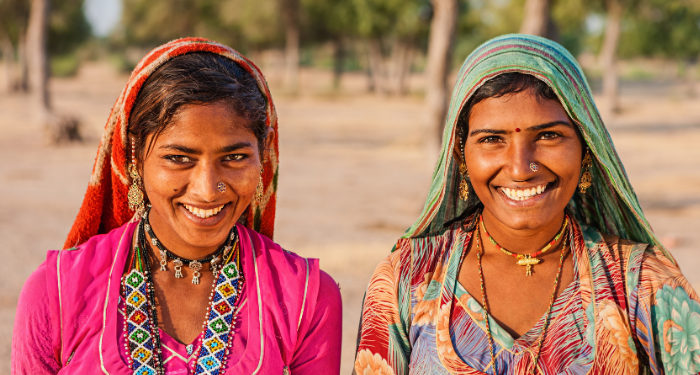
Banjara women in India; see story below (Beyond).

In this issue:

  1. INDIA: Owning the Great Commission
  2. MALI: Remains of Kidnapped Missionary Recovered 
  3. BANGLADESH: Hope for the Rohingya
  4. MALAYSIA: Woman Wins 13-Year Fight for Right to Call God “Allah”
  5. USA: Four Signs We’re on the Cusp of a Church Revitalization Movement

Read or share the email edition or scroll down to read individual stories below.

Like what you read? Subscribe.

Greetings!

On Easter morning, at my church’s pre-service prayer meeting, I read Luke 24:1-12. In verse 11 we see how the disciples responded to the women’s report: “And their words seemed to them like idle tales, and they did not believe them.”

Another source put it this way Breaking News: “Executed Jesus Christ Alive, Tomb Empty,” Friends Say (BosNews Life). Incredible. How do you think you would have responded to the news at that time?

In this day of fake news, I must confess my skepticism is higher than ever. But praise God, we can know the Truth.

Blessings,
Pat

INDIA: Owning the Great Commission

Source: Beyond, March 27, 2021

The Banjara people of North India live bleak lives. They are impoverished. Illiterate. Unwelcome within city limits. They live under tents of plastic sheeting, often next to open sewage. They eat the scraps that butchers can’t sell, and they are considered too low for any caste group to accept. Their lives are devoid of hope.

Then a disciple told one Banjara group about Jesus.

They now have hope and have been changed by the Holy Spirit in every way. They eat decent food. Many have built one-room homes of brick. They started a school and their children are learning to read. Many have started micro-businesses. And they are obeying Jesus’ command to make disciples of the lost.

Banjara house church leaders met recently to seek God for direction in reaching 3,000 more Banjara families with the gospel this year. Though they are poor and mostly still illiterate, they are owning the Great Commission for themselves. They are dividing up the work and funding it from their own resources.

When people are discipled to Jesus—not Christian culture or church traditions—true transformation results. This is the Book of Acts in action.

Read the full story and see a previous report from the same source, Balking at Baptism.

You might also want to read about how God used an indigenous gospel film to spark a movement to Christ among the Banjara (Create International).

MALI: Remains of Kidnapped Missionary Recovered

Source: International Christian Concern, April 2, 2021

DNA tests confirmed that the body of Beatrice Stoeckli has been recovered, months after her reported death at the hands of Islamic extremists.

Switzerland’s Foreign Ministry announced the findings in a statement.

Beatrice Stoeckli primarily worked in Timbuktu, spreading the gospel and working with women and children in Mali since 2000. In 2016, she was taken captive by the terrorist group ama’at Nusrat Al-Islam wa’l-Muslimin (JNIM), a group affiliated [with] al-Qaeda that has been known to attack foreigners in the country.

Beatrice was confirmed dead in October 2020 by Sophie Petronin, a French charity worker that was also abducted in 2016 and later released. According to Petronin, who converted to Islam during her captivity, Beatrice protested the constant changes of location that her captors enforced, and as she continued to fight against them, they dragged her outside and shot her. It is believed that she had not converted at the time of her death.

The full story includes a few more details, also widely reported by syndicated news sources.

We also found a few updates on other stories about persecuted Christians which we shared previously: Slimane Bouhafs of Algeria continues to face persecution after moving to Tunisia and German Pastor Michael Feulner of Germany is hopeful he can remain in Turkey (Morning Star News).

BANGLADESH: Hope for the Rohingya

Source: Pray for Rohingya, via Assist News, March 30, 2021

“Where can we find a home? Where can we find security? Where can we find hope?” As I sat across the table from seven Rohingya men, my mind flashed back to a week earlier when I prayed “God, I’m losing hope in humanity.” Immediately I felt Him reply, “Why is your hope in humanity?” I was reminded that our hope is in Him alone.

All eyes were on Devin and me as these men, leaders in their community, awaited our response. We sat under a tent in the heat of Bangladesh in the refugee camps with bellies full of rice. The pain in their eyes was tangible and the hopelessness they experienced was real. Anuwar, a loving father, shared that he found out his wife was pregnant that same day. He felt aborting the baby could be a more loving option than raising another child in the camps which had no future or hope.

I told them how less than a year earlier, Devin and I were praying together. Out of nowhere “Burma” came into my mind and I pictured a woman wearing a black burqa. I could not point to Burma on a map. I had no idea who the Rohingya were, let alone their situation. The men’s jaws dropped. 

“It’s like magic! Most people hear about us from the media, but not you!” I told them that God put them on my heart, and now I was sitting in front of them, on the other side of the world, to tell them He has not forgotten them. He loves and cares for them. It is in Him that we can find hope. Mohammed announced they must share this story of hope with their community, to remember that God has not forgotten them.

The full story includes a few prayer points, and you can find more through the Pray for Rohingya website.

You may have read that at least 15 Rohingya were killed and tens of thousands displaced by a March 22 fire in Cox’s Bazaar, the largest Rohingya refugee camp (New York Times). Another blaze killed three more people soon after (Al Jazeera).

MALAYSIA: Woman Wins 13-Year Fight for Right to Call God “Allah”

Source: World Watch Monitor, March 17, 2021

A Malaysian woman’s campaign for Christians’ right to use the word “Allah” for “God” has succeeded after almost 13 years of court hearings and delays.

Jill Ireland Lawrence Bill has been campaigning for the right to use the word ever since immigration officials at a Kuala Lumpur airport seized eight Christian CDs from her in May 2008 because the CDs used the word “Allah” in a Christian context.

After a seven-year legal battle, Ireland was given back the CDs in 2015, but she maintained that the court had failed to address her constitutional right as a Christian to use the word.

In October 2017, her lawyer, Lim Heng Seng, noted that 60% of Malaysia’s Christians speak the Bahasa Malaysia (“language of Malaysia”), which uses “Allah” for “God.” The word, which predates Islam, has been used by local Christians for hundreds of years, since Europeans first spread the religion, long before Malaysia even came into existence.

He said Christians were never consulted when in 1986 the country banned Christians from using the word, and that the government’s blanket ban was unconstitutional and discriminatory.

After years of delays, including several this year due to COVID-19 lockdown, the Court of Appeals judge Nor Bee ruled in Ireland’s favor that the 1986 directive by the Home Ministry to prohibit Christians from using four prohibited words, including Allah, was not a blanket ban.

Read the full story. An article from the BBC includes additional background, and the case is more fully described in a piece from Malay Mail (which identifies Ireland as “a Sarawakian of the Melanau tribe.”) Note that this decision is being appealed (The Star).

USA: Four Positive Signs We’re on the Cusp of a Church Revitalization Movement

Source: Sam Rainer, Church Answers, via The Christian Post, April 4, 2021

I believe we are on the cusp of a church revitalization movement. The signs are there. Will churches follow them? On the road, a sign is no good unless it helps you travel to your destination. The signs point in the right direction for a church revitalization movement, but for it to happen churches will need to move.

1. Almost every church is smaller, but the core is stronger than ever. The return rate of people in churches is highly localized right now. Additionally, larger churches have lower return rates, while smaller churches are recovering more quickly. By this fall, Church Answers expects most congregations to be at 80% pre-pandemic levels.

2. The number of church adoptions [mergers] has the potential to catch the number of church closures. When a church is adopted, a healthier and stronger congregation receives a more vulnerable congregation into the family. Two families are brought together.

3. Pastor tenure will be longer after the great reshuffling. Like people in other professions, pastors are exhausted and struggling with decision fatigue. A great reshuffling is occurring. Over the long term, we expect pastor tenure to lengthen and get better, especially as Millennials enter the prime of their careers. With longer pastor tenures, revitalization is more likely.

4. The neighborhood church movement is primed for a launch. The neighborhood church is associated with a particular neighborhood. It is common for them to carry the name of the community. They were originally started in the community and for the community. For years, we have dismissed the potential for these churches. I believe they are primed for a comeback.

The full article includes links to a new “master class” and conference about church revitalization.

Also worth noting: As various sources report, less than half of Americans now claim a formal congregational membership (Baptist News).