Events: Conferences, Classes, & Retreats in June

Source: Missions Catalyst Events Calendar

June 3-4, World Weekend of Prayer for Children at Risk (international). Coordinated by the Viva Network.

June 4-30, Equipping for Cross-Cultural Life and Ministry (Union Mills, NC, USA). Followed by a Language Learning Accelerator course on July 2-14. Provided by the Center for Intercultural Training.

June 7-8, Mission Agency Consultation (Dallas, TX, USA). Workshop for organizational leaders, provided by Sixteen:Fifteen.

June 9-11, ACMI Virtual Conference (online). Conference for people ministering among international students. From the Association of Christians Ministering among Internationals.

June 12-16, Abide Debriefing (Joplin, MO, USA). Help for moving forward with hope and momentum; from TRAIN International (held eight times a year). An additional debriefing will be held June 19-23.

June 14, Mobilizing Your Senior Church Leadership (online). Webinar for church mission leaders from Sixteen:Fifteen and Missio Nexus.

June 19, Business Strategies for Effective Pioneering (online). Hour-long webinar from Frontiers USA; join live or watch the replay a week later.

June 19-21, Support Raising Bootcamp (Abuja, Nigeria). Provided by Support Raising Solutions.

June 20, World Refugee Day (international). Many churches observe this with prayer on the Sunday before or after.

June 21 to July 1, Breathe (Wilderswil, Switzerland). A retreat for mission workers offered annually by Catalyst International. A second retreat will be held September 21-29 in the same location.

June 21-22, Support Raising Bootcamp (Rogers, AR, USA). Provided by Support Raising Solutions.

June 26 to July 22, COMPASS (Palmer Lake, CO, USA). Language and culture acquisition provided by Missionary Training International.

June 29, Day of the Christian Martyr (international). An annual event from Voice of the Martyrs.

View the complete calendar, updated regularly. Submissions welcome.

Special Edition: AI and Its Impact on Global Missions

Hi, friends! You’ve got feelings and opinions about ChatGPT and its many cousins, don’t you? When it comes to world missions, AI offers both challenges and opportunities.

As the Chief Innovation Officer for SIL International, Jon Hirst has been following developments in the world of artificial intelligence more than most—and also considering how it may impact us as followers of Jesus.

In the coming months, Jon will also be part of several (mostly virtual) events to help us stay current and think critically about these things; see more info below.

— Marti

Obedience in This AI Moment

By Jon Hirst, Innovation in Mission

During college, I interned in the marketing department of the magazine Christianity Today. Each day that summer, I rode with a friend of mine at the university who was working in the relatively new interactive office of CT. It was in a different building than I worked in and I remember walking over there after work in awe as I watched the beginnings of the Internet take off in the form of AOL chat rooms and simple hyperlinked pages. I was too young to really think through the fact that, as with any new technology, some might be mourning the loss of in-person interaction or the beginnings of 24-7 connectivity.

Today, I feel a similar sense of awe as I sit in demos with our Artificial Intelligence (AI) teams in SIL International (where I serve as the Chief Innovation Officer); but unlike in those early days, I better understand the concern that naturally comes with a technological breakthrough of this magnitude.

The innovations coming out of this round of tech breakthroughs will not only create new opportunities but will also have significant impacts on the work that many of our staff do each day. One recent study expects 80% of employees to have 10% of their work impacted and almost 20% of employees to have at least 50% of their work impacted. AI will also likely affect certain industries and jobs more directly than others; some of which overlap with activities that are core to nonprofit activities. We should expect significant impacts to the way work is done even though our overall vision and mission statements will remain unchanged.

So how can we live out this trust in God in a time of change? Here are four postures to consider:

  • Humility: None of us know where an AI-driven world will take us or what it will look like to be fully human in a time when many of the efforts that have defined us get taken up by machines. We need to submit our will and our ways to God daily and ask Him for patience and grace. As we turn to God for comfort in navigating the unknown, we can recognize that there is both joy and excitement along with fear and loss.
  • Learning Together: God embedded in us a curiosity that breeds empathy and human connection. We are made for learning in community! We want to learn from each other and grow as God’s children. As machines chip away at some of what we have labeled “our identity,” we, who know how God made us, are in the best position to learn how to function in a world transformed. Our task becomes to discover our true selves and what it means to be humans made in God’s image.
  • Grace: This level of transformation will be intrusive and confusing. As we seek to pursue opportunities and safeguard against risks, we will naturally misunderstand each other, step on toes, and struggle to anticipate how our actions will affect others. It is our job to assume the very best from our colleagues and partners as we extend grace. When the changes create disequilibrium and uncertainty, we can choose to respond through discussion, listening, and open-minded engagement.
  • Obedience: God’s Word maps out what it means to be God’s children and followers of Jesus in a time when the new Kingdom is not yet fully seen or honored. The coming years will require hard choices from us as we seek to know when to say “yes” and when to say “no” to the new opportunities that will present themselves. What will it mean to stay faithful to God’s direction?

So as you start each day, expect the unexpected, be ready to show an extra measure of love and kindness, look for the little lessons, and ask God for the strength to be courageous in the face of the unknown. Together we can learn to navigate a dramatically different world, encourage those around us and honor God in our obedience.

Read the full article and related resources.

I’d also encourage you to explore innovationinmission.com and sign up for Jon’s Innovation in Mission monthly newsletter.

Upcoming Events Related to AI and Ministry

Source: Missions Catalyst Events Calendar

May 31, AI and Its Impact on Global Mission (webinar). Join Ted Esler, Jon Hirst, and Mark Tabladillo in this Missio Nexus discussion about ways artificial intelligence tools like ChatGPT affect the global Great Commission.

July 11, Thriving as a Publisher and Author in an AI-Assisted World (webinar). This event, provided by Media Associates International, will be geared towards helping Christian authors and publishers around the world think through the impacts of AI. Anyone can come.

September 27-29, Mission Leaders Conference (Orlando, Florida; virtual passes also available). Missio Nexus has conferences like this every year. The 2023 theme is “Shift: Rapid Social Transformation and the Gospel.” It will address many topics, but will certainly include AI.

October 24-26, DigitalMediaCon 4.0 (virtual event). This three-day conference for Christian communicators, held by the Evangelical Press Association and the National Association of Evangelicals, is an annual event. Anyone can come. While covering many topics related to media and ministry, this year the event will have a particular focus on AI and how it is changing the landscape of media ministry.

View the Missions Catalyst Calendar.

Church Growth in Ukraine | Bibles for Bhutan

  1. Ukraine: Pentecostal and Evangelical Churches Growing Tremendously
  2. Australia: Making God Stories Available to Aboriginal People
  3. Bhutan: Scripture for a Staunchly Buddhist Nation
  4. Libya: Christians Arrested and Could Face Death Penalty if Convicted
  5. India: Is Violence in Manipur Ethnic Cleansing? or Religious Cleansing?

Read or share the email edition or scroll down for more.

Ukraine: Pentecostal and Evangelical Churches Growing Tremendously

Source: Assemblies of God World Missions, May 8, 2023

A recent road trip across Ukraine revealed that Pentecostal and evangelical churches are experiencing significant growth, and may emerge from the war stronger than ever before.

“Churches are packed out because people are seeking God,” says Jane M. Dollar, 57, an Assemblies of God world missionary to Ukraine who has spent the past year operating a center for Ukrainian refugees in Poland.

There is great spiritual hunger in the nation, according to Mykhailo Panochko, senior bishop of the 100-year-old Ukrainian Pentecostal Church.

“People heard the message of the good news,” Panochko says. “Many repented and have been discipled and baptized. The harvest is so big that we lack workers, ministers, people who can feed and grow the people, maturing them in Christ.”

For example, a small church in the once-occupied southern city of Kherson has more than 500 new people attending, but only one minister.

“Everyone has many questions about the present situation, but also the future destiny of their souls,” Panochko says. “People are looking for answers.”

Read the full story.

Australia: Making God Stories Accessible to Aboriginal People

Source: Eternity News, May 2, 2023

Susanna Baldwin, Kathy Dadd, and Dave Glasgow were thrilled to launch the Plain English Version Mini Bible at the Katherine Christian Convention in the Northern Territory at the weekend.

Susanna and Kathy have taken over the bulk of the translation work from Dave Glasgow, who launched the project to make the Word of God more accessible to speakers of Aboriginal languages who learn English as a third or fourth language. The Mini Bible contains most of the New Testament and parts of the Old Testament, including Genesis chapters 1-21.

Speaking to about 200 people at the Saturday night celebration event, Dave mentioned that the Plain English Version, or PEV, is being used by Aboriginal people not just in the Territory but all up the east coast as far as Cairns, as well as in the Pacific and Asia and even migrant communities in Australia.

It is also one of the most popular versions of the Bible downloaded on YouVersion—something that has come as a welcome surprise.

The full story explains more about the ideas behind the PEV and shows how its translation brings to life captivating stories that are good for sharing, especially with those who do not have the Bible in their own language yet.

From the other side of the world, see also this updated list of America’s 50 largest foreign missions and Bible translation organizations, in terms of revenue and excluding denominational groups (Ministry Watch).

Bhutan: Scripture for a Staunchly Buddhist Nation

Source: Back to Jerusalem, April 2023

For the first time, an audio version of the Bhutan Bible in the Dzongkha language is being secretly recorded inside the country. Indigenous believers are armed with an underground recording studio, supported by BTJ, and are recording the audio Bible in the local language.

Bhutan is one of the most unreached nations in the world. About 0.3% of the population in Bhutan are believers, but the majority of the believers who live in Bhutan are Nepalese. Thus, 99.7% of the indigenous Bhutanese have never heard the gospel, or have ever heard the name of Jesus. In fact, the government doesn’t want to claim the existence of any Christian missionaries within their border.

BTJ is working directly with the Bhutanese underground house church by sponsoring a recording of the Old Testament in an audio format. Please pray that they are able to finish the recording correctly and in a prompt and safe manner.

Read the full story and another from BTJ, How the Very First Chinese Bible Translation Came to Be.

See also What’s Behind the Boom of Christianity in China? (China Christian Daily). It describes an interesting project to build a public database of Christian activity in China during a 400-year period (from 1550 to 1950).

Libya: Christians Arrested and Could Face Death Penalty if Convicted

Source: Religious Liberty Prayer Bulletin, May 10, 2023

Six Christian Libyan nationals arrested during March and early April for apostasy (leaving Islam) and Christian proselytism (missionary work) could face the death penalty if found guilty. Videos of the detained believers confessing to their “crimes” have been posted on-line. One believer is a 22-year-old woman who became a follower of Christ [at] aged 15. Another believer is reported to have renounced his faith under torture; may he be comforted by the amazing grace of his Savior, Jesus Christ.

Two U.S. citizens arrested around the same time for alleged Christian proselytism have been released and deported to Tunisia (Libya Update).

Meanwhile, Nigerian pastor Femi Abraham Akinboye—arrested by an Islamic militia in July 2021 while seeking a permit for the church he had established—remains detained, his fate unknown. Lord have mercy! Please pray.

The full story includes links, background, and more prayer points.

From another part of the world, we read that in Cuba, documented violations of religious freedom more than doubled from 2021 to 2022 (story from Baptist Standard, responding to a report from Christian Solidarity Worldwide).

Closer to home for some: In February, we included a news brief about after-school Satan clubs in the U.S. Those are back in the news after a court ruled in favor of The Satanic Temple (The Hill).

India: Is Violence in Manipur Ethnic Cleansing? or Religious Cleansing?

Source: Mission Network News, May 17, 2023

In Manipur, India, more than 2,500 homes of tribal Christians are now just frames and ashes. Meitei Hindus in northeast India began attacking tribal Christians two weeks ago in a horrific campaign of violence.

So far, at least 68 people have been killed and over 25,000 displaced—forced to flee while their houses and churches burned.

With different messages coming from various media outlets, people are asking, is this an ethnic cleansing? Or a religious cleansing?

A ministry worker with A3 (formerly Asian Access) says, “Personally, I feel it’s both. So it’s part of ethnic cleansing, but also it’s part of the Hindu fanatics propagating their religious views because Christians are considered to be one of the greatest enemies and they will try to destroy the strongholds of Christianity. If it’s ethnic cleansing only, why do they have to burn 121 churches? To me, I think it’s more like two sides of the same coin.”

Read the full story. Please pray.

For more background on this conflict check out Indian Troops Ordered to “Shoot on Sight” amid Violence in Manipur (The Guardian) as well as a roundup from the Religious Liberty Prayer Bulletin.

Practical Mobilization: Messiology 101

Five Practical Principles for Mission Mobilizers From OM’s George Verwer

By Shane Bennett

Read or share the email edition.

Since mission mobilizer, leader, and author George Verwer died on April 14, we’ve seen many tributes. Read a short but strong one from OM USA’s President and CEO Andrew Scott (Christian Post). In his final video on YouTube, just a week before he died, George said he hoped he’d be remembered for what he called “messiology.” So let’s remember. Here’s what Shane wrote for Missions Catalyst a few years back when the “Messiology” book came out. Scroll down for how you can get a free copy. ~ MW


You know those people you really wish you could hang out with? Heroes beyond your reach? Maybe you’ll shake their hand or get a picture with them, but there’s no way they’re going to be weekly-get-together, maybe-go-camping-in-the-fall kind of friends. George Verwer, the founder of Operation Mobilization, is like that for me. We go way back: I can literally remember stuff he told me (and 17,000 others) at Urbana in 1983. Later talks and books of his have shaped me in significant ways.

Right now I’m really jealous of the guy. I just read a book he wrote called Messiology, and I so wish I’d come up with that term! I love it! I wonder if I was sleeping or deep in a must-watch episode of The Office when God was handing out “messiology” and I missed it. More likely he knew George would hit it out of the park. And so he has.

“Where two or three are gathered together in His Name, sooner or later there will be a mess.” 

– George Verwer

I love this little book and want to point out some of the ways the book speaks particularly to mobilizers—and why you might want a few physical copies on hand to share.

What Is Messiology?

George says, “Put simply, messiology is the idea that God in his patience, mercy, and passion to bring men and women to himself often does great things in the midst of a mess… Over the course of 57 years in over 90 countries and thousands of churches and other organizations, I have often observed some kind of mess with them. Sometimes clear sin is involved that needs to be repented of. Other times it’s just silly stuff. I have said, and I feel it strongly, that no matter how filled we are with the Holy Spirit, we are still human. Our humanness has its beautiful side and its messy side.”

Pause for a second. Any messes in your life and work right now? If you’re at all like me, this probably doesn’t require a lot of mulling over. Likely a few popped into your head instantly. George is right when he says, “Where two or three are gathered together in His Name, sooner or later there will be a mess.”

Here are five things from this little book that I think are particularly helpful for us as we advocate for God’s purposes among the nations, work in the roles he has given us, and deal with the messes we—and sometimes others—have made.

1. We’ll never fully “get” God.

That God works despite and sometimes through the messes in our lives rests on the mystery and mercy of a great God. Verwer says,

“The last verses of Romans 11 have helped me again and again: Oh, the depth of the riches both of the wisdom and knowledge of God! How unsearchable are his judgments and unfathomable his ways.”

The stamp of God on creation, on every bit of life we’re connected to, is both broader, deeper, and more subtle than we imagine. In a way that is both stunning and uncomfortable, I’m reminded that I comprehend only the tiniest slice of the great work of God at any moment. I pray for the grace to be duly humble.

2. God didn’t ask me to sign off on who he uses.

Joel Osteen? Pope Francis? Nigerians? Hard-core Calvinists? Americans? Apparently, God doesn’t feel the need to have me vet everyone he chooses to work in and through. I don’t get this: How can perhaps mistaken people be used by a good God to raise up honest disciples? It boggles the mind!

But clearly, the circle God draws and labels, “these are building my kingdom” is bigger than the one I’d draw, and I tend to think I’m pretty open in this area. I once nearly lost a long-term worker I was recruiting because I was not strong enough on some beliefs. (You’ll have to guess or ask which ones!)

Is it possible we can become so enamored with our view, our dogma, or our history that we assume God does not work outside of it? Is it possible that we waste valuable time writing papers, making videos, and holding meetings all primarily designed to point out how other people are wrong? All the while many of those “wrong” people and “wrong” methods are tools in the hands of a wise and powerful God, so intent on accomplishing his purposes of gathering people to himself, that he can and does use them! And we don’t see it.

Neither George nor I would advocate that we abandon truth, but rather rejoice in the deeper truth, the mystery of a powerful God who accomplishes his purposes through a more diverse set of humanity than we might be comfortable with.

3. Critical people annoy me to no end.

Seems wherever you look, Facebook, online and print publications, public forums, or pulpits and stages, people are constantly being critical. “This ministry isn’t committed to the Bible.” “That church is too extreme.” Really, what is wrong with people? Do they not own a Bible? Maybe they never open it. Don’t they have anything better to do than complain and criticize?

Oh, hang on: “Let there be peace on earth, and let it begin with me…!”

It is so easy for me to snip and bite, casually pointing out the shortcomings of some and the extravagances of others. In my younger days, I wasn’t even subtle: “No Christian should own a Range Rover. It’s just a ridiculous status symbol.” As I’ve gotten older and put childish ways behind me, I’ve sadly gotten more sophisticated in my criticism. Dang it! But God has mercifully reminded me through the valiant Verwer to ease up on knocking people down.

No church is perfect. Few supporters respond as quickly as we like. Every agency drops the ball. And all of us fall short of what we might be. Thank God his grace abounds.

4. I should say “I’m sorry” much more often.

Want to join me in this? Honestly. Not in an “I’m sorry you felt bad when I did that” way. More of an “I dropped the ball; I failed to respond on time; I lied to you because I was embarrassed about my mistake” way.

There are times when I’m trying to be funny and say things that are not honoring. Other times I’m arrogant and self-aggrandizing because I want to be looked at and liked. And sadly, I sometimes overlook or demean people because I don’t see how they serve my purpose.

I’m sorry.

5. Let’s love more, even when it hurts.

I cannot imagine the criticism and abuse George Verwer and his wife Drena have dealt with over the years. One of my favorite leadership quotes is, “If you want to be a leader, you’d better get used to the sight of your own blood.” I suppose the Verwers know it well.

May God give us the grace to love people when they fail us. When they impugn our motives. When they relentlessly attack, causing pain to us or worse, to ones we hold dear.

Mobilizing others and working to complete the Great Commission is messy. Thank you, George, for the happy reminder that God is big enough, good enough, and intent enough to work out his purposes for us and the world, despite—even through—the messes.

Originally published in Missions Catalyst in 2018; slightly adapted.

Want to read it for yourself? Here’s a publisher’s blurb and a way to get a copy for free.

In his most biographical book, George Verwer exercised his well-loved honesty and refreshing realism, sharing his own failures and looking at how God works through messy situations. Journey with this great man of faith as he explains that although everything we touch has its weaknesses and faults, God works through our fallenness and humanity. Join George in “messiology” and celebrate what our great God is doing and how we can be part of his work.

Download a free PDF (GeorgeVerwer.com) or purchase copies wherever you get books.

Changed by the Love of Jesus | Student Arrests in Eritrea

  1. Sudan: How to Pray
  2. Kenya: A Village Chief’s Life Changed by the Love of Jesus
  3. Eritrea: More than 100 Christian College Students Arrested
  4. Africa: Finishing the Task in the Sahel
  5. Iraq: One Click Away From Knowing Jesus

Read or share the email edition or scroll down for more.

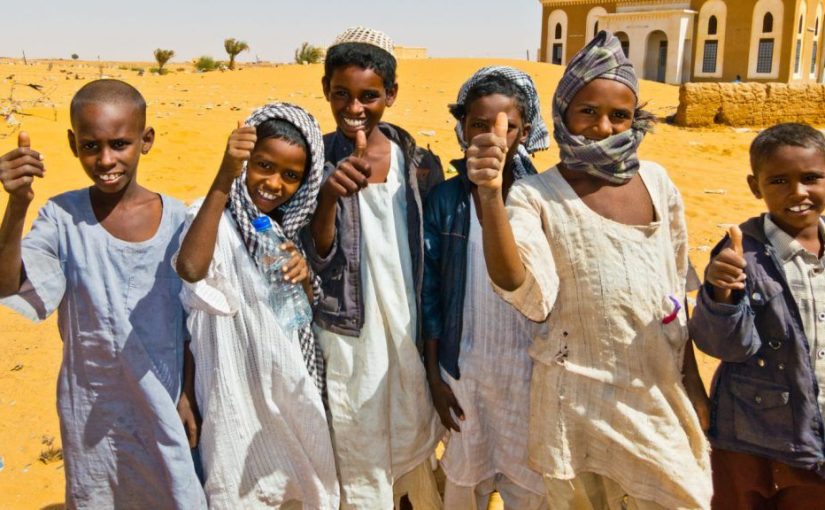
Header photo: A group of boys at a rest stop between Khartoum and Karima, Sudan (2012). Photo by Mark Fischer/Flickr.