I was enjoying the last rays of the Middle Eastern sun late one afternoon when my friend Khaled called me.
“Hey, Trevor,” he greeted me. “You have a pool, right?”
“A pool?” I glanced across the yard at the inflatable kiddie pool my children used on hot days. “Yeah, a little one for the kids. Why do you ask?”
“An adult could fit, right? I need it next Wednesday.” His words came out in a rush. “Can you bring it to the garden? And then can you fill it up?”
I raised an eyebrow, even though Khaled couldn’t see me. “Sure, but what is this all about?”
“Salwa wants to get baptized!”
Salwa lived in a neighboring region that foreigners couldn’t access. For years, my team and I had prayed fervently for the people of this area, but all our attempts to reach them with the gospel had failed.
Salwa had been making regular treks to our city for the past several months. Here she’d met Khaled and some other local Muslim-background believers my team and I have been discipling. When they shared the gospel with Salwa, she eagerly decided to follow Jesus.
Now, Khaled’s invitation to her baptism was a stunning answer to prayer.
Source: International Christian Concern, May 24, 2023
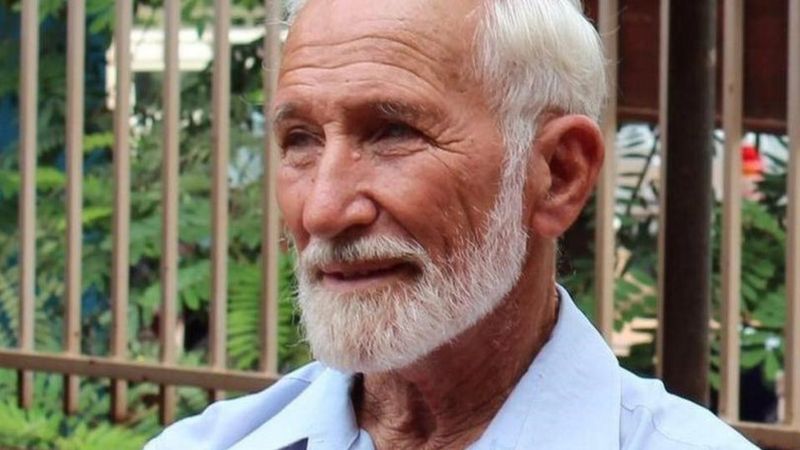
Kenneth Elliott, an Australian doctor kidnapped in Burkina Faso and held captive by al-Qaeda for more than seven years, has finally returned home to his family.
“Kenneth Elliott was safe and well and was reunited with his wife and their children on Thursday night,” Foreign Minister Penny Wong told the Associated Press.
On January 15, 2016, Elliott and his wife Jocelyn were taken from their home in Burkina Faso by the Mali-based terror organization al-Qaeda in the Islamic Maghreb (AQIM). Jocelyn was quickly released in February 2016.
Elliott and his wife had been running a hospital in Djibo. The hospital, which could hold 120 patients, was closed due to Elliott’s absence after the kidnappings. He was the only surgeon in the area and made his services free to the population of roughly 2 million. He was given the nicknames the “Doctor of the Poor” and “Savior of the Sahel” for the work he was doing.
Read the full story or one from the Associated Press. The family’s statement says, “At 88 years of age, and after many years away from home, Dr. Elliott now needs time and privacy to rest and rebuild strength.”
Apparently, the Sahel now accounts for nearly half of global terrorism, with more people killed by terrorists there than in the Middle East, North Africa, and South Asia combined (Unherd). On the weekend the Elliotts were kidnapped, the same group took credit for a terrorist attack in Ouagadougou that killed 30 others from at least 18 nationalities.
Do you know about the Fulani? Considered the world’s largest nomadic people group, they are found in many countries across Western Africa and beyond. Most Fulani people are Muslims, and occult practices are also widespread among them. Many have been disenfranchised by their communities and as a result, are quite poor. So it is not surprising that the majority are illiterate.
During a week-long training, a group of Fulani women who follow Jesus or have expressed strong interest learned oral discipleship methods. These strategies are effective with both educated and uneducated people and are great for mixed groups. As the days went by, trainers saw the Lord use this course to speak into the hearts of the women and their families.
“At one point, we were talking about repentance. During the worship time that followed, all of the women felt convicted to kneel before God to sort out the hidden things in their lives. We witnessed how the Holy Spirit was transforming their hearts. It was incredibly moving. We were also encouraged to see several men participating.
“God deeply touched the husband of one of the women there. He told us that he had been a ‘friend of evil spirits,’ but that from now on he would leave all of that behind. At the end of the week, he decided to be baptized.”
The Ghana National Association of Authors and Publishers has offered an apology and admitted to errors amid criticism from parents, educators, and the country’s deputy education minister for a textbook’s negative depiction of the impact Christian missionaries have had on the country.
In a statement, the association offered an “unqualified apology” to the Ministry of Education, The National Council for Curriculum and Assessment, Ghanaian Schools, Nananom, the Christian Council of Ghana, and “any Ghanaian who find the statements obnoxious.”
The book, titled History of Ghana for Basic Schools, Learners Book 4, reportedly touches on what it describes as the negative consequences of Christian missionary activities and claims Christianity has led to an increase in poverty in the country, according to Ghana’s largest English radio station.
As of the 2021 census, Christianity is the predominant faith in Ghana, practiced by 71.3% of the population across numerous denominations, [and] Islam constitutes the religious beliefs of 19.9% of the nation’s total populace.
Read the full story. It’s an interesting, current example of the debates about whether missionaries destroy cultures.
During a recent trip to Chad [to] implement an emerging model of Bible translation called church-centric Bible translation, I worked alongside other members of the unfoldingWord training team to train and resource Chad nationals to translate 50 Bible stories into eight minority languages.
Muslims and Christians [came] together to embark on this translation journey [which] takes a fraction of the time. Ultimately this will have the potential to impact around 2 million people in Chad who speak something other than Chadian Arabic.
I knew it would be a challenging road ahead as a group of eight language teams, with five members each (two all Muslim, two all Christian, and four mixed groups) came together. I have spent decades of my working life developing leaders and teams and didn’t underestimate the barriers they needed to overcome as they began the first in a series of six translation workshops.
This translation project succeeds the first translation group of its kind in Chad which began in 2018 and was completed 18 months later. From this first group of eight language teams, at least two new churches have been planted and the new believers are assigned to the associated missionary for the people group.
Did you know? Chad is home to more than 200 ethnic groups who speak more than 100 languages, according to 5 Things You Need to Know about Chad (World Relief).
Habakkuk 2:14 says that the Earth will be filled with the knowledge of the glory of the Lord as the waters cover the sea. How about our streets and sidewalks? Use the Holy Ground prayerwalking app to find resources (though most are “coming soon”), see where others have prayed, and track prayerwalks in your own area.
Looks like this started near me, in Portland, Oregon, but even here there are plenty of streets that may not have been prayerwalked. Thought I’d give it a go. What about you? Get a family member or friend and pray for God to be glorified in your neighborhood or town.
Learn more or look for the app from the Apple and Google app stores.
Looking for tools to stimulate prayer for a people group or region on your heart? See Justin Long’s list of prayer guides, recently updated. Many are free downloads. Let him know if you have one to add.
If we wouldn’t seat ourselves onstage at a concert hall without training, is there a reason we wouldn’t need to be trained for other work God has for us (like global work)?
There are lots of lessons around town. The trick is to both train your eyes to see them—and your heart to choose to engage.
Grit to Stay Grace to Go: Staying Well in Cross-Cultural Ministry, by Sue Eenigenburg and Eva Burkholder
Cross-cultural ministry is full of twists and turns. You finally figure out what to do and where to go, raise your support and share your plans with everyone, only to get to the field and find it’s not what you expected, or that the people you were so looking forward to working with are on their way out. Or maybe you’re the one leaving and processing all the implications of that decision.
Whether you stick it out or realize it’s time to let go, Grit to Stay Grace to Go will help you know you aren’t alone.
Each chapter addresses a different dynamic that often comes up, how the authors have seen or experienced it, lies you might fall for and truths you can cling to. Throughout are meaty reflection questions and resources for going deeper—typically 4-6 articles to access online and a book or two for each of the 36 chapters. A series of appendices address topics like soul care, listening, loss and grief, and debriefing.
This is more of a workbook and a reference than the sort of book you read straight through. Team leaders and missionary care providers will find it a helpful resource, and field workers will see themselves on its pages.
Note that both authors have published books for women, but this isn’t just a book for women, Americans, or missionaries from a certain tradition; they’ve made efforts to keep a broader readership in mind.
Missionary Motivations: Challenges from the Early Church, by Matthew Burden
Christianity’s rapid expansion is remarkable. But the earliest Christians had little to say about obeying the Great Commission or concern for the lost. Without dismissing those motivations, the author of this short book takes a close look at the early church’s vision for global missions, notably their focus on filling the earth with worship and holiness (less Matthew 28, more Malachi 1:11).
This thoughtful book explores what drove Roman martyrs and desert fathers as well as the thinking of the saints, monks, kings, and pilgrims who expanded the Church in India, Syria, Central Asia, Europe, and beyond.
Brave Son of Tibet: The Many Lives of Robert B. Ekvall, by David P. Jones
Raised in China by missionary parents, gifted with languages, and able to make friends with anyone, Robert Ekvall of the Christian and Missionary Alliance had advantages that served him well in the two decades he and his family served among Buddhist nomads in northeastern Tibet. The inspiring story is full of adventures, setbacks, and breakthroughs.
After tragedies and opportunities remove him from Asia, he returns as a WWII military attache and intelligence officer with the U.S. Army and later takes up a new life as a university professor. It’s all in this readable and well-researched biography.
You might also appreciate The Empathy Machine, an article from Ted Esler on why we should read biographies.
Jonathan Edwards on Movements, by Dave Coles
What do we make of revivals, awakenings, and new religious movements? How should we sort out what we hear and see? The author, a proponent of CPM/DMM, takes a look at how influential theologian Jonathan Edwards (1703-1758) responded to the revivals and Great Awakening of his day and advised others to sort out the wheat from the chaff.
Along the way, Coles asks: what would Edwards say, both positive and negative, to critics of disciple-making movements today? It’s a quick read but a challenging one if you’re not used to the language of early American theologians like Edwards.