March 3-5, Ralph D. Winter Lectureship (La Mirada, CA, USA and online). Provided by Frontier Ventures. Topic: Homogeneity and Hybridity, Revisiting the Homogenous Unit Principle.
March 4-25, Theology of Disability Workshop (online). Set aside a few hours each Friday in March for this free workshop from Accessible Hope International.
March 8-9, Support Raising Bootcamp (Charlotte, NC, USA). Similar events are held throughout the year in various locations by Support Raising Solutions. Note that SRS is offering one of these workshops online April 4-6.
March 9-11, Standards Introductory Workshop (online). Learn about the Standards of Excellence in Short-Term Mission. Workshops will be offered virtually as well as in person several times in 2022.
March 27 to April 1, Sharpening Your Interpersonal Skills (Orlando, FL, USA). Workshops are provided regularly in different locations by International Training Partners.
March 28-31, European Member Care Consultation (Budapest, Hungary). Sponsored by Member Care Europe; usually held on an annual basis.
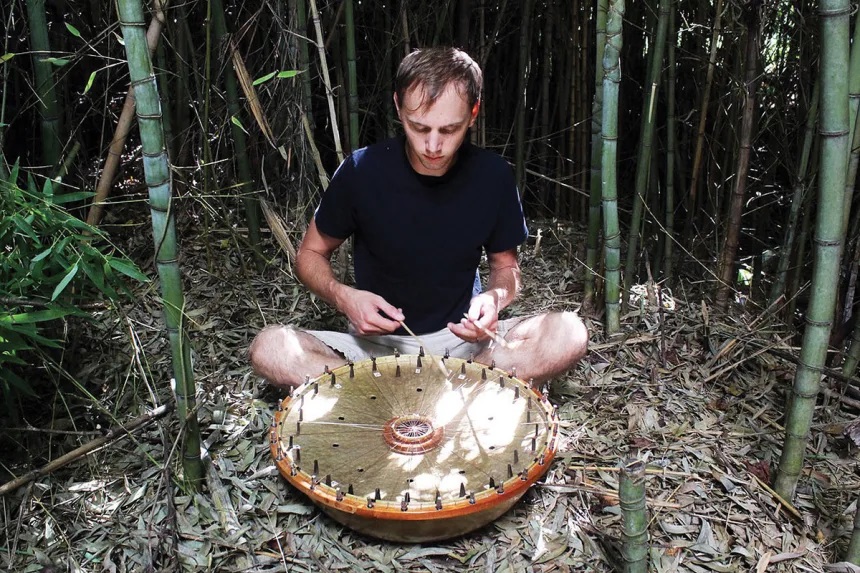
A missionary and a skilled craftsman, Caleb dreamed of a tribe he’d never met and a musical instrument he’d never seen. That dream sent him on a journey that helped bring the gospel to a tribe in a remote corner of the Philippines. See the story below. (Image: Evergreen Missions)
Pakistan: 17-year-old Boy Leads an Entire Tribe to Jesus
Uganda: A Christian Apologist Is Beaten Unconscious
Iran: Mandatory Islamic Re-education Classes
Algeria: Another Church Closure Threatened
Philippines: A Musical Instrument Connects Heaven and Earth
In Pakistan, a 17-year-old boy led his entire tribe to follow Jesus. Rehan worked as a waiter at a roadside restaurant. He often worked 12-hour days, trying to scrape together enough money to feed his family.
One day, a truck driver began visiting the restaurant. Over time, Rehan noticed how well the man, Safdar, treated him and asked him why. Nehemiah with Forgotten Missionaries International (FMI) tells the story.
“Rehan said, ‘How is your attitude towards a waiter so gentle? Have you joined some other sect than Islam?’ Safdar gave him an audio Bible. Rehan took it home and began listening. Then Safdar suggested Rehan take off from his work and spend time together to answer his queries and questions at the FMI Discipleship center.”
Rehan realized how much Jesus loves him and he was baptized a couple of months ago. He didn’t stop there though; he gathered his family together and told them as well. His parents were moved by the message but still feared backlash from the tribal leaders. Nehemiah says when someone in Pakistan starts following Jesus they often face persecution from their tribe and family.
Nehemiah says he invited three FMI partners to help him share the gospel with the tribe. “One evening, he gathered all the tribe’s members under one big tent. First, Rehan showed a movie about Jesus. Then an FMI partner shared a 15-minute devotion about new hope in Christ. That day, a 17-year-old-boy led his whole tribe to the Lord Jesus Christ.”
Praise God for this tribe of about 60 people, and ask him to strengthen them. Pray the story of Rehan and his tribe would not be an isolated one.
You might also be interested in Looking Back on 30 Years, in which the UK Director for Frontiers considers factors that have led to the movements toward Christ we see today in the Muslim world.
Islamic extremists stopped an evangelist on his way to participate in a debate about Christianity and Islam in Kampala, Uganda, and beat him unconscious, he said.
Charles Kamya, 43, said he was about 300 meters from the open-air debate site in the Bwaise area of Kampala [on January 29] when two men stopped his car.
“I stopped my car only to be ambushed by six other Muslims in Islamic attire who resurfaced from the bush at around midday,” Kamya told Morning Star News from his hospital bed.
He said one of the assailants told him, “You have been terrorizing our religion. Today Allah has called you, and you are going to meet him.”
“Some beat me badly while others cut me with some objects, and I lost a lot of blood as they pulled me out of my car and threw me out,” he said.
A blow to the head with an iron bar left him unconscious for about two hours, he said. A passerby found him in a pool of blood and called police.
“They arrived immediately and saved my life,” Kamya said. “The attackers did not damage my car or take anything inside the car. They only wanted to destroy my life.”
Source: International Christian Concern, February 4, 2022
Ten Iranian Christian converts previously cleared of all accusations are being forced by the Islamic Revolutionary Guard Corps (IRGC) to participate in re-education classes led by Islamic clerics. The ten Christians, eight of whom were cleared in a Dezful court in November of any crime, appeared after being summoned via phone.
The IRGC led the arrest, charges, confiscation of property, and threats against the Christian converts in Dezful. These mandatory Islamic re-education classes directly conflict with the rulings of the Civil and Revolutionary Court of Dezful that said the group “merely converted to a different religion.” The court noted that this apostasy could be punished under Islamic Sharia law but was “not criminalized in the laws of Iran.” The courts also ruled they “didn’t carry out any propaganda against other groups.” The IRGC-mandated classes were presented to the group to “guide them back onto the right path.”
Christians in Algeria request prayer for church leaders in Ait Atteli, a village in Tizi Ouzou, the province in which most Algerian Christians live, as officials have started proceedings to close their church.
The provincial governor filed a case on February 1 against the pastor and his father who owns the land where the church is located. The case is based on a 2006 ordinance regulating non-Muslim worship. No date has been set for the court to hear the case. The church was established in 2006 and joined the EPA (Église Protestante d’Algérie), the legally recognized umbrella of Protestant churches in Algeria, in 2011. It has more than 90 members.
In recent years several churches have been closed under this ordinance, which requires non-Muslim worship to be held only in buildings licensed for that purpose. The licensing commission established under the 2006 ordinance, has yet to issue a single license.
The government has waged a systematic campaign against Protestant churches since November 2017, leaving 16 church buildings closed and at least four other fellowships ordered to cease their activities.
In 2013 Caleb Byerly woke up with a start and began to furiously write in his journal everything he saw in a rather unusual dream. For the previous five years, [Caleb] had been engaged in mission outreach to indigenous people and tribal areas in Southeast Asia and the Pacific Islands.
“In the dream, I was standing on top of this mountain. I was looking out across the mountain, and I saw a tribe of people,” he told God Reports. He had never seen the tribe before and felt drawn to them, so he asked, “What tribe are you? What people are you?”
“We’re the Tinananon tribe,” they replied. Caleb had never heard of this people group and he began to carefully observe their actions in his dream.
A tribal chief walked to the front carrying a musical instrument.
“He took two small sticks, and he began to play this instrument. As he played the whole tribe started to dance and they started to worship. This kind of sound of worship just filled the place. It was as if heaven and earth just collided. After that, I woke up from the dream.”
God has spoken to Caleb through dreams previously, so he meticulously recorded in his journal the name of the Tinananon tribe. He made detailed drawings of the bowl, its dimensions and materials, a wooden ring that goes around the bowl, the strings connected by wooden pegs, and the two sticks used to play the instrument.
The full story describes how Caleb, an instrument maker by trade, built the instrument he saw in his dream, found the Tinananon tribe, and helped bring them the Bible in their language. It’s pretty amazing!
Hear Caleb tell the story in a 2019 episode on The Unseen Story, a podcast with first-person stories that build faith in God’s power and presence. Actually, Google will help you find this story told in quite a few places.
Note that Caleb Byerly and his wife founded Evergreen Missions, which includes a focus on promoting indigenous music, poetry, and more.
Have you had a chance recently to consider how good you’ve got it? I’m talking about a deep down, soul-lifting consideration of God’s gifts to you. The sort of thought process that reminds you you didn’t hit a triple, you were actually born on third base!
If you’re going through hard, hard times right now, it might be tough to think this way. But it also might be particularly important. I haven’t spent much time on the precipice of despair, but maybe an effort to focus on what isn’t terrible could be a good way to walk back from the edge.
A serious inventory of the good stuff in our lives might also pleasantly remind us that we serve a God of abundance and abundant goodness.
The God of Abraham
Imagine the beep, beep, beep of God’s “Dump Truck of Amazing Gifts” as he backs it up to Abram’s tent and begins to raise the bed! “Abram! Grab your wife and get out here. I’m fixin’ to bury you in blessing! (What? God’s not Texan?) You’re going to have a land that’s yours. You’re going to have more kids than you can count! I’m going to elevate your regard among all men. I’ll have your back and mess with the people who mess with you. And, get this, both of you, you have a purpose beyond your imagination. You are charter members of the Global Blessing team. We’re going to take these gifts to every clan on the planet.”
The presents you and I get may be different from what God gave Abraham and Sarah, but they are similarly huge, certain, and rich in purpose. When I lived in Holland, I remember walking down the charming streets of Amsterdam, shaking my head and thinking, “How did I get so lucky to live and work here?” Even now, in southern Colorado, it’s crazy good. As I write, intrepid workers are installing solar panels on our roof to capture power from the wonderful number of sunny days here.
It may be cloudy where you are, but I hope you share my sense that a good God has smiled on you lovingly and abundantly. If so, there are two things I’d like to say.
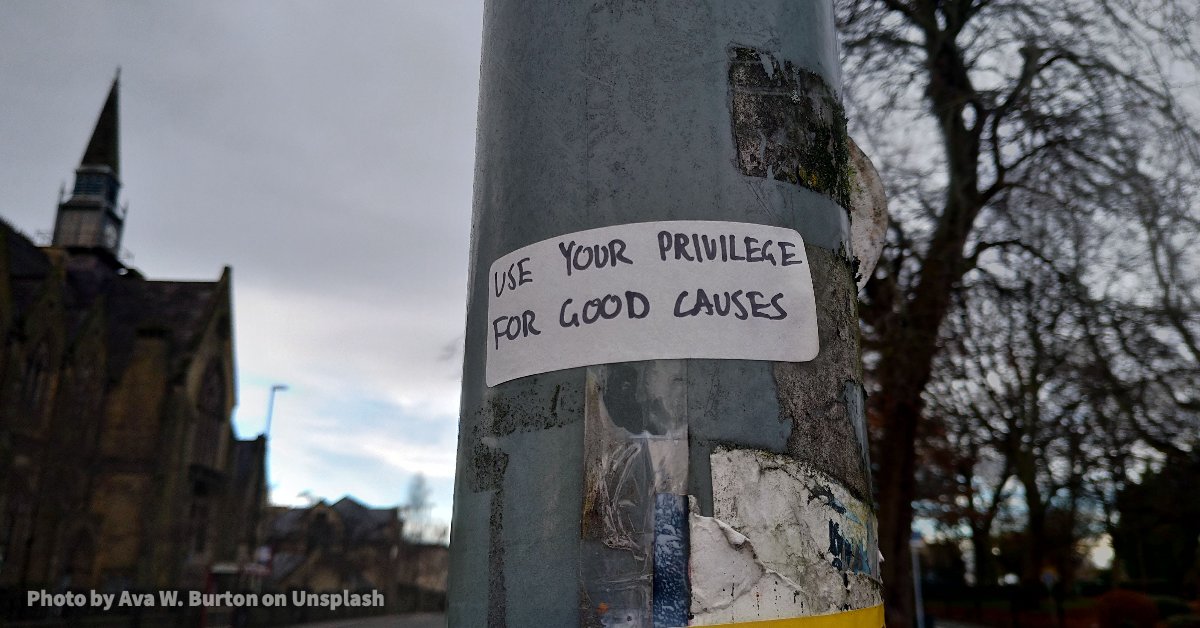
1. Let’s recognize our privilege.
I know “privilege” is a provocative word these days and I don’t choose it lightly. But I can’t get around the sense that I have some advantages. I can make a long list of things in my life I did little or nothing to bring about but that make everything easier than it might have been. Maybe you do, too?
I grew up with two parents who stuck it out through thick and thin and three siblings who didn’t kill me though few would have blamed them if they did. Through junior high and high school, I had a pastor who pumped value into my friends and me and valued Jesus even more than he valued us.
I don’t worry about food, either the amount or the safety of what’s available. Nor water. Nor whether or not I can keep the house warm enough this winter to keep the kids healthy. Nor if there are resources for medicine if they do get sick.
And I know I’m part of a society that is still generally run by privileged people like me (see here, here, and here) and they still generally run it for their (and my) benefit.
To be honest, I’m not sure how to deal with that. If you felt like God was leading you to devote your life to leveling the playing field, I’d cheer you on. But if the lone African American woman in my Perspectives class two nights ago, or the Mexican woman sitting near her, looked at me and asked, “It’s not fair the way the system is organized right now. What will you, as an insider, do about it?” I’m not sure how I’d respond. I hope I would at least listen to them and at a deep, honest level believe what they said.
This irony is not lost on me: I have the privilege to sit in my comfy chair, in my comfy house, and ruminate thusly, fully expecting you’ll read what I type on my new MacBook Pro.
2. Let’s consider what to do with it.
Sometimes Jesus asks us to give up everything, right? That was his prescription for the rich young ruler in Mark 10. Zacchaeus only had to give up half (and four times whatever he had gained by cheating!) Sometimes we expect that to be the vibe: God or a mythical preacher extending his mythical bony finger toward us and saying, “Thou shouldst giveth away thy goods and pecuniary resources!” Fair enough. The Bible shows us there’s a time and place for that.
I prefer the biblical model of stewardship. Every good gift comes down from the Father and is intended to bless his kids and facilitate their involvement in his kingdom-building enterprise. As good stewards we:
Assess what we have, e.g., money, stuff, gifts, abilities, privilege, or even spiritual maturity forged in suffering.
Compare that to the overall goal. Short version: Genesis 12:3b. For the longer version, take Perspectives!
Figure out how the first step gets you to the second.
Critique your stewardship success, but maybe not that of Bob in the pew next to you!
I so want to be faithful and true in this, but often fall short.
Last week, I read a super fun book related to this. (There’s the privilege again: I have the time, eyesight, resources, and security with which to read super fun books.) In More or Less, author and cool guy Jeff Shinabarger asks us and himself, how much is enough, and what would it look like to live a life of extravagant generosity?
Jeff made me wonder what I have an excess of and what it might be like to give that away. Some of the things he did seem easy: Decide how many t-shirts you need and give away the rest. Others, not so much. He and his wife gave up a huge chunk of their backyard to be a community garden. Personally, I need to grow in understanding where I have excess. I’m learning, slowly, how to give away money.
But one thing I have more of than some people is access to the attention of sharp believers. Yep, I mean you, among others. Believing that access to be a gift of God, I want to steward it to the best ends. When appropriate, I want to open doors for people who weren’t born into the privilege I was, but—and this should come as no surprise—have important things to say about God’s global purposes. (If that’s you, I’d love to chat!)
Grace to you as you steward your time, health, privilege, and money. May God lead you in a few minutes of reveling in the good gifts of your savior and the delight of being chosen by him. It might help you to crank Matt Maher’s Alive and Breathing! It sure does me.
Subversive Mobilization: Help Needed
Psst, over here, I’ve got a quick question for you: If God has given you skills in the dark arts of admin and IT, I could use some help. I need someone to help me drop fewer balls and help me with the content delivery I think God may want me to be about. If that sounds interesting (or more importantly, like good stewardship) for you, shoot me a text (719.251.1403). Let’s do some cool stuff together.
Between the Olympic Games in Beijing kicking off at the end of the week and [Tuesday] being the first day of the Chinese New Year, I hope you are taking some time to introduce this holiday to your children!
Need some tips? Some craft ideas? Some recipes? Or to learn about the spiritual needs in China?
You might use Alicia’s Olympic Games Devotionals this month. She writes, “I want to help your family watch the athletes and countries come together in Beijing with the purpose to see what God is doing in each of those countries and how he loves each person from every nation.”
For more insight on religion in China, see The Church in China: It’s Complicated, a short article Joann Pittman of China Source wrote for the UK mission info service OSCAR.