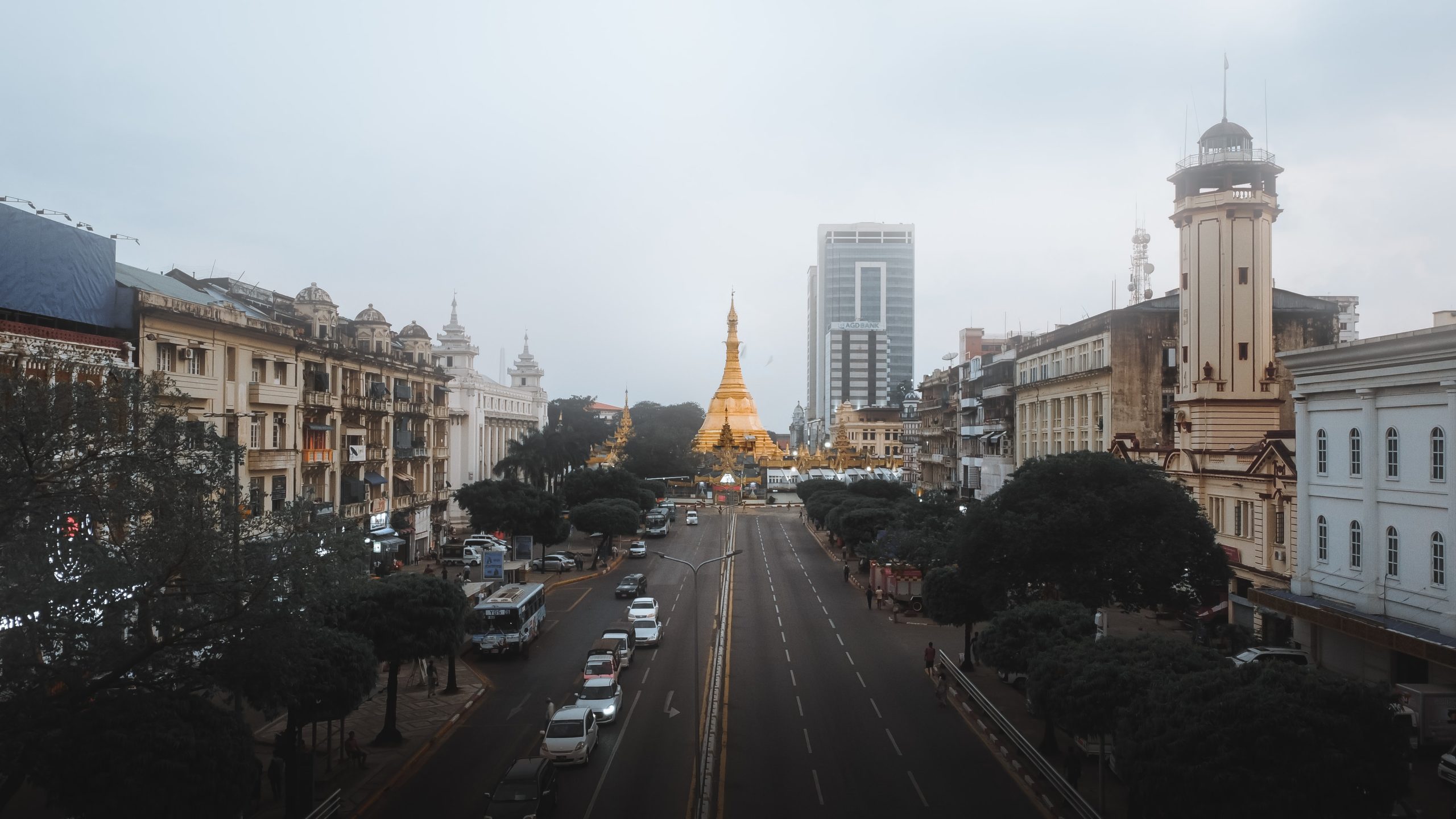
Baptisms Amid Bullets as Hundreds Turn to Christ

Nine months after Myanmar’s military staged a coup and took over the civilian government, the violence continues. Yet so does the church. Learn more about what’s happening in this edition.

In this edition:

  1. Myanmar: Baptisms in the Face of Bullets as Hundreds Turn to Christ
  2. Afghanistan: Taliban Fighters Have Saul-to-Paul Experience
  3. Korea: A Love Sonata for Japan
  4. Kenya: Commitment to Send Missionaries from Asia to Africa
  5. USA: Surprising Insights on Views of Suffering, Salvation, and More

Read or share the email edition or scroll down for individual stories.

Myanmar: Baptisms in the Face of Bullets as Hundreds Turn to Christ

Source: Open Doors, November 2021

Nine months after Myanmar’s military staged a coup and took over the civilian government, the violence continues as the Tatmadaw (Burmese local army) leaves traumatized civilians and destruction in their wake.

Yet like so many situations where God’s people are pressed on every side (2 Corinthians 4:8), faith continues to survive in the devastation. Our local partners report that increasing numbers of people are turning to Jesus for their hope.

Our local partners are aware of 544 people giving their lives to Jesus this year in Myanmar, with 166 of them making decisions to be baptized.

Of that number, 50 new believers were children who have dedicated their lives to Jesus in an Open Doors training last month.

The full story includes pictures and prayer points.

See also Army Attacks Continue in Myanmar’s Most Christian State and Why I Pray for Myanmar with Hope (Christianity Today).

Afghanistan: Taliban Fighters Have Saul-to-Paul Experience

Source: Mission Network News, November 15, 2021

On October 25 the United Nations said Afghanistan is on the brink of the world’s worst humanitarian crisis, worse even than Yemen or Syria. Out of 38 million people in the country, 23 million won’t have enough food to last the winter without more aid.

But the Taliban continues hunting down civilians who oppose their ideologies, including activists and Christians. Greg Kelley spoke to contacts of World Mission inside the country. He says, “Not only that, but they’re identifying communities. Because where there’s one Christian, in most cases there tend to be several Christians.”

Kelley heard a remarkable story from his contacts about a group of Taliban fighters that went out searching for a Christian community. “They went to this community and they killed them all. Now on their way back, they had an encounter with an angel, and this angel rebuked these men and gave them instructions on where to go. Now this someone (they would have no idea who this individual was) happened to be a leader of the underground church movement.”

Kelley says the Taliban fighters laid down their weapons before this church leader, who then proclaimed Jesus to them. Now, Christians have taken them in as disciples in the way of Jesus.

Kelley compares this story to what the Apostle Paul experienced while hunting for Christians. His encounter with the risen Jesus and subsequent conversion is recorded in Acts 9. He says this story should encourage Christians everywhere. “I think it just needs to be a reminder to all of us that we can’t put God in a box, even as we look at the horrors and tragedies of Afghanistan.”

Read the full story and see also Despairing Afghan Refugees Find Aid and Hope and Not All Christians Are Fleeing the Taliban.

Korea: A Love Sonata for Japan

Source: Lausanne Global Analysis, November 2021

Korea and Japan are called, “the closest but the farthest nations.” Yonhap News reports that only 16.7 percent of Koreans have positive feelings toward Japan, while 20.2 percent [of] Japanese have positive feelings for Korea. The Japanese prohibition of hate speech has not extinguished the discriminatory actions against Koreans, and the anti-Japan campaigns in Korea seem to be a political strategy for more support from citizens. A deep gulf still exists between the two nations.

The Christian population in Korea is 19 percent of the total population, while in Japan it is about 0.8 percent. Korea often identifies herself as the “Israel in East Asia.” Japan, to the contrary, is known as the “graveyard of missionaries.”

In the midst of such contrast, learn how a Korean church reached across the divide and contextualized its efforts to share the gospel in Japan.

You might be interested in another (brief) article from Lausanne, Friendship Is Part of Our Gospel.

Kenya: Commitment to Send Missionaries from Asia to Africa

Source: International Mission Board, November 17, 2021

On October 29 in Kenya, IMB missionaries serving in Sub-Saharan Africa and the Asian Pacific Rim signed a memorandum of understanding solidifying the sending of missionaries from Asia to serve in Sub-Saharan Africa.

Daren Davis, the IMB leader for missionaries serving in Africa, said the signing of the memorandum is a historic step toward seeing Asians engage those in need of the gospel in Africa. Davis [also] acknowledged the decades of missions’ investment in Asian countries.

“We stand here today on the shoulders of those who went before us, people who labored in places where the name of Jesus was not known, and now, from those very places, rise up believers who are going to the nations for the sake of the gospel,” Davis said.

Jeff Singerman, who serves in Africa, said the brutal fact is that there are multitudes of unreached people on the African continent. He sees the signing of the memorandum as an answer to prayer. It is a building block to understanding that Christians from other nations can join the task of seeing African churches sending African missionaries.

Singerman said they will host multicultural training to enable missionaries from Asia to be fruitful and successful in the mission and in the calling that God has given them.

“This collaboration might be the greatest contribution the IMB can make in this generation of missionaries. In other words, facilitating connections with those [with] whom we work, so that they can understand their fulfilling and calling to the missionary task,” Singerman said.

Read full story.

USA: Surprising Insights on Views of Suffering, Salvation, and More

Source: Baptist News, November 24, 2021

New research on American beliefs about some of faith’s hardest questions highlights both the nation’s biblical illiteracy and the chasm between what various Christian traditions teach. And it holds a few surprises about how people in the pew actually believe things contrary to their own church’s doctrine.

Pew Research in September dug into Americans’ views on theodicy (why do bad things happen to good people?), as well as their views on the reality of heaven and hell and how one gets to either destination. (See Few Americans Blame God or Say Faith Has Been Shaken Amid Pandemic, Other Tragedies).

While most of the questions produced clear majority views within the American populace, the detailed analysis among various iterations of Christianity reveals deep differences. And it turns out that the majority view on some questions may part ways with orthodox Christian teaching.

For example, 33% of American adults—including 30% of those who identify as Christian—believe in reincarnation. No major branch of Christianity teaches reincarnation, which also has no support in the biblical text.

Read the full story.

See also Bible App Installs and Use Show Global Bible Engagement Is on the Rise (Christian Newswire).