
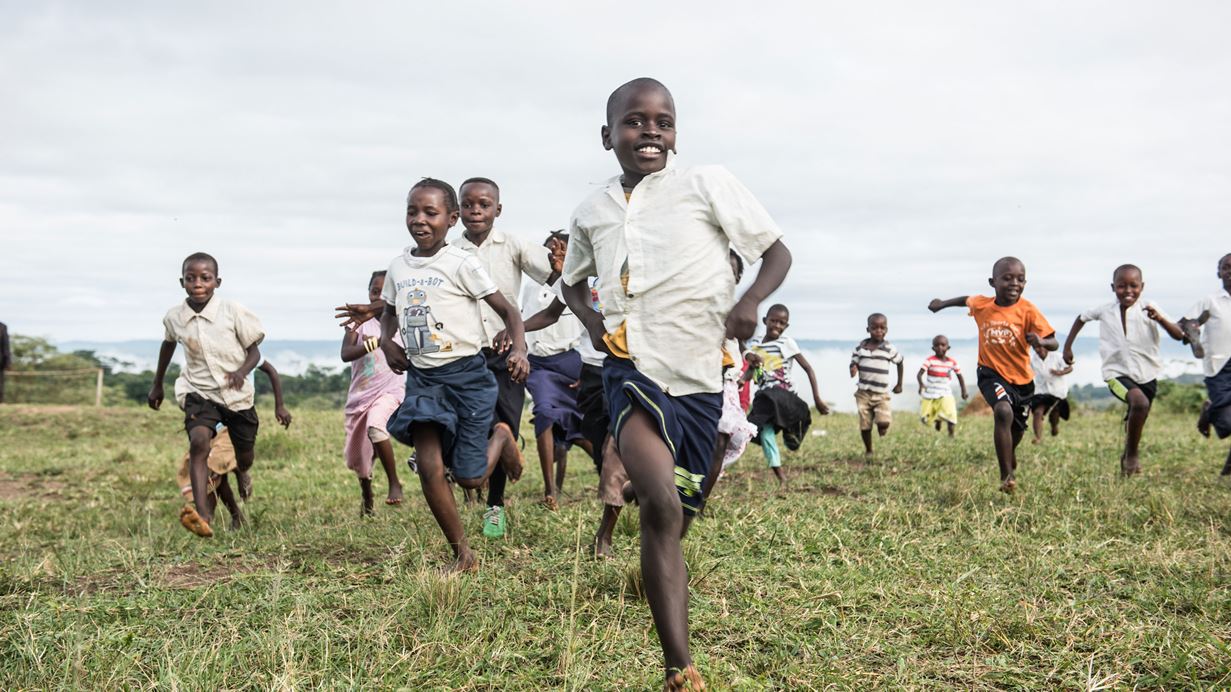
In a year dominated by COVID-19, some other big stories got less coverage. On November 18, the Democratic Republic of Congo (DRC) declared itself free from Ebola for the first time in nearly three years. See the story below (Tearfund).
In a year dominated by COVID-19, some other big stories got less coverage. On November 18, the Democratic Republic of Congo (DRC) declared itself free from Ebola for the first time in nearly three years. See the story below (Tearfund).
Source: Tearfund, December 2020
At Tearfund, we have seen our partners around the world step up and respond to crisis after crisis during 2020. But in a year dominated by the coronavirus pandemic, Tearfund’s News Editor, Andrew Horton, rounds up some important events that didn’t get much time in the news.
From locusts, floods, and hurricanes to positive stories of change, here are seven stories you may have missed in 2020.
» Read the article with links and pictures.
» OMF’s Andy Smith calls 2020 the Year of the Eraser. If you canceled much this last year, you can relate. See also Seven Heartfelt Prayers by Pastors for Their Churches in 2021 (Thom Rainer, Church Answers).
Source: Jubilee Campaign, December 31, 2020
On December 29, it was revealed that lawyers and government officials of the Indian state of Madhya Pradesh have approved The Freedom of Religion Bill of 2020 which has raised many concerns among the nation’s religious minorities. This new legislation, according to Reuters, “would make pressuring a woman to convert to their husband’s religion a crime punishable with imprisonment.”
Just a month prior, the Indian state Uttar Pradesh passed a similar law, the Prohibition of Unlawful Conversion of Religion Ordinance. In both Uttar Pradesh and Madhya Pradesh, officials claim that the legislation is aimed at “curb[ing] religious conversions using misrepresentation, allurement, force, threat, undue influence, coercion, marriage or any other ‘fraudulent means.’”
However, though there is no specific religion mentioned in the bill, critics believe it may indiscriminately target the nation’s Muslim and Christian communities. For some time, radical Hindu nationalists have accused—without credible evidence—India’s Muslims of engaging in a “Love Jihad” campaign by which they coerce Hindu women to convert to Islam with the promise of marriage. Similarly, politicians in Madhya Pradesh have repeatedly criticized and condemned Christian missionaries, who they claim make promises of education and financial support to Hindu women in exchange for their conversion to Christianity.
» Morning Star News reports the arrest of a Korean Christian and several other suspects under the new anti-conversion law in Uttar Pradesh.
Source: OMF International, January 4, 2021
I had a quiet and peaceful upbringing in Cambodia, but the Khmer Rouge changed everything. When I was 21 years old, my city came under attack. My family was rushed out of Phnom Penh into the countryside. The journey was difficult. My mother died on the side of the road, but we had to continue on.
Eventually, separated from my father and sisters, I was forced into a labor camp. I was beaten, tortured, and starved. On multiple occasions, I thought I would be executed.
In the midst of my suffering, God touched my heart. I was harvesting rice and glanced up at a mango tree. I began wondering who created the first crop. Though I claimed to be Buddhist like my mother, I began believing there must be a Creator God.
When the war ended, I escaped and was reunited with my family. We stayed in refugee camps in Thailand, where I met some missionaries. One woman shared the Bible with me and told me about Jesus. When I heard how Jesus had forgiven those who had mistreated him, I was deeply moved. I accepted him as my Savior right away.
In 1992, while living in Canada, I got connected to a ministry that shared the gospel with Cambodians through radio. I harbored bitterness toward Cambodia and never wanted to return. But God made it clear he had plans for me there.
I’ve been living in Cambodia and serving in gospel radio ministry for 20 years. The Lord has given me strength not only to forgive my persecutors but also to love my country. After all, God has done for me, I consider it a privilege to spend my life serving him here.
» Article includes two more testimonies from Cambodia.
» See IMB Commemorates the Service of Single Female Missionaries (Southern Baptist Convention).
Source: Mission Network News, December 30, 2020
On Christmas morning in Lahore, Pakistan, a group of 50-60 Muslim men attacked a Christian church during their Christmas service. They aimed to kidnap and assault the women in attendance.
The security guards and other men at the church fought back with bare hands against the staff-wielding intruders, giving the women time to escape. Many Christian men suffered blunt trauma injuries and fractures in the fight.
Things got worse when the police arrived. Authorities helped the defeated Muslims escape, and blamed Christians for fighting back. Nehemiah from FMI (Forgotten Missionaries International) says, “They scolded and threatened the Christian community, the Christian church, saying it’s illegal to have their own security. [This] is truly an unjustified and illegal action by the police, because it was announced by the government of Pakistan two years ago, that every church must have its own security. They must have their own CCTV cameras, barbed wires, and medical equipment.”
To make things worse, the police have now arrested security guards who beat back the mob, saying they broke the law.
» Read the full story and one with a different ending, Pakistan Officials Stop Christmas Day Terrorist Attack.
» See also Boko Haram Kills Villagers in Christmas Eve Attack (BBC).
Source: God Reports, November 28, 2020
Nasser, who was born and raised on the eastern coast of Saudi Arabia, longed to die for Allah by waging jihad and thus improving his chances of making it into Paradise.
“God had other plans for me,” he says on a Your Living Manna video.
In the summer of 1990, Nasser plotted to run away and join [the] jihad, but Iraq’s Saddam Hussein invaded Kuwait. At the time, he was actually in the United States with his mother visiting relatives and the ensuing world chaos prevented him from leaving.
“What was I going to do? I was surrounded by infidels. You either make [war] against them or you try to bring them into Islam another way,” he says. “I thought Allah brought me here to evangelize them.”
As he learned about American culture, he eventually perceived that born-again Christians were different than the rest of Americans (who he wrongly assumed to all be Christians), and he began to target them because he figured it would be easy for them to switch since they already lived clean lives.
One of those loving and clean-living Christians was a woman with whom Nasser fell in love.
“That was my undoing,” he admits.