Missions Catalyst 12.18.13 – World News Briefs

In This Issue: Origins of a nativity scene, helping disabled children, and more

Greetings!

This week’s edition of News Briefs features a story about how a village family in Southeast Asia was able to hear the gospel when Christians explained to them what the nativity scenes they were making and selling really meant. This month many Christians around the world take the opportunity to share the story of Christmas with those who may have never heard or understood it.

A few more Christmas-related stories which may interest you:
» Learn about a multicultural nativity play featuring performers from more than 50 nations (BBC). Guess where the baby Jesus is from!» Read about Christmas in South Sudan, where more than 20 churches have sprung up in refugee camps (Seedlinks, via OM NewsBytes).

» Our friends at OM also encourage us to pray for brothers and sisters who remain in prison this Christmas.

» Finally, lift up cross-cultural workers home(sick) for the holidays (A Life Overseas). Thanks.

blessings,
Missions Catalyst


About Us

Missions Catalyst is a free, weekly electronic digest of mission news and resources designed to inspire and equip Christians worldwide for global ministry. Use it to fuel your prayers, find tips and opportunities, and stay in touch with how God is building his kingdom all over the world. Please forward it freely!
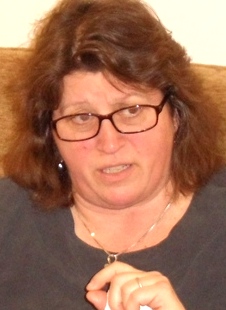
Pat

Pat Noble has been the “news sleuth” for Missions Catalyst since 2004. In addition to churning out the news, she is working to create a SWARM (Serving World A Regional Mobilizers) in Northern New York using the NorthernChristian.org website. You can connect with her at www.whatsoeverthings.com.


SOUTHEAST ASIA: Christians Share Christmas Story with Nativity Crafters

Source: Commission Stories, November 10, 2013

Summer Cole, who lives in Southeast Asia with her husband John and their four boys, steps out of the wooden long-tail boat and walks along a narrow path dented into the straw.

Behind her, Mo Kham, a national believer who works with the Coles, jumps out of the boat and runs to catch up. Stepping carefully through a maze of broken clay pots, scurrying, chickens and bleating goats, the women make their way to potter Thant Lin’s home in the village where people of the Tai people group live.

At the house, an older woman places a steaming pot of tea on the table and Lin serves a cup to Cole and Kham. While they sip tea, Lin lines tiny figures on a low-lying table in the center of his paneled home.

Assembled in a cluster, the fragile clay pieces depict Christ’s birth.

These tiny figures provide Cole access to Lin and his family. She visits Lin’s home a couple of times a year and helps to develop his business while sharing the gospel with him.

Setting down her tea, Cole speaks to the excitement of discovering nativity sets in a market in a country that is 80 percent Buddhist, “I was amazed that in a staunchly Buddhist country there was this little nativity set, and I wanted to find out more. So I went and found what village they come from.”

“I realized they did not know much about the figures they were making,” Cole said. “So I made a plan to come back.”

Included in the return plan was the one-hour plane ride, one-hour taxi ride, and two-hour boat ride required to reach Lin’s village.

When she returned, Cole brought a children’s Bible so the family could look at the pictures as she shared the Christmas story. Though they listened carefully as she told the story, Lin and his family did not fully understand the heart of the message, never having heard the gospel before.

“This is something that they’ll probably have to hear many times to begin to catch the significance of it and understand why I would be so interested in these [sets],” says Cole.

» Read full story or watch this really cool three-minute video.

TURKEY: Embracing Outcast Children

Source: ASSIST News Service, December 4, 2013

California-born Norita Erickson of Kardelen Mercy Teams, based in Ankara, Turkey, where she works with Turkish people with disabilities, has an extraordinary story to tell.

“Turkey is a country of 75,000,000 people and 99 percent of the population is Islamic, some more strongly Islamic, while others are more moderate. But 17 percent of the Turkish population – and that might include some Christian minorities too – has a disability. That’s a very high percentage. Part of it is also a belief in fate. In many Islamic countries, they believe that God has written your whole life on your forehead and nothing you can do will change it. So you don’t mess with fate because that’s what God has given you as the test for your life.”

“I really didn’t understand what it meant to serve the disabled until 1997 when I went into a state-run institution and was shocked to find 400 children who had been sent away to live in this place. They were tied in their beds, covered in their vomit and bodily filth, and were screaming, as there did appear to be anyone there to care for them. No one appeared to know what to do with them and the attitude of the care givers was that these children were ‘cursed’ and they were ‘cursed’ having to work in such a place and so they would just do a little as was needed until they died.

“I was shocked and I ran out of that place and I cried out to God. I was angry. I said, ‘How could You show this to me? I wish I didn’t know what I just saw.’ It was overwhelming – just like going into a concentration camp… I started to cry and I heard the Holy Spirit saying, ‘You are weeping my tears for these children.'”

Kardelen is the Turkish word for a snowdrop flower, the first flowers to emerge at the end of winter when they respond to sunlight.

“I saw these children, and our ministry, like this. These children are hidden away, but they respond to the sunlight of God’s love as we bring it into their homes and into these institutions,” she said.

» Read the full story, which includes links to an interview with Norita, details the struggle she experienced due to her Armenian background, and more. See also her book, Cry Out.

CANADA: Yummo Comes Home

Source: Outreach Canada, November 20, 2013

 It is surprising to many Canadians today that 150,000 aboriginal children were forced to go to Indian Residential Schools from 1831 to 1996 as part of Canada’s official efforts to assimilate the indigenous people. It is not surprising that many victims did not survive the experience.

Yummo Comes Home is the story of an Okanogan/Thompson Aboriginal man who revisits the Kamloops B.C. Residential School building where he was hurt to reclaim and bring back home his boyhood innocence and confidence. The son of a settler immigrant, Don Klaassen, portrays the sentiments of the descendants of the immigrant settlers who are discovering this often forgotten portion of Canadian history.

In this 28-minute documentary video, the two men demonstrate what it means to experience reconciliation and take bold steps to shape a hopeful future.

» Learn more. This is a great story of healing from childhood abuse, and it’s sensitively told. You can preview the entire video online.

SOUTH AFRICA: Praying for Peace and Healing on the Streets of Manenberg

Source: 24-7 Prayer, December 16, 2013

Thursday is prayer walk day, and two friends joined us – their first time walking around Manenberg. We left the office and began to walk, only for people to tell us to get off the road because the gangs were shooting at each other.

We obliged, prayed for and declared peace along the street, and then played with a tortoise in a [shop]. Then we were told it was OK to walk again, because the shooting had finished. We did so. As we went, we saw an old man on crutches. We asked to pray for him. He had broken his hip falling off the roof. He had had surgery, and couldn’t walk without crutches, and even then very slowly and in much pain.

After we prayed healing for him, he began to move his leg freely, and exclaimed that he couldn’t do that previously and it felt better. The pain had left, and movement had come! He then wept as he accepted Jesus into his life, still overwhelmed by getting healed. Then he walked home, waving his leg around as he went, unaided by crutches.

» Read the full story.

An Opportunity for You

As you may know, each of the gang behind Missions Catalyst, Marti Wade, Pat Noble, and Shane Bennett, raises support to do the work they do. Missions Catalyst is a part of that work. If it has been helpful for you this year and you’d welcome a chance to say thank you to and bless Marti, Pat, or Shane, we’d like to offer you that opportunity. The links below will direct you to a donation page at their respective organizations, or, if you prefer, to send a note of thanks.

» Give to Marti, or email Marti.

» Give to Pat, or email Pat.

» Give to Shane, or email Shane.

Thank you for being part of the Missions Catalyst tribe. We’re grateful for you.