Subversive Mobilization: Win at Pastor Appreciation Month

What if the crazy missions people at church (us!) were also the ones who absolutely nailed Pastor Appreciation Month? We typically ask for a lot. What if we showed appreciation the best? How cool would that be? Very way cool!

First off, don’t get your pastor a Bible or a book on being a better pastor! And don’t regift a religious trinket, wall hanging, or mug! Of course, a shot glass with the Footprints poem on it would be an edgy exception to this rule. 

Matt at the Ten-Minute Bible Hour leaned hard on several of his pastor buds, finally convincing them to tell him what they’d really like for Pastor Appreciation Month. The video is more fun, but the list of his ideas below is quicker! 

  1. Fix something for them. Just take your “fixing things kit” to their house, ask what needs to be fixed, and knock it out for them! 
  2. Take total and permanent responsibility for something at church. Tell your pastor, “I’ll take this off your plate to free you for other things.”
  3. Let them try something new. Maybe your pastor has been wanting to try something and you’re a gatekeeper who thinks it’s a bad idea. Back off. Let them give it a go. 
  4. More books. Of their choosing! Consider a book budget, Amazon credit, or a Barnes and Noble card as appropriate. 
  5. Offer some deep-level affirmation. Pick something about them, maybe non-ministry related, and tell them how they’re doing a good job as a parent, a spouse, a friend. Write a letter, not a card.
  6. Heal a relationship, then go together to tell the pastor it’s better now. You’re going to think this is crazy but go to the 9:30 minute mark on Matt’s video. This would be an amazing gift!
  7. Knock out a financial debt. Find one they’re wresting with of a size you and your buds can handle, and just kill it! You’ll give them a tax-free raise, instant relief from minor or major despair, and maybe some sweet momentum on their debt snowball. 

If you’ve got a great idea for a Pastor Appreciation gift, I’d love to hear it.

Travel Posters in a Prison Cell

10 Traps & Distractions that Keep Us from Full Impact in God’s Global Purposes

By Shane Bennett

[You can also read or share the email edition of this article.]

In the past week, I’ve been privileged to watch two women I know do remarkable things. One bought a one-way ticket and hopped on a plane to Faroffistan. She’s going to live there, learn the language, and love and help the people. She raised support and launched during a pandemic. I’m impressed.

Another friend prayed, cried, schemed, called, cajoled, pressured and otherwise worked her tail off to get her Muslim-background-believer friends and a bunch of others out of Afghanistan. She has a way to go to reach her goal, but several people are breathing the air of freedom and security because of her efforts.

Do you want to have an impact like that? I do. I want to do every good deed God has laid out for me. I want to accomplish great things for a great God. I don’t want to miss the full impact God has in mind for my life.

But there are traps. There are distractions. There are things that look good, but only give the illusion of life, like what songwriter T Bone Burnett called “a travel poster in a prison cell.”

Let me be clear: I don’t know what “full impact” means for you. I don’t really know what it means for me. But I believe we want to pursue it and I know there are traps and pitfalls between here and there. Join me in asking which ones you’re prone to.

1. Sometime’s gonna be the right time.

There’s never a totally good time to move to Pakistan! Some times are slightly worse (eight months pregnant) or slightly better (marriage is solid and you’re independently wealthy), but no time’s perfect. I wonder if it’s possible that we fib to ourselves by saying, “We’ll seriously consider going when whatever happens.” Could it be this is an application point for the Proverb:

Do not withhold good from those to whom it is due,
    when it is in your power to act.
Do not say to your neighbor,
    “Come back tomorrow and I’ll give it to you”—
    when you already have it with you.

2. I’ve been there, done that, got the fridge magnet.

It’s cool when global impact is on our bucket list, but we miss our best impact when having done something, we put a big fat checkmark by it! I wonder how much more effective Mormon missionaries would be if 20-30% of them went back for a second pair of years. (Let’s keep this idea to ourselves, eh?)

Like many things, we can expect our involvement in missions to compound in effectiveness over time. Your best contribution might be 25 years down the road.

3. I’m waiting for the big assignment.

My friend who’s getting people out of Afghanistan was in a position to make a difference because she’d been discipling Afghans for a while via Facebook. She was able to do that because she had taken the trouble to go out and meet Afghans in her city. Going to a public event with the hope (and prayer) to meet and make friends with Muslims is a relatively small step. Taking that step, however, can lead to amazing possibilities.

I hope God has huge things in store for you and for me. Maybe you’re up to your ears in one right now! If you’re not, trust God for the results of the small steps you’re taking and continue to exercise the faithfulness in little that qualifies you for big.

4. I’m truckin’ to Tarshish.

I want to soft-pedal this in some way, but I’m just going to ask: Is it possible you’re not having the full impact God has for you because you’ve boarded a boat to Tarshish? Would you be fish bait right now, were not God demonstrating his amazing patience? Maybe you found a good thing to do in order to avoid the scary thing Jesus was asking of you.

I certainly don’t know this about you. But I do know this: It’s never too early to get off the wrong road.

5. God doesn’t (or maybe can’t) use people like me.

The depth to which this notion has been pressed into our psyches is matched by its absurdity. The most cursory look at the Bible will show God specializes in partnering with buffoons! An equally cursory look at the humans around you (and perhaps your own heart) will show that most of us assume we are the sole exception to this rule.

God can use you. In fact, he probably already is. And it’s scary cool what he might do through you as you turn your face to the wind and begin to walk.

6. I’m living the American/Dutch/Kiwi/Indian dream.

All cultures are broken, right? They’re packed full of presents for God waiting to be opened, but yeah, they’re broken. In America, it may be the dream of owning more and better and bigger stuff. Maybe, where you’re from, it’s honoring your family or community above all, submitting to its every direction for your life. I don’t know, but I bet there are aspects of your culture that effectively raise up mindsets and pressure against giving your life to God’s global purposes.

I like a lot of things about my culture, and I don’t like the feeling of bucking it (usually), but I really don’t want to meet Jesus and have him say, “High five, Buddy, you pretty much nailed the American Dream. You could have 10x’d your impact on the world, but, hey, you got to drive a Tesla.”

7. Blessed be the ties that bind (well, not all of them).

I feel like such an old man saying this, but watch out! Entangling alliances can cause you to miss your full impact! A wife or husband is such a gift. The Bible says so. But with four feet instead of two, it’s harder to jump into something new! Add a baby and you square the challenge. Buy a puppy and you might as well forget it! None of those things are bad. You may even want to get a mortgage and buy a house. But do the calculus. Consider the ramifications. Don’t let the vines of normal life keep you from the radical impact God wants to give you and give the world through you.

8. I don’t know which way to walk.

Have you ever tried to plan a trip and been paralyzed by the options? A gazillion flights at different times and prices and do you have to pay for bags? Forty different rental car companies plus secret ones you won’t know until you commit. Hotels with high prices and bad reviews, low prices and mostly good reviews except for the one just three days ago that says this place has gone to the dogs! Ack! So it can be with a world in need. With so many options, how do you know?

For starters, at least, go where the glow is low. Point yourself toward the places or peoples where the least amount of Jesus seems present. There are around 422 Muslim peoples where no one has yet shown up and said, “Wanna hear a story Jesus told?” Give yourself to one of them! 

9. Say no to plateau.

Ask God for the grace and strength to run all the way to the tape. I know people whose gospel effectiveness is stunning, even though they’ve more than earned a rocking chair and an afternoon of watching baseball. To be sure, “full impact” looks different when you’re 25 than it will (does?) when you’re 75. But may God make us all like scrappy old Caleb, “I am still as strong today as the day Moses sent me out; I’m just as vigorous to go out to battle now as I was then. Now give me this hill country that the Lord promised me that day.”

10. We’re all going to be OK, aren’t we?

True confession: I’ve been a mission mobilizer for 35 years and for most of them I’ve wanted to be a universalist. I just don’t think the Bible allows it. Tolerant pluralism may be the current zeitgeist, but God says he’s bringing his kingdom to bear on the earth and Jesus is the king. I want to die inviting people to their rightful place in that kingdom. Join me?

Globe image by Prawny from Pixabay.

You Think You Had It Bad? Check Out This Girl!

back to school banner image with school supplies

Summer Short Shots: The Back-to-School Edition

By Shane Bennett

In my world, it’s back to school time. The three intrepid humans I’ve been riding herd on this summer vacillate between fired up and frantic about returning to the classroom. Excited to see friends, concerned about new teachers, happy that masks are “strongly suggested,” but “not required,” and perhaps secretly glad to be ridden herd on by someone else for a change! 
 
To celebrate the season this is the first-ever back-to-school edition of Practical Mobilization. No back-to-school buzz at your house? No worries. These ideas, for the most part, travel beyond that sphere. Though I’d also humbly invite you to forward this to your friends with school-aged kiddos.

1. Surviving the “Meet and Greet” 

Depending on how tight the COVID clampdown is where you live, you may have a “meet and greet” at your kids’ school in the next few days. Does that several parts of your body to involuntarily clench? Does mine! Then here’s some help for you: Treat it like a challenge to do what Jesus would. For starters, he’d bless your kid’s teacher. Ask how you could pray for them this week. (If you’re feeling super feisty, pray right then and there!) And, he’d probably talk to the people no one is talking to!

The handy acronym FORKS shows you one way to give that a go. 

2. This Girl Had It Harder Than You!

Need a little pre-first-day pep talk? Try sharing the story of Nadia Nadim with your kids. Here are the bullet points: 

  • Born in Afghanistan in 1988.
  • When she was ten years old, her family fled for their lives after her father’s execution.
  • As a refugee in Denmark, she began to excel at soccer.
  • Nadim now plays for the Danish national team and for Racing Louisville Football Club.
  • She speaks nine languages.
  • Oh, and one more thing, she’s one semester away from completing med school!

Watching her TEDX talk might give you a little boost as well!

3. A Challenge on Another Level

Gospel workers around the world face brain-bending and heart-rending decisions when it comes to schooling their kids. For some, boarding school several time zones away is still the best choice. For others, it’s local school or home-schooling. 
 
One of the most poignant photos of any of my kids is that of wee Anna sitting in her Dutch kindergarten on her first day ever of school. New classroom, new teacher, new language!  
 
Since this challenge is real, I’m wondering if as a community we can take a moment and share some prayer and encouragement for cross-cultural workers facing school decisions and the implications of the choices they’ve made. I set up a Google doc where you can share a brief prayer or blessing for our family members around the planet. It won’t take you long, but it might be the thing that gets them through a rough day.

4. Homeschool with Global Purpose

Once you’ve chosen to home school your kids, and some of you have, the question looms large: What curriculum do you use? I’m the last person qualified to answer that for you! But here are a couple of options that have God’s global purposes at their core: Sonlight Curriculum and Unveiling Glory

5. Middle School Survival Training

If you’re a dad of middle school girls, you might suspect there’s no way to navigate those years without tears, heartache, and seasons of moodiness. I agree and have observed that both girls and boys are their rawest, most sin-ridden selves during this time. Even so, I want kids to grow up to follow Jesus wholeheartedly and take the gospel to the most challenging and under-served parts of the world. This one-page survival training might help in a small way.

6. Life Inventory 

Finally, if on that first day of school, having dropped the kids at the bus or building, you sink into the sofa and go into some sort of human hibernation until pick-up time you’ll get no judgment from me. 
 
Assuming your nap need will ease up eventually, though, here’s something to consider that is just tough to do with kids writhing around you like a sack full of snakes: A life inventory.
 
Not an “everything bad I’ve ever done” list, but more like you and the Holy Spirit asking, “Where’s this ol’ train headed?” 
 
I like the approach Ximena Vengoechea outlines, starting with writing 100 wishes on 100 post-it notes. How fun might that be? Don’t panic. Most people don’t get past 30 or 40. (Ximena, overachiever that she is, was at 121 when she ran out of post-it notes!) 
 
A life inventory is probably not going to solve all our issues, but it might just be a fun and helpful way to put to use some of the time that theoretically will be freed up when the kiddos go back to school. 
 
Thanks for reading the Summer Short Shots. Before you head off to your next priority, please take a moment and share a prayer or blessing for missionaries and the kids going off to school. Thank you.

Gotta Get a Passport! Four More Summer Short Shots

gotta get a passport

Quick, actionable missions ideas and a chance to win a $25 Amazon gift card.

Read or share the email edition.

By Shane Bennett

Does it bug you as it does me when people tell others to do something you’re pretty sure they’re not doing themselves? I bet my kids wonder about this when I tell them to take naps, but I stay awake.

Of course, they’ve no idea how much I’d love to take a nap too!

You know the old saying, “Those can’t do, teach.” Hoping to avoid proving this, I work hard to not ask anyone, including you, to do something I’m not willing to do myself.

But this month, I’m sealing the deal. I’m going to implement each of the following ideas. If it goes well, I’ll write about it. If not, I’ll sweep it under the rug! So here we go. Brief but binding.

1. Get (or renew) your passport! 

I know, you couldn’t have traveled this past year if you wanted to, so why bother? Well, my friends, that ship has sailed. Many ships are sailing again, planes are flying, trains are tracking, and God may be fixing to invite you to go somewhere super cool. Most of the least-loved lands on the planet pretty much insist on a passport to let you in. If you don’t have one, it’s very difficult to obey God if he asks you to go love the people there. 

If you live in the U.S. and want a passport, say for a possible trip with me next spring to reach out to Muslim immigrants in Italy, you may want to get on it. According to the State Department, “Routine service can take up to 18 weeks from the day an application is submitted to the day a new passport is received!” (The exclamation mark at the end of that sentence is mine. The chill State Department felt like a period would suffice. But 18 weeks deserves an exclamation point!)

2. Say thank you.

Few things are as easy, appropriate, and beneficial as saying thank you. 

It blesses people to be thanked. It temporarily lowers your social status relative to another person, but in a healthy way. “I received something I needed from you and I’m grateful.” I think it may even boost your sense of gratitude and happiness. One way to count your blessings is to thank those who brought them into your life. 

Around 100 people support my work financially most months. I’m going to give each of them a personal thank you before another edition of Practical Mobilization hits your inbox.

Got anyone you could thank? Maybe…

  • Thank you for the impact and influence you’ve had on my life.
  • Thank you for your years of hard work that accomplished worthwhile stuff for the kingdom of God.
  • Thank you for looking me in the face and saying you accept me. Jesus was speaking through you then.

By the way, thank you for reading Missions Catalyst. I honestly and deeply appreciate it. 

3. Restart the church missions emphasis.

If your church is getting back together in person, maybe this fall would be a good time to grab some weeks to emphasize a big God’s purposes for a big world. Here’s what I’m thinking:

  • Ask for three Sundays, but settle for two.
  • Book a speaker. As gifted as your pastor and others at your church are, there’s something powerful about an outside person talking about things like reaching the unreached. Pro tip: Many speakers have not been speaking much due to COVID. You may want to tell them they have less time than they do, in anticipation of enthusiastic overrun!
  • Design and order a cool, tangible item to give everyone that will connect people to your ongoing mission efforts and remind them to pray. I’m thinking of a stress ball globe with something printed on it that I haven’t come up with yet. You could also go with a bookmark, fridge magnet, or a pen. All solid options. I’d advise against scented putty. Too many ways that’s going to go bad! 

I can guess what you’re thinking: “Hey, if we buy a little doodad for everyone, we won’t have money for the speaker’s honorarium!” Wanna hear a little secret? Having been grounded by COVID, many missions speakers are chomping at the bit so much they’ll speak for free. (On second thought, that might only apply to me!)

Finding a good theme is an early challenge for a missions emphasis time. You want something that builds curiosity and inspires interest and involvement. And it needs to go hand in hand with the giveaway. 

To spark your creativity and entice your involvement, I’m awarding a $25 Amazon card to the person who posts the best theme/giveaway combo for a fall 2021 church missions emphasis. 

Share your best stuff here.

4. Renew a commitment to pray for the world.

You’re probably a better pray-er than me. I lean heavily (inappropriately) toward taking action on my own, rather than praying for God to take action. It’s tough enough to pray for things present right in our own lives. When we toss the net out to include the whole wide world, people we don’t know, places we’ll never visit, it’s a wonder any of us pray for the nations! 

But you don’t have to be very analytical to wonder when, at current rates we’re going to accomplish what God has in mind in terms of gathering his harvest. There’s so much to do, time is of the essence, and it seems like so few are about this work.

So, I’m encouraged to pray. More and better. And invite others to join me. 

A small step any of us—heck, all of us—could take is to set a recurring alarm on our phone at 10.02 am, and when it buzzes take a moment to pray Luke 10.2 as Jesus said, “The harvest is plentiful, but the workers are few. Ask the Lord of the harvest, therefore, to send out workers into his harvest field.”

I’m committing to the near-daily journaling of a brief prayer for the nations. I’m also going to invite our elder team to do the Luke 10.2 prayer!

If you have prayer advice for me, I’d love to hear it. Shoot me an email. Maybe you can help spark content for a future Practical Mobilization article.

Grace to you as you both pray and take the action God invites you to take.

See you in August with more summer short shot ideas. 

Summer Short Shots: Five Quick, Actionable Missions Ideas

If the powers that be just laid another lockdown on you, I’m sorry. Much grace to you. For many of us, though, COVID is loosening its grip. Plus the northern hemisphere is moving headlong into summer.

Since that may mean more time outside and less devoted to email, the next three Practical Mobilization columns will be brief and action-oriented. You’re going to find four to six ideas so good, you’ll be glad you’re reading this instead of fishing, floating in the pool, or playing Frisbee! 

1. Easy Recipe for Cognitive Whiplash

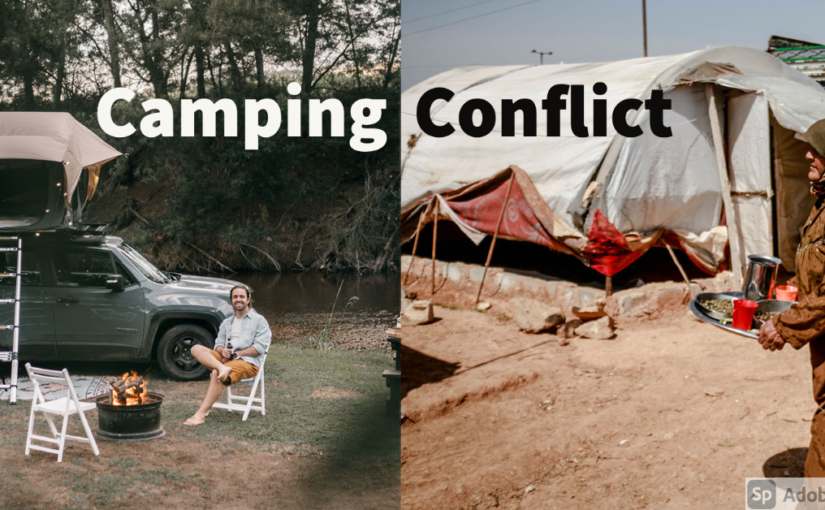
Read a book that details a South Sudanese mom’s experience in a refugee camp while camping, yourself. You just need 1-2 decent tents, a cooler full of yummy food and plenty of water, and a vehicle with sufficient fuel to take you home when you’re ready to stop “roughing it.” In case you’re wondering, the mom in the book was happy to sleep on the ground with her two surviving children, having reached the camp after walking for weeks, dodging militants, and barely staying alive due to a lack of food and water. 

The book is John Grisham’s Sooley and I loved it. A few caveats: It’s also a basketball book. If you hate basketball, you’ll likely want to skim some pages. But hey, we’ve been skimming since high school, right? John Grisham might also be below your literary tastes. And what, after all, does a fantastically rich white guy have to say about the despair and success of Sudanese refugees? 

But I’m thrilled to see Grisham uses his storytelling talent to draw the attention of his vast audience to a situation so gut-wrenching I usually just look away. Read and share this book with your friends who care about refugees and those you’re nudging that way.

2. Get Your Heroes on the Big Screen

Here’s a super simple idea that will help the people at your church know the people your church supports. Ask your missionaries to shoot and send in a 90-second video introducing themselves and their work. All you need is a sincere thank you and one cool story. If they close with an invitation to visit, well, that would rock, too. 

Remember three keywords to make the video better than most.

  • Loud: Make sure the voice is clear and legible.
  • Light: Shoot outside or with plenty of artificial light.
  • Lengthwise: Make sure the video is shot on a phone held sideways. Horizontal will look tons better than vertical on Sunday morning. 

Since video files can get huge, maybe ask them to post them to a Google drive or someplace similar and then share them with you. 

3. Friends for the Fourth

The exploding apex of summer in the U.S. is the Independence Day celebration this weekend. You American? Invite internationals to join your gathering of friends and/or family. Feel a little queasy wondering what to grill and what to say? Check out a recent edition of Muslim Connect for some cooking and conversation tips. 

4. Awaken from COVID Slumber

My boss at Healing Nations said the coolest thing recently: “Let’s help churches awaken from COVID slumber!” Maybe your church isn’t snoozing, but I bet many of your people are ready to ramp up and get going with the Holy Spirit to bring God’s kingdom to bear on the Earth. My church is dreaming about an Alpha Course in the fall and maybe a trip to connect with refugees in Italy next year. If you suspect I’m jazzed about this, you’re right! 

How about your church? Maybe you’ve stayed at full steam ahead or maybe you’re ready to kick it up a notch in the missions department. If you’re a part of a medium-sized church and could use some help in connecting with vetted missions partners for long-term connection, I’d love to chat with you. If your church might be up for giving it everything you’ve got to get boots on the ground among one of the ~450 currently unengaged Muslim people groups, I want to get on a plane, bus, or boat to meet you for coffee. In either case, shoot me a quick email and let’s get cooking! 

5. Ask for the Mic

If you’ve got a missions message burning in you, now may be the time to take a risk and ask if you can share it. I don’t know your church, of course! Maybe this idea is laughable for you! But summer might be the time when your pastor wouldn’t mind a Sunday in the seats. It’s like asking someone out in high school: you won’t know if you don’t ask! If you decide to give it a go, let me know and I’ll pray for you! 

More ideas to come next month.

Rattlesnakes on the Path! Would You Tell Your 20-Year-Old Self?

By Shane Bennett

Here’s a fun question: If you could go back in time, based on current knowledge and life experience, what would you tell your 20-year-old self about missions? Maybe as the bus rolls away from a mind-blowing Urbana Student Missions Conference. Maybe sitting around with your small group from Campus Crusade for Christ (yes, that’s what they called it!) Maybe driving home after date number three with that guy who seems to be God’s gift to women and specifically to you. 

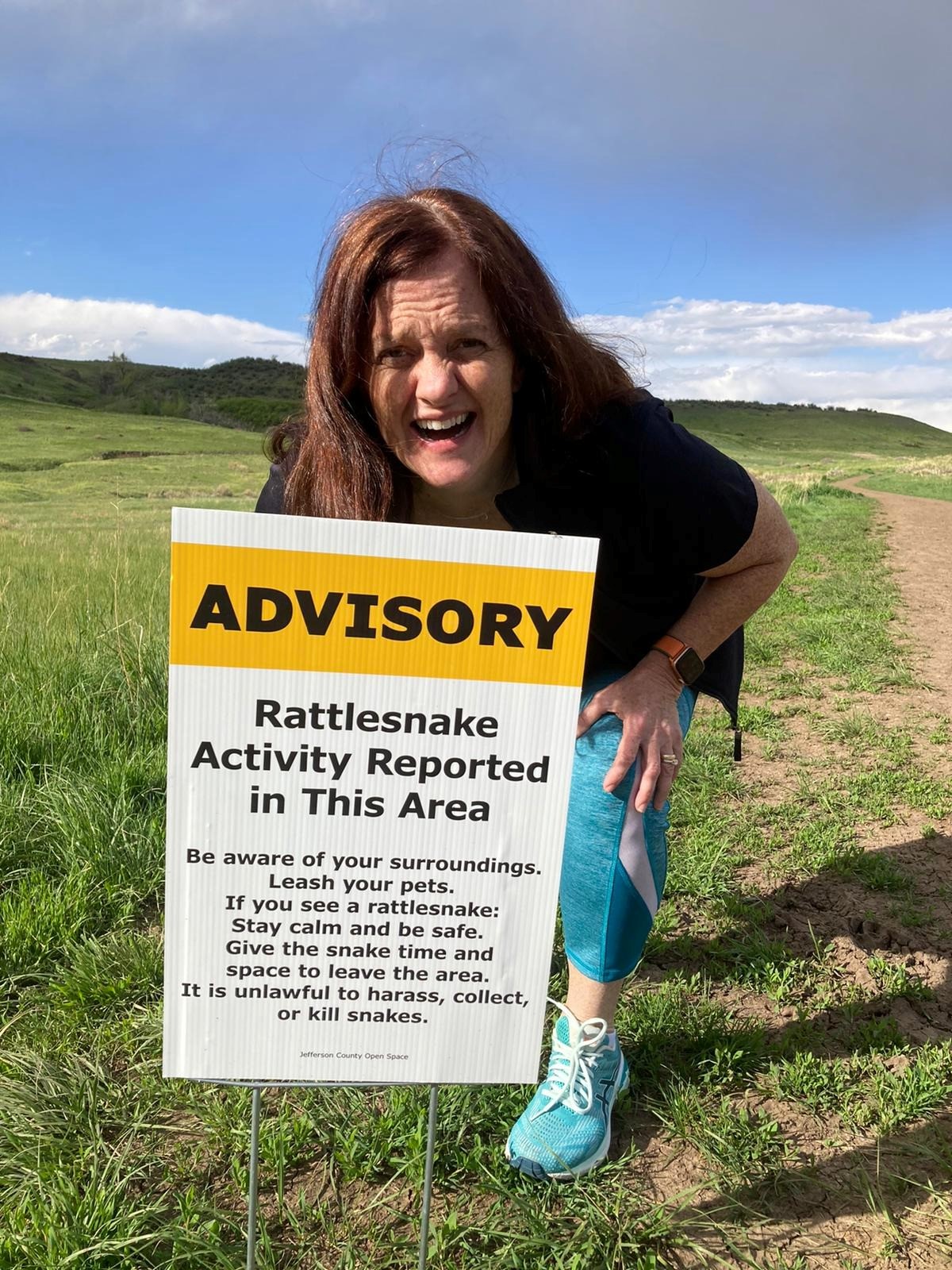
What would you say? Would you have warnings to share? Hope to impart? Like my long-time friend pictured above, would you point out, “There will be rattlesnakes on the path! Might as well expect them!”

For some of us, our 20-year-old self is back a ways! For me, it was 1985. For others, the back-in-time update wouldn’t cover such a span. If going back to when you were 20 would be less than 10 years for you, please let me know. I’m serious. If you’re under 30 and reading Missions Catalyst, take eight seconds to click this link and drop me an email telling me your age. This is a small part of an effort to stave off the, perhaps inevitable, process of us writing for people our own age until we all die! 

In his immense grace, God has kindly blessed me with a boatload of friends. (More like this boat than this one.) They are smart, articulate, and funny, and most can remember being 20 even if it’s been a while. So I ask them what they’d say to their younger missions self. Before I share their wise responses, it’s only right that I go first. 

1. Accept others.

I’d say to young me: “Dude, stop being ‘Judgy McJudgerface!’” I remember with regret some of the dumb things I said about people who had different priorities than I did, particularly when it came to how they spent their money. Of course, this was in part because they had money and I didn’t. Jealousy may possibly have slipped in. In my early missions days, I could have done with a tenth of the judgment and ten times the grace.

Melanie echos that, saying, “I wish I had not wasted time telling people how wrong they are but told them more about how right Jesus is!!” Amen.

2. Listen up.

Several friends would tell their younger selves to relax a little bit and keep learning. To listen more. To ask questions.

Our intrepid editor offers, “I’d probably tell the 20-year-old Marti: Hey, you don’t have to take yourself so seriously. The 50-year-old Marti sometimes needs to be reminded of that, too!”

Lynn says, “I would keep learning and listening to ministry leaders in other countries.”

Pam adds, “Relax, be a learner, and don’t spend so much of your time thinking about what other people are thinking.”

3. Try these practical tips.

Some of my buds are crazy practical. I wonder how life would be different had I known these people and learned from them 35 years ago.

More than one bud said they’d tell themselves to take the Perspectives course as soon as possible. That’s a good word.

Jen says, “Beware of student loans!” Indeed!

Matt advises young Matt to put away money for retirement!

Dave said, “Keep my mouth shut until Christ’s love fills my heart for the Muslims I am with.”

4. Be intentional.

Jon says he would tell his younger self, “Work hard until age 30 in a high-paying job but live with the spending level of a missionary. Invest every dime over your minimal spending for that decade. By age 30 you’ll be able to serve in ministry the rest of your life and money won’t ever be a worry for the future. You’ll be free to follow however God leads, and your donors will be able to shift their giving directly to ministry projects (they’ll be even happier). Simple.” I’m not sure how simple that is, but crazy smart. 

Doug would tell his 20-year-old self, “Find the most fruitful disciple-maker you can find and ask him if you can shadow and assist and learn from him for the next three years. After three years, ask that disciple-maker to help you figure out where to be the most fruitful in God’s kingdom. Unless that disciple-maker tells you otherwise, go to the largest unreached group you can find and take five people with you. The six of you commit to learn the primary heart language and culture and stay there for five years. After the fifth year, ask God what to do next. Rinse and repeat.” 

May God raise up thousands who will combine and execute these last two ideas.

5. Keep your priorities straight.

Several friends said they remind their younger selves to keep God first.

Mike says, “Watch over your heart above all things by staying centered on the King.”

Robby adds, “Yield in advance to the Holy Spirit’s direction and empowering in adjustments (repentance) and assignments (good works Father prepared in advance for us).”

Brett says, “Keep the main thing the main thing: loving Jesus and loving people.”

6. Watch out for pitfalls.

Like me and perhaps you, many of my buds have walked some challenging roads in their efforts to see the gospel go where it hasn’t before. For many, there have been rattlesnakes on the path. Some they dodged, others get ‘em. As a result, their advice to their 20-year-old selves is sober and heart-felt.

Fouad says, “Work while there is light for darkness is coming. Put the hand to the plow and never look back.” 

Amy offers, “Make sure to marry someone who has a God-placed vision that lines up with yours. Even through all the ups and downs of every marriage, if you share a common vision of why God has you here on earth, it will carry you through stronger than most anything.”

Similarly, a couple of friends would pre-remind themselves to keep their family in mind.

Lois learned to say no to some opportunities when she realized that saying yes to ministry was saying no to her kids.

Brett considered, “As a consultant who mostly worked from home, or traveled for seminars, presentations, and training, I wish I had involved my family in my ministry more. My kids follow Jesus, but I think it would have been so much more enriching to have taken them.”

Tim thoughtfully reminds the younger Tim, “Don’t wish to peer into the future as the things you’ll face will seem too overwhelming if you knew.”

7. Don’t go it alone.

Knowing the road will be fraught with hazards and heartbreak, Barbara says she’d tell herself, “Find your journey-mates or a ‘band of brothers.’ Devote yourselves to caring for and encouraging each other and advance the kingdom together.” 

Like someone who knows what he’s talking about, Bret wisely says, “Find a good counselor! Deal with your junk, your family history, and your sinfulness. Find someone you trust and can be honest with. My generation did not do soul work very well. Millennials today are more open to this than we were (thank God!) I have concluded that almost all of us would benefit from going to a counselor as often as we go to a medical doctor! ‘God makes the man, then He makes the ministry.’”

Julie humbly reminds herself, “You’re probably not gonna get it all done by the time you’re 30, more like, you’re not gonna get it all done!” Her husband adds, “Remember there are Kingdom saints who labored before us and saints who will labor after us. Just play the part in God’s generational sweep.” Sad, sober, hopeful words.

Others advised getting in relationship, even submission, to local leaders. It’s easy to think we’re the ones with all the answers. Ethnocentrism is as natural as skin.

Dr. Johnson said, “All theology is contextual, including White theology. And Christianity is not a Western/White religion but a global religion.”

8. Be all in.

Finally, other friends said they’d tell their 20-year-old self to be radical, to be ready to die for the gospel. They’d say to center your coming obedience in a deep love for and from the Father. To focus, like Paul, on laying the foundation where it is not yet. 

My dear friend and mentor Greg says from the perspective of his 80 years, “It’s not what you start, it’s what you leave behind. If you can’t finish it, make sure you find some people who can. And keep laughing at your own foibles.”

Amen. Amen.

What would you say?

I can’t tell you how much I’d love to hear what you’d tell your 20-year-old self! Even if you don’t usually respond to requests like this, please take two minutes and share your thoughts here. I’ll link to this page next month so the whole Missions Catalyst community can read them. That link also has the comments that space prevented being included in this article.

Steps to the Edge: From Stone to Stone to the Ends of the Earth

By Shane Bennett

One of the rare, exquisite joys of life is crossing a stream by hopping stone to stone. I don’t get to do it often. A lack of practice, along with what may be a low innate ability, shows through pretty clearly. But a couple of weeks ago, a great guy at church invited us to come and see some land he’d recently purchased. It consisted of a canyon with a small river running along the floor. The hike he led us on required crossing the stream a couple of times. Ah, the joy! 

Since that afternoon, I’ve been thinking about how cool a metaphor rock-hopping makes for the journey to the nations. If you’ve been reading Practical Mobilization for a while, you know I’m not afraid of being a little cheesy. If perusing these few paragraphs compels you to roll your eyes, I wouldn’t blame you. Or you may feel it’s a little remedial for you. If so, I apologize—but encourage you to use that sense to spur you on to get it in the hands of people who might not have thought of these things yet. 

Crossing the Stream: Fundamentals 

What about Those Who Don’t Go?

Two of our party didn’t cross the stream. In my mind, they represent people who are not going to the nations. In the past, I might have thought of them as dummies or immature, worldly believers who don’t care about the important stuff like I do. Now I think of them as real people, children of God who are probably really smart and with whom God is pleased. 

That’s because, as passionate as I am about getting bodies in the last places and among the least-reached peoples, I’m also growing in the realization that Paul is right: There are different gifts, but the same Spirit; one body made up of many vital parts

One of the two who stayed did so because she’s recovering from an injury. Next time we go, she may lead the way. Feel free to listen in as I say this to myself: “Give people a chance to heal, to deal with their stuff. God’s probably not feeling as rushed as you are!”

Who Helps Goers Go?

My friend Greg, who owns the land and had done the walk a few times before, wore some nice, tall rubber boots. This allowed him to stand in the stream and hold the hands of the hoppers. He even lifted some of my kids from one stone to the next. This may be the role many of us play. In a thousand tiny bits of encouragement, along with a few big ones, we help the goers get gone. 

Sometimes this feels like an also-ran, second-rate, B-team role. I’ll tell you what though: If Greg had not helped our kiddos navigate the stream, the whole hike would have come to an early and tearful end. 

Are you a rock-hopper helper? Hear me clearly: You matter. Probably way more than you think. Keep at it! 

One more fundamental observation: As fun as the stone stepping is, the goal is actually getting across. In this analogy, the work is on the other side. You gotta cross to get there. Some of us from somewhere need to get where none of us have yet been. Get hopping!

Your Dream Stream-Crossing Team

Visualize a stone path across a stream and those who are crossing with you. You need each other. Let’s take a closer look at the key people and relationships.

1. Your Spouse

While single women have done much of the heavy lifting in taking the gospel to the ends of the earth, most of us will partner up. If God’s nudging you toward the least evangelized parts of the world, do your best to find someone who’s similarly compelled. Let’s be honest, it’s almost always easier to live where you grew up than to sink your roots into a new culture. And marriage isn’t easy anywhere. Choose wisely. (And remember, grace abounds and God thinks you rock!)

2. Your Church, Agency, and Team

Start as early as possible to get known by a church that might someday lovingly launch you out. Build a track record of service there.

Many of us would be smart to link up with a sending agency. There are a gazillion, though. So how do you choose? Ask someone smarter and older than you for starters. My friend Jeannie Marie who is smarter (but not older) than me offers this great list

Few of us will go alone. Consider carefully who’ll you’ll team up with. Do you have the same ministry goals? The same vision for team life? Similar ideas about how to have meetings when you all have noisy little kids?

3. Those All-Important Partners

Americans (like me) can so easily think it’s all up to us. But God has got so much going on. Increasingly, our role might be to come alongside and serve the efforts of intrepid local pioneers who have crossed smaller cultural and geographic distances to begin new ministries among previously unengaged peoples. How can you help?

The Stones of Preparation

You may not be able to drop into an unengaged situation and find a viable, productive role being who you are right now. Ministry in most parts of the world requires training, preparation, and development. I’m guilty of a “we just need warm bodies” mobilization, but the reality is that it’s tough to live in another culture. And if you’re going to work a job or run a business in a “foreign to you” place, you probably need to be very good at what you do. 

So imagine the stones across the creek being the aspects of preparation that will get you from here to there. 

1. The Stone of Study

What does that early stone look like? Should you get a Bible degree? A welding certificate? An MBA? Given my inability to predict the future, sometimes I think, “Just jump to the rock you can reach!” Look at how God has made you, then ask smarter, older people what they think. Take a step, knowing you’ll probably skip to a different stone before too long!

2. The Stone of Practice

Starting as soon as you can, become proficient at what you do. A track record takes time. The best time to begin building one was “before now.” The second best time is when you finish reading this!

3. The Stone of Service

Hop over this rock and you’re going to take a bath! Even knowing that, I’m tempted to sneak around the service stone. But nothing replaces cleaning toilets, taking out the trash, and working in the nursery. Whatever the other side of the stream holds for each of us, the essential nature of the disciple is servanthood. It wasn’t on a whim that Jesus used some of the most precious last moments of his life on earth to wash feet! 

Finally, for some of us, getting to the place across the river where God wants us will require following a well-trod path. We might even be blessed to watch others go from stone to stone ahead of us. Thank God for that. 

But my heart longs for unengaged peoples to get what might be their first gospel attention. The path to places where those peoples live is yet uncharted. You might have to launch out on your own. You might do what I did on our hike: Toss some stones into the stream to fill in gaps too big to hop. Let’s not be cavalier, but let’s also not bemoan lack of precedence when God is calling us to set precedent.

Conclusion

If you’ve ever crossed a stream like this, you know a couple of other things as well, don’t you? Some of the rocks are slick with moss, others wobble and tip when your foot lands on them. In either case, you could end up bum-down in the creek. It’ll happen. Grab a hand and get up. Shake and shiver. Then keep going.

If anything in my life is certain, it’s this:
The other side of the stream is worth getting to.   


Editor’s note: If you know someone who could use some encouragement on their “stream crossing,” please forward this to them. If your heart longs for unengaged peoples, give Shane a shout.

Let Us Praise Valiant Women

By Shane Bennett

At one of the lowest points in my life, a colleague in the cause conspired with her tribe to invite me out to spend Christmas with them. It may have been the kindest thing anyone has ever done for me and I suspect I’ll never forget it. This act, added to Sarah’s track record of coordinating Perspectives classes and leading her church’s missions efforts, sealed my respect and admiration for her. 

Since one of the stated goals of Monday’s International Women’s Day was to “celebrate women’s achievements,” I thought I’d use this month’s edition of Practical Mobilization to raise a toast to women who’ve sparked and shaped my global journey. Some I’ve known, some are from history, and one is fictional. 

As I reminisce, I pray that God will bring to mind similar women in your life. Perhaps you could send them this brief article, buy them a coffee, or symbolically place some flowers on their grave. 

A Youth Grouper Who Told Me to Go

The first woman who encouraged (nagged?) me to become a missionary was a fellow youth grouper, Beth Brosher Hasz. I don’t know where Beth got her fiery passion, but her frequent words to me made me determined to flee the call! I suspect her words to her Father, though, were instrumental in my eventual inability to avoid it. I saw her work similar magic on a pastor we had in common. Beth went to be with Jesus early, but her influence ripples on.

A Praying Grandmother

My decidedly non-charismatic grandma used to pray and worry for me when I traveled. At least that’s how it was until Jesus showed up at the foot of her bed one night and told her to keep praying but let the worry go. To her credit, she obeyed on both counts.

A Global-Minded Teacher

My hands-down best professor through four years at Ball State University was Dr. Alba Jean Rosenman. She wagged her cosmopolitan finger and challenged me and twenty other sophomores, “Before you marry, buy a house, and settle down in Muncie, Indiana, you need to get out of America for a while!”

Her nominally Jewish, Argentine hackles were raised when I took her up on that and spent a summer learning to sympathize with Palestinian refugees in Jordan. 

Two Hospitable Hostesses

I was first introduced to Islamic hospitality by one of those Palestinian refugees; an unnamed and unseen (she hid behind a curtain) wife who served cubed, seeded watermelon to me and my friends in the pre-dawn hours when her husband invited us over after early morning prayers.

Later I enjoyed more examples of Muslim hospitality in the tiny apartment of a Memon family in Bombay. I enjoyed the food offered whenever we visited, but looking back, I appreciate the resilience and innovation that Memon mom exhibited as she kept her household afloat with three kiddos. When we asked the daughters about their father, they simply replied, “he is deceased.” 

A Capable Co-laborer

I once led a team of bright North Americans for a summer of cultural research in Turkey. My assistant team leader was a Canadian woman named Ann Marie. Her responsibility was to coordinate the actual research and she did it brilliantly. In truth, she could have done my job as well as hers, while there’s no way under the sun I could have handled her role. 

A Mentor Who Opened Doors

When the small mobilization agency I worked for decided to move from the Netherlands to the UK, Linda Harding, a national-level mobilizer in her own right, kindly and boldly agreed to vouch for us, open doors, and help us find a place for our ministry.

During an early visit to Liverpool we stopped by a sandwich shop and I had no idea what the proprietor was saying, even though he was speaking English. Linda graciously confessed, “I can’t understand Liverpudlians either.”

By generously lending her credibility to our youthful, outsider efforts, Linda gave us life!

A Model of Ministry Faithfulness

With Linda’s wisdom, we settled in lovely Bradford where my family began attending the parish church five minutes down the hill from our house. Our neighborhood was probably 90% Pakistani-British. St. Margaret’s Church was a lovely example of living out and giving out the gospel in a largely Muslim community.

There was no greater example than the woman who ran the weekly homework club. For a good portion of each evening, the classroom looked like it could have been the set for the tornado scene in a live production of The Wizard of Oz. But she stuck it out, giving her all to help neighborhood kids of all creeds and colors succeed. 

Two Weary Women Who Didn’t Give Up

Likewise, two winsome, but weary saints, nameless to me, but not to God, ran a Catholic help center for refugees in Catania, Sicily when I first visited. They graciously gave of their valuable time, helping us understand the migrant dynamics in the city. As they turned out the lights and locked the door at the end of one visit, I sensed both their fatigue and the realization if they could just stay awake a couple more hours, they could help more refugees.


An Intrepid Influencer

My respect and love for Melanie Mitchell, Louisville legend and Perspectives leader extraordinaire, is also immense. She and an intrepid corp of women across the US have argued winsomely and effectively with predominately male missions pastors and gatekeepers to bring the life-changing Perspectives course to new places all over. 

Several Smart Strategists

Melanie also blessed me with an introduction to Dr. Florence Muindi, one of the smartest people I know. Florence knows Jesus, she knows lots of stuff and she knows how to get things done. If she wasn’t living in Kenya and changing the face of cities throughout Africa, I’d be asking her questions every day! 

Closer to home, but just as smart, Carol Davis has been over the past several decades an unassuming but brilliant, low-key but relentless strategist for the advance of the kingdom of God among unreached peoples. I am one of many who have falteringly put her ideas into action to good result.

Finally, my regard is so high for Marti Wade, my friend, colleague, teammate, editor, and encourager. When I grow up, I’d like to be able to think and execute like Marti.

And Many More

I lack the time, space, and expertise for an adequate look back at women’s remarkable impact on the advance of God’s kingdom over the 200 years. Think Lottie Moon, Amy Carmichael, Susanna Wesley, and so many others. Even Rachel Lane, the missionary heroine of John Grisham’s book The Testament. (If you haven’t read it, can I suggest giving it a go?)

I am so grateful for these moms and missionaries. I celebrate the God-empowered achievements of these pastors and pioneers.

Grateful for You!

And you, women readers of Missions Catalyst, I celebrate you—both who you are and the wonderful things God is giving you grace to accomplish. You are not overlooked today. You are a co-heir with Jesus, a force to be reckoned with, an agent of the Most High’s kingdom from the end of the block to the very ends of the earth.

13 Reasons We Say “No” When Asked to Go

By Shane Bennett

Back in the day, both sets of my grandparents, newly married, attended a missionary revival meeting in their native Dover, Delaware. The preacher was fiery, and the call ignited in their hearts. At the end of the week, they packed their meager belongings in caskets and sailed with the tide.

All four of them succumbed to disease before they’d learned the language, seen the first convert, or had children of their own.

I know what you’re thinking: “Hey, wait a minute, Buddy! They didn’t really pack their stuff in coffins!” You’re right, they had Samsonite like everyone else (sans wheels, though!)

Of course, this story is not true. But it hearkens back to the day I imagine mobilizing for missions was simpler, more direct, with a much shorter on-ramp. “The Bible says it! The heathen need it! Let’s do it!” That must have been nice.

The Teacher in Ecclesiastes 7 says, “Do not say, ‘Why were the old days better than these?’ For it is not wise to ask such questions.” I suppose he’s right, the grumpy old man!

But I’d rather ask this question anyway: If someone who loves Jesus hears a kind and thoughtful invitation to devote their life to cross-cultural work in another country, what are some of the most common hurdles that will quickly emerge in their minds?

My personal data may be tainted by the years I’ve spent pondering this. So I reached out to friends on Facebook. See the post. Many generously responded. No question is perfect and mine may have missed by a mile, but aside from those trying to correct it, the responses are helpful and provide a window into how people see the invitation to join God in his global purposes.

The reasons may seem familiar. Luke mentions some of them when listing responses Jesus heard when he said, “Follow me.” Mobilizer extraordinaire Todd Ahrend says he has heard some of the same excuses going from campus to campus over the years.

My Facebook friends don’t reflect everyone, but they’re probably a good cross-section of churchgoers in the U.S. If you ask your average “pal in the pew” to consider becoming a missionary, odds are good a negative response will be undergirded by some combo of these 13 reasons.

1. I tried it. Didn’t work.

This touches me deeply. One friend said, “Well, I tried and the church wouldn’t send me, so.” Of course, there are some candidates even the most wild-eyed mobilizer wouldn’t want to endorse. People living a double life. People who don’t know the Bible from a beanstalk. But I wonder sometimes if our bar is set too high and our categories too stringent.

2. My spouse is not down for it.

An easy excuse? Possibly. But it’s also a reality for many. There is no “wayback machine” on marriage, so let’s be careful not to water seeds of discontent.

3. What about my kids?

It can be crazy hard to imagine taking kids into another, often poorer, culture. I’ve been there. One friend said, we “decided we will wait until our kids graduate.” On the flip side, there’s a long list of benefits to taking kids to other cultures. But to be honest, the benefits are paid for in tons of work and no small amount of risk.

4. What about my family?

One friend imagined “the guilt of taking my toddler away from both sets of grandparents who waited so long to experience this role and close relationship.” Another shared how she served as the main caretaker for an aging parent. Jesus talked about loving him more than family, but also had things to say about honoring those so close to us.

5. I’m not equipped.

“I grew up being told I was worthless.” Though buried deep, that shame still manages to exert a sneaky influence on us. Alternatively, we recognize capacity in our lives but have concluded it’s not what’s needed for mission work. We’re not very spiritual. We don’t know the Bible like Beth Moore. Try as we might, we struggle to be kind and good.

6. I’m too old.

This used to be a better excuse than it is today. Old people rock in many parts of the Muslim world. But old people are often tired people. I get that, though surely not as well as I’ll get it in ten years. And let’s be honest, “old” is not entirely based on chronology. There must be a dozen other factors determining our “oldness.”

7. My health issues say no.

From chronic disease to food intolerance, many of us struggle with situations that would be exponentially more difficult and embarrassing to deal with in a different culture. The world’s getting friendlier in this regard, but challenges remain.

8. I’m not going to raise support.

Ah, this is a classic one, isn’t it? Usually, it can be cloaked in one of the reasons above, but some are as honest as my good bud who said, “Fundraising makes it a non-starter for me.” For most of us reading this, support raising is still intrinsically a part of missions. And it’s still painful for most of us.

9. I’m not called.

The second classic! I love how an uber-cool pastor friend of mine responds to this, “It isn’t the only way to serve God and his Great Commission. Don’t wait for some magical call. Rather, I would say that every believer should give themselves completely to the Lord and his authority and his biblical callings and get fully engaged in God’s kingdom project. Then see where he leads you, wherever that might be, even if it means staying where you are or going overseas.”

10. I’m doing the thing God’s called me to and it’s here.

It’s hard not to be zealous when you really want to see the Great Commission completed. But it’s true: God doesn’t call everyone to be a missionary to the unengaged. While we all should hold our vision and assignment with open hands, we mobilizers should not be guilty of dissing everything that’s not our thing.

11. Better to support and pray for indigenous workers.

There’s data to support this idea. But there’s also a big God who can use anyone anywhere and seems to find fun in doing so.

12. Everywhere is a mission field.

Missionaries earn a special badge for keeping their smiles on when a pastor follows their message with, “But really we’re all missionaries in our homes, neighborhoods, and workplaces.” We dare not deny God is at work all over, using his followers in a myriad of ways. That said, I love what my friend Jay asserts: “The mission field is foreign, cross-cultural work. It’s difficult and taxing work, unique work, sacrificial work. I think we dishonor those cross-cultural workers when we don’t distinguish their work from Christian work in one’s own culture.”

13. I don’t love people enough to make that sacrifice.

I appreciate this honesty. How many of us value comfort and security over the riskiness of following Jesus into unknown territory? Most, I suppose. Let’s be honest about it. Without condemning, let’s take a deep, long look, allowing the grace of a good God to do its work on our guarded souls.

I’d love to hear what you’d add to this list. You’ve most likely heard (and used?!) additional reasons.

Finally, to be clear: I don’t mean to mock anyone for feeling and thinking what they do. I don’t know their path. I have no idea, usually, of the battles raging behind the shield of their church smile.

But I do want to change a few minds and open up the possibilities.

To that end, I need to understand and connect. As Brené Brown reminds us in this cute, but potent little riff on empathy, being next to someone in their hassles, issues, and excuses spawns connection.

May God give us grace to:

Get close.

Listen intently.

Quote Jesus carefully.

Challenge boldly.

Love relentlessly.

The World Is My Neighbor: Learning from the Good Samaritan

Neighbor - PM

By Shane Bennett

John Wesley, a personal hero of mine, famously said, “I look upon all the world as my parish; thus far I mean, that in whatever part of it I am, I judge it meet, right, and my bounden duty to declare unto all that are willing to hear the glad tidings of salvation.”

I enjoy the contrast of Wesley’s generous sentiment to the apparent caution of the expert in the law whose question to Jesus prompted Luke’s account of the parable of the Good Samaritan. Having established that the greatest commandment was loving God, followed by loving neighbors, he pressed to see who all might be included in the “neighbor” designation.

The lawyer asked how to be a good Jew. Jesus told him to be like a good Samaritan! Show mercy to those who need mercy.

I love this story more every time I circle back around to it. It has power over millennia and lessons for us in these crazy days. If you have a moment, read it again, then consider these three observations and one question.

1. Jesus nails the first response.

The lawyer opens the chess match with, “Teacher, what must I do to inherit eternal life?” Jesus could have pulled out a copy of the Four Spiritual Laws, shown him the Romans Road, or maybe drawn the Bridge Diagram in the dirt for the guy. Instead, he responds with, “What is written in the Law? “How do you read it?”

This is such a good challenge for us in these days of information whirlwind, fake news, and deeply held but biblically suspect ideology.

When we feel strongly on an issue, let’s ask ourselves, “What is written? How do you read it?” and then ask the same question, kindly and carefully, of fellow believers, concerning the issues of the day.

Let me be clear: I’m not accusing you of “biblically suspect ideology.” I’m confessing that some of my thinking might be unbiblical—and inviting us all to consider that it could be true of any of us.

2. Jesus sticks the landing.

Jesus ends the brief episode with a question: “Who of the three was neighborly?” Then when the lawyer bravely stated the obvious and correct answer, Jesus said, “Go and do likewise.” So simple, so brilliant. And so important for us today.

Knowing what Jesus says is valuable. Doing what he says, however, is the main payoff. Jesus wraps up the Sermon on the Mount with the “house on the rock, house on the sand” illustration. If you hear and do what God says, you survive calamity. I so long to be one who both hears and does what is right. I’ve racked up way too many points in the know column relative to the points in the do column.

After reading the Sermon on the Mount, I’m particularly challenged to go after the warm, godly characteristics of “peacemaker,” “salt,” and “light.” Want to join me? Perhaps show the way?

3. A bad guy is the good guy.

Ah, to be a storyteller like Jesus. He knew his culture so well. He had the right measure of boldness, cheekiness, and sport. If he told the Good Samaritan story in your church come Sunday morning, who would be the good guy? A Mormon? A Muslim? An American? A transgendered, illegal alien? The deacon’s daughter who went to college, left the church, and got all liberal?

Jesus has a way of cutting to the chase, doesn’t he? Of raising a mirror to show us our moral prejudice and our grace parameters.

At the same time, by choosing a bad guy Samaritan to be the good guy in his story, Jesus is telling us this: I’m down for using you to do my kingdom work. If a Samaritan is fair game to show a Jewish lawyer how to act, then you’re not too dumb, too old or young, too short on the raw material, too privileged or underprivileged, too red, blue, rural, urban, or weird. Your checkered past doesn’t stop him. God delights to use you.

Last night I met a farmer from the middle of nowhere, Idaho, who retired, took his wife’s hand, and moved to the Middle East for several years to love Muslims. It may be a side note in the story, but don’t miss it: Kingdom work is open to pretty much anyone willing to take a detour, drop some coin, and get their donkey dirty.

4. How do you love like a Samaritan?

Jesus told his tester, “Go and do likewise.” Be a good neighbor. Act the way the Samaritan did. God knows there are plenty of people right now who feel like the universe has conspired to beat the tar out of them, take their stuff, and leave them for dead.

Maybe you share that sentiment. You feel like you’re on a playground merry-go-round, barely keeping your grip as it spins. Then a big kid comes along and gives it another push. Maybe you feel like the US election and subsequent events have yanked the rug out from under you. Perhaps the pandemic, the school closures, or the economic stress has you hanging by a thread.

I’d be honored to come alongside you in prayer. I suspect I can relate to some though certainly not all of what you’re facing. Tell me how I can pray. If the Holy Spirit’s nudging you put the words of Jesus into action, to act like a good Samaritan, here are three things to consider.

Look.

Odds are good you won’t see a robbed, beaten, left-for-dead dude on your way home from work today. But you may pass someone in the hallway at church who’s on the ropes. The person in front of you at the grocery may be only barely holding their stuff together. And if we dare to consider it, there are whole nations of Muslims, Hindus, and Buddhists reeling under the assault of the virus with no one even whispering, “Jesus is for you.”

There are times when I don’t want to look around. Like a priest or Levite, I want to lower my head, avert my gaze, slide on over to the “enjoy my life” side of the road and let the rest of the world be. But Jesus calls me, us, to look.

Will you consider with me, to whom is he asking you to be a neighbor this week?

Listen.

Jesus could have directly responded to the lawyer’s question. He certainly knew the answer! Maybe his response was more than Semitic pedagogy. Maybe Jesus wanted to let the guy talk. I know that today we show care for people when doing that. David Augsberger says, “Being heard is so close to being loved that, for the average person, they are almost indistinguishable.”

It feels empowering to yell. Cathartic to confront. It may feel imperative to get your take on the table. But it’s safer to listen. And there are people around you who need to be heard today. Simply holding your tongue and taking the time to nod your head and say, “Go on…” could mean so much.

To whom might the Holy Spirit be prompting you to listen today, this week?

Love.

Finally, we act as a good neighbor by loving people who need it, those whom God puts alongside our path.

Let’s be honest: Loving costs. It costs time and money and involves taking a risk. If we choose to love, we might have to trade in being right, at least temporarily.

In a deep way, I want the Church to be known these days for its love. If that’s going to happen, it probably needs to happen first in me and you. Jesus’s life and death show us the way. May God empower, encourage, and release us to “Go and do likewise.”

Who might God be asking you to love in a fresh way this week?

Grace to you as you do so.