Colombia: People Group’s First Known Believer Baptized

Source: International Mission Board, May 31, 2022

In 2021, IMB published a story about missionaries Travis and Beth Burkhalter and their work among the Embera people of Colombia. Travis was learning a difficult and unwritten language to share the gospel with an unreached people group.

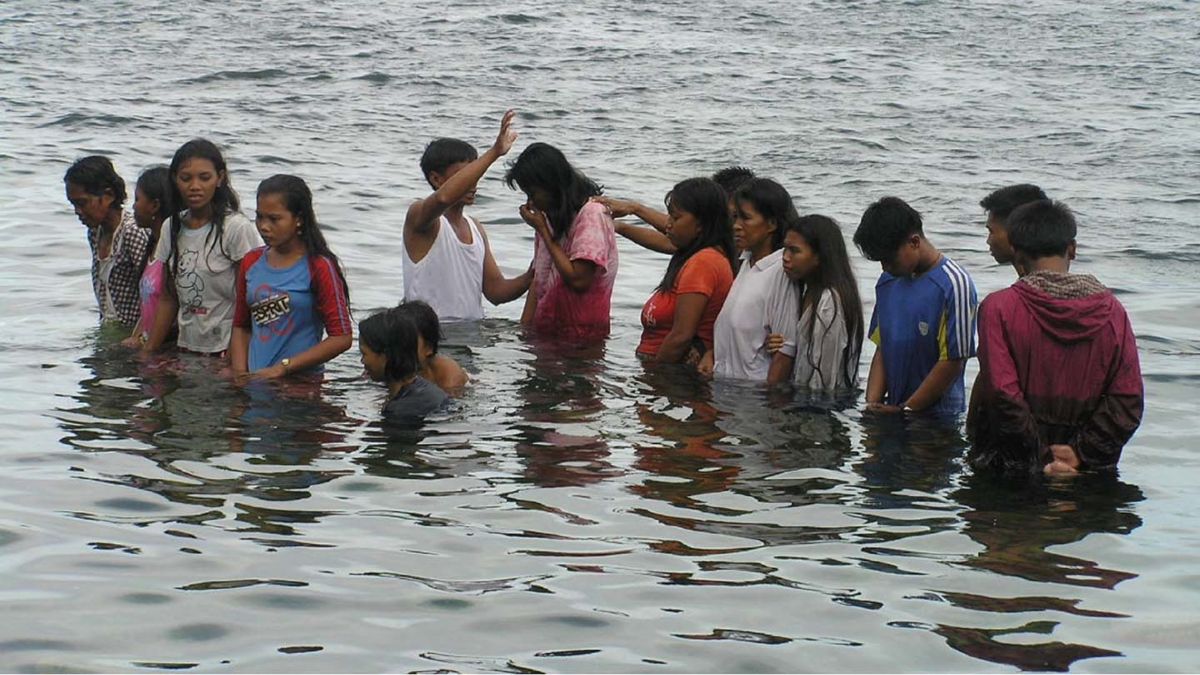
In early April 2022, Travis waded into the rushing waters of a jungle river to baptize Sarah, the first known follower of Christ among her tribe. With tribe members watching from the bank of the river and on nearby rocks, Sarah took this bold step of faith.

Sarah explained her decision to accept Christ with her community. The Burkhalters and others on the team shared with her for three years. As Travis learned more of her spoken vocabulary, he taught Bible stories in her heart language. The more she learned, the more she understood the truth of what Jesus had done for her. Finally, she expressed her belief in Christ and desire to follow him.

Ask God to use Sarah’s testimony and witness to bring many more of her people to salvation.

Read the full article and the previous one for a good description of challenges and strategies for working in this region.

See also Colombians Face Violence Just for Going Outside (Open Doors). It has to do with an anti-government strike called by a major cartel.

Let’s also pray for Colombia in the days leading up to a surprise presidential election run-off on June 19.

USA: How a Truck Driver, His Family, a Homeless Man, and a Cab Driver Came to Christ One Night

Source: ASSIST News Service, June 11, 2022

One night my friend Charles said to me over dinner, “I’m tired of plain vanilla Christianity.” We were both in Washington, D.C., on business and had a good dinner together sharing about our jobs, our ministries, and our walks with the Lord. I prayed with Charles about his desire to see the power of God at work in a new way and assured him that the Lord would answer the desire of his heart.

We left the restaurant, and we decided to walk the few blocks back toward our hotel.  As we waited to cross an intersection, Charles struck up a conversation with a man who was trying to restart his truck. It had broken down as he was making a turn and was blocking part of our crosswalk. He had diagnosed the problem and called his wife, who was on her way with a carburetor part he needed. We waited with him and began to share with him about the Lord Jesus…

Read the full article to see how the man and several others found new life before Jerry and Charles even made it back to their hotel!

See also Praying at the Airport, an encouraging story about how a field worker and his teenage son, prompted to ask God for an opportunity to give a Bible away, witnessed an answer to their prayers (Frontiers USA).

World: Podcast Gives Insight into the Plight of Refugees

Source: Mission to the World, June 14, 2022

Rebecca Deng pounded maize in a mortar to make her basic meal of posho, an African dish similar to grits as the African sun beat down on the vast array of tents and makeshift shelters in the Kakuma refugee camp. Eight years prior, Rebecca and thousands of other boys and girl fled their homes during Sudan’s long and terrible second civil war, walking hundreds or even a thousand miles to the safety of neighboring Ethiopia, Kenya, or Uganda. This life was especially difficult for Rebecca and the other “Lost Girls” of Sudan. The discrimination they experienced at home continued in refugee camps. They were seen as inferior to boys, and only fit to bear children and take care of the house. 

As Rebecca ground her posho, she heard a commotion. A large crowd gathered at her school building as a man stood above the crowd with a piece of paper in his hand. “I have just received word,” he shouted, “that the UNHCR has selected 4,000 Lost Boys to be resettled in the United States. You are going home!” 

Loud cheers erupted. As the pandemonium intensified, Rebecca pushed her way to the front of the building where a weathered bulletin board bore the list of those selected for resettlement. “Deng, Rebecca” was among them. Her heart leapt in her throat. Tears streamed down her face as she cried for joy, anticipation, and fear of the uncertainty of what lay ahead. She was finally going to find a home.

[The podcast] Refugees: What You Don’t Hear on the News highlights the stories of people whose lives God’s Church touched in a refugee crisis. Kay and Carolyn interview pastors, missionaries, doctors, lawyers, authors, and many others who have seen the Lord work powerfully to save marginalized and insecure refugees. They use their amazing gifts of interviewing and storytelling to find the stories of God’s glory and sovereignty that news outlets don’t talk about—stories like Rebecca’s.

Read full story and consider listening to and sharing the podcast with others. The episode about Rebecca was featured on World Refugee Day (June 20) in 2021. Rebecca also tells her story in a 2020 book, What They Meant for Evil: How a Lost Girl of Sudan Found Healing, Peace, and Purpose in the Midst of Suffering.

Hope on Its Way Sounds Like a Motorcycle | Sierra Leone

  1. Sierra Leone: Hope on Its Way Sounds Like a Motorcycle
  2. Mexico: Christians Fined for Not Participating in Catholic Festival
  3. Kyrgyzstan: Threats, Poisoned Pets, and No Place to Bury Their Dead
  4. Indonesia: Top Clerics Apologize for False Accusations of Forced Apostasy
  5. USA: Thai-American Who Grew Up Buddhist Finds Freedom From Demonic Oppression

Read or share the email edition.

Sierra Leone: Hope on Its Way Sounds Like a Motorcycle

Source: Every Home for Christ, May 17, 2022

Local believers shout to each other over the sound of the bikes, coordinating which areas of town each team will cover. “Go to the slums,” a leader reminds them. “Target the areas where prostitution is common.”

The teams know exactly what neighborhood he’s talking about—Capital. It’s notorious. The team assigned to cover Capital parks their bikes near a known place of prostitution. How do you start sharing the gospel in a place like this?

One member of the team introduces himself to a handful of young men and women standing nearby. As the team begins to speak, one young woman bursts into tears. Through sobs, she explains that her name is Musu Amara, and she is just 22 years old.

The child of wealthy parents, Musu had been a third-year student at the polytechnic institute in the city of Kenema. The trajectory of her life pointed toward success, comfort, and prosperity. But she started keeping company with bad influences, dropped out of school, and eventually found herself living as a prostitute.

“I am not the only one,” Musu says. She confesses that she has dragged many of her friends into the sex trade. But now she tells the team she’s done. “I want to go home,” she says.

So, two team members help Musu pack her belongings and board a motorbike taxi with her.

Sallay Amara comes to the door and shields her eyes to see who is coming. It has been a long time, and the young woman who gets off the motorbike has lived a hard life. But her mom recognizes her. Sallay falls to the ground, weeping.

Sallay hugs her lost daughter tight. “Where have you been all these years?” she asks.

[Now] as a result of Musu’s dramatic return, every one of her formerly Muslim family members has accepted the gospel! Most of Musu’s friends from Capital have also decided to return home. In fact, so many young people have now left this life that the man who exploited them has been forced to close his business and leave the area.

Read the full story. Also read The Gospel for All Generations, featuring stories of Jesus transforming the lives of the elderly.

Mexico: Christians Fined for Not Participating in Catholic Festival

Source: Christian Solidarity Worldwide, April 29, 2022

Protestant Christian families in Chiapas, Mexico [may be] forced to participate in a syncretic Roman Catholic festival or face illegal fines for the fourth consecutive year.

The 16 families attend the Alpha and Omega Presbyterian Church in Nueva las Tacitas [in] Chiapas State and belong to the Tzeltal indigenous group. They are being forced to pay an illegal fine as a consequence of their refusal to participate in the Santa Cruz Festival, referred to locally as “Convivio de Agua,” which is held every year on May 3.

The first fine was issued in 2016, and since 2019 they have been issued annually to those who do not participate. Six of the families in the community who declined to participate in the festival have been forced to pay an illegal fine of 300 pesos (US$15) or have their water supply cut off until they were able to pay it. Some years, members of the religious minority community have been without access to water for five months, until they were able to gather the money to pay the fine.

On May 3, 2021, the six families were charged an increased fine of 500 pesos (US$25) per family. Local authorities disconnected their water supply until they could afford to pay it. The church has since grown, and now an additional ten families are facing the fine.

The full story explains how the lack of access to the local water supply has affected these families. It also points out that the Mexican constitution guarantees freedom of religion or belief, though ongoing violations have occurred in Nueva las Tacitas for almost a decade.

Kyrgyzstan: Threats, Poisoned Pets, and No Place to Bury Their Dead

Source: Open Doors UK, April 27, 2022

Kerim wasn’t allowed to attend his mother’s funeral. In his small village in Kyrgyzstan, the fact that he is a Christian is enough to ban him. After everyone left, Kerim tried to quietly enter the cemetery to mourn his mother—but the mullah (a Muslim leader) and other locals threw him out. They said he would “desecrate the holy place” with his presence.

Kerim asked for an explanation. Instead of getting one, the mullah forced him to pack his belongings and leave the village. The same mullah had previously demanded that the family deny their Christian faith, otherwise he would not allow them to bury Kerim’s brother in their village. The family had to hold the funeral in a Christian cemetery almost a hundred miles away.

Kerim’s story is just one example of growing persecution against Christian converts in Kyrgyzstan. Since the beginning of 2022, reports of persecution are rising—including death threats, violent attacks, and mental abuse.

In one incident, a pastor and several church members in a small village received threats through phone calls and WhatsApp messages after distributing books of Bible stories in a local boarding school. Locals even poisoned the pastor’s dogs.

See the full story with prayer points.

Also from Open Doors: According to a new report, nearly 200 foreign Christian workers and their families were forced to leave Turkey between 2019 and 2022.

Learn more about religious freedom in Kyrgyzstan in a news and analysis article from Forum 18. They have similar roundups focused on each of the countries in Central Asian countries and beyond.

Indonesia: Top Clerics Apologize for False Accusations of Forced Apostasy

Source: International Christian Concern, May 19, 2022

Indonesia’s highest Muslim clerical body in charge of interpreting Islamic law issued an apology on May 17. The council was coming under fire from local authorities and Christians for accusing religious minorities of forcing Muslims to apostatize.

Several days earlier, the North Sumatra branch of the Ulema Council claimed that a district in the North Sumatra province had a very alarming rate of apostasy cases among Muslims. Muhammad Hatta, who works for the council, said that he was informed about many Muslims abandoning their faith in the Langkat district.

Despite a lack of concrete data confirming this, Hatta claimed that “it was very alarming.” According to him, there were attempts to convert local Muslims to other faiths through marriage and other methods.

Following criticisms, the council released a clarification. Its chairman, Zulkifli Ahmad Dian, apologized for the confusion and said the district had recorded no mass apostasy attempts.

Read the full story.

USA: Thai-American Who Grew Up Buddhist Finds Freedom From Demons

Source: God Reports, May 20, 2022

Ide was raised in the Theravada tradition of Buddhism. Growing up in America, Ide was told by his parents to always double down on the teachings of his family, as 95% of Thais are Buddhist.

So he hung on to Buddhism, even when animism opened him to demonic influences. His parents didn’t believe him or his brother when they were awakened by terrors or heard voices during the night, so they comforted each other.

In his early 20s, he began to suffer from depression and OCD, believing that something bad would happen to his mom if he didn’t repeat a phrase a number of times.

“I would keep having to repeat things as a thought in my head until I felt peace,” he says.

He sought help from university student psychological services and got referred off campus because the case was [more serious] than they could handle.

Thus began years of [visits to] therapists, psychologists, and psychiatrists. At the height, he was taking 12 pills a day to calm his irrational fears. He also dove deep into Buddhism, visiting the temple and praying with monks every evening.

Still, he sought solutions that Buddhism couldn’t provide.

Read the story from God Reports or watch Ide describe his journey in a half-hour YouTube video, also below (Delafé Testimonies; in English with Thai subtitles). You might learn something about connecting with Buddhists.

Delafé is trying to create the world’s largest archive of Christian testimony videos. If you have time, take a look at their other videos.