
Practical Mobilization: George Verwer’s Messiology

Missions-Catalyst-no-tagline_large

verwer image

George Verwer image: Facebook.

Messiology: Five practical principles for mission mobilizers from OM’s George Verwer

By Shane Bennett

You know those people you really wish you could hang out with? Heroes beyond your reach? Maybe you’ll shake their hand or get a picture with them, but there’s no way they’re going to be weekly-get-together, maybe-go-camping-in-the-fall kind of friends. George Verwer, founder of Operation Mobilization, is like that for me. We go way back: I can literally remember stuff he told me (and 17,000 others) at Urbana in 1983. Later talks and books of his have shaped me in significant ways.

Right now I’m really jealous of the guy. I just read a book he wrote called Messiology, and I so wish I’d come up with that term! I love it! I wonder if I was sleeping or deep in a must-watch episode of The Office when God was handing out “messiology” and I missed it. More likely he knew George would hit it out of the park. And so he has.

I love this little book and want to do just two things in today’s Practical Mobilization:

  1. Point out some ways the book speaks particularly to mobilizers.
  2. Convince you to get a copy or five.

Celebrity crush alert: I emailed George to ask for a deal on the book for you all and he wrote me back! Read on, or really, (since this isn’t your first-ever email!), skip down to the end for the deal.

What Is Messiology?

George says, “Put simply, messiology is the idea that God in His patience, mercy, and passion to bring men and women to Himself often does great things in the midst of a mess… Over the course of 57 years in over 90 countries and thousands of churches and other organizations, I have often observed some kind of mess with them. Sometimes clear sin is involved that needs to be repented of. Other times it’s just silly stuff. I have said, and I feel it strongly, that no matter how filled we are with the Holy Spirit, we are still human. Our humanness has its beautiful side and its messy side.”

Pause for a second. Any messes your life and work right now? If you’re at all like me, this probably doesn’t require a lot of mulling over. Likely a few popped into your head instantly. George is right when he says, “Where two or three are gathered together in His Name, sooner or later there will be a mess.”

Here are five things from this little book that I think are particularly helpful for us as we advocate for God’s purposes among the nations, work in the roles he has given us, and deal with the messes we—and sometimes others—have made.

1. We’ll never fully “get” God.

That God works in spite of and sometimes by means of the messes in our lives rests on the mystery and mercy of a great God. Verwer says, “The last verses of Romans 11 have helped me again and again: Oh, the depth of the riches both of the wisdom and knowledge of God! How unsearchable are his judgments and unfathomable his ways.”

The stamp of God on creation, on every bit of life we’re connected to, is both broader, deeper, and more subtle than we imagine. In a way that is both stunning and uncomfortable, I’m reminded that I comprehend only the tiniest slice of the great work of God at any moment. I pray for grace to be duly humble.

2. God didn’t ask me to sign off on who he uses.

Joel Osteen? Pope Francis? Nigerians? Hard-core Calvinists? Americans? Apparently, God doesn’t feel the need to have me vet everyone he chooses to work in and through. I don’t get this: How can perhaps-mistaken people be used by a good God to raise up honest disciples? It boggles the mind!

But clearly, the circle God draws and labels, “these are building my kingdom” is bigger than the one I’d draw, and I tend to think I’m pretty open in this area. I once nearly lost a long-term worker I was recruiting because I was not strong enough on some beliefs. (You’ll have to guess or ask which ones!)

Is it possible we can become so enamored with our view, our dogma, or our history that we assume God does not work outside of it? Is it possible that we waste valuable time writing papers, making videos, holding meetings all primarily designed to point out how other people are wrong? All the while many of those “wrong” people and “wrong” methods are tools in the hands of a wise and powerful God, so intent on accomplishing his purposes of gathering people to himself, that he can and does use them! And we don’t see it.

Neither George nor I advocate that we abandon truth, but rather rejoice in the deeper truth, the mystery of a powerful God who accomplishes his purposes through a more diverse set of humanity than we might be comfortable with.

3. Critical people annoy me to no end.

Seems wherever you look, Facebook, online and print publications, public forums, pulpits and stages, people are constantly being critical. “This ministry isn’t committed to the Bible.” “That church is too extreme.” Really, what is wrong with people? Do they not own a Bible? Maybe they never open it. Don’t they have anything better to do than complain and criticize?

Oh, hang on: “Let there be peace on earth, and let it begin with me…!”

It is so easy for me to snip and bite, casually pointing out the shortcomings of some and the extravagances of others. In my younger days, I wasn’t even subtle: “No Christian should own a Range Rover. It’s just a ridiculous status symbol.” As I’ve gotten older and put childish ways behind me, I’ve sadly gotten more sophisticated in my criticism. Dang it! But God has mercifully reminded me through the valiant Verwer to ease up on knocking people down.

No church is perfect, few supporters respond as quickly as we like, every agency drops the ball, all of us fall short of what we might be. Thank God his grace abounds.

4. I should say “I’m sorry” much more often.

Want to join me in this? Honestly. Not in an “I’m sorry you felt bad when I did that” kind of way. More of an “I dropped the ball; I failed to respond in on time; I lied to you because I was embarrassed about my mistake” kind of way.

There are times when, in an effort to be funny, I say things that are not honoring. Other times I’m arrogant and self-aggrandizing because I want to be looked at and liked. And sadly, I sometimes overlook or demean people because I don’t see how they serve my purpose.

I’m sorry.

5. Let’s love more, even when it hurts.

I cannot imagine the criticism and abuse George Verwer and his wife Drena have dealt with over the years. One of my favorite leadership quotes is, “If you want to be a leader, you’d better get used to the sight of your own blood.” I suppose the Verwers know it well.

May God give us the grace to love people when they fail us. When they impugn our motives. When they relentlessly attack, causing pain to us or worse, to ones we hold dear.

This mobilization stuff, this completing the Great Commission, it’s messy. We know that, don’t we? Thank you, George, for the happy reminder that God is big enough, good enough, and intent enough to work out his purposes for us and the world, in spite of—even through—the messes.

About the Book

About the Book
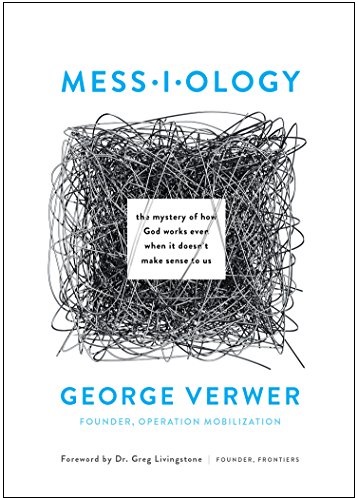
Messiology cover outlined

In my best George Verwer impersonation, “I beg of you, I implore you, get five copies of this book. Read one, give four away. If you’ll just write me, I’ll send them to you for free, that’s how much I love literature!”

Really though, get this book. If you don’t have any money, ask for a free copy. If you have some money, pay a dollar a copy (10% of the Amazon price). If you have a ton of money, bless George!

» Email your book request (with a shipping address) and transfer funds here (attn: Special Projects). Or get the Kindle edition for US$.99 from Amazon.
 

No longer a foreigner | World News Briefs

Missions-Catalyst-no-tagline_large

SFC/ CBM in Bori, South Sudan

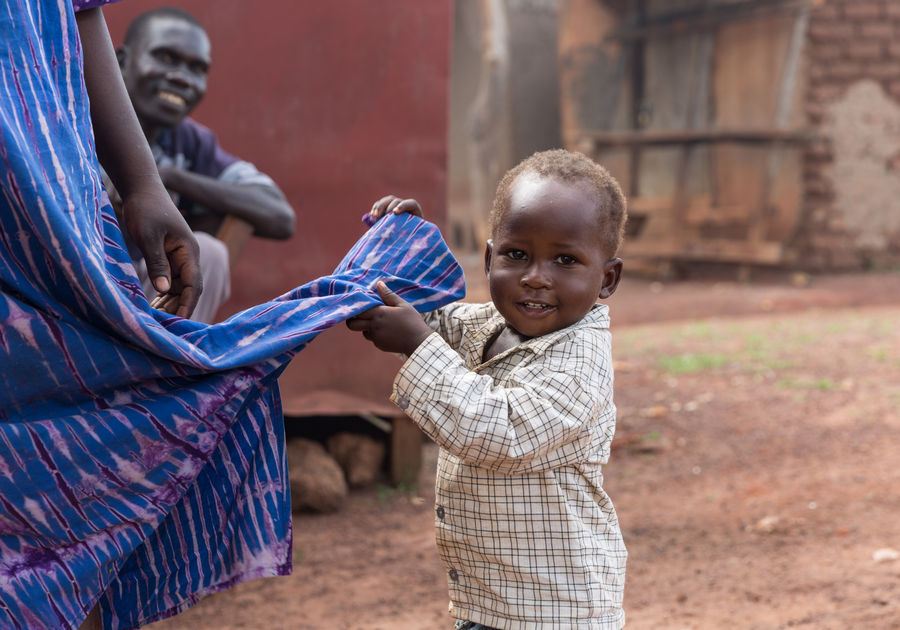
A young boy smiles for the pho­tog­ra­pher in the mar­ket in Bori, South Sudan (Wycliffe Bible Translators; related story below). Today’s edition features stories about breakthroughs and barriers in scripture translation and distribution. Read and pray.

Missions Catalyst News Briefs 05.02.18

  1. SOUTH SUDAN: “God Is Not a Foreigner Anymore”
  2. NORTH AFRICA: Taxi Rides with Tarek
  3. MOZAMBIQUE: Tewe People Celebrate New Audio Bible Materials
  4. CHINA: Ban on Online Bible Sales
  5. BOLIVIA: Sharing the Gospel in Isolated Villages

SOUTH SUDAN: “God Is Not a Foreigner Anymore”

Source: Wycliffe Bible Translators, April 25, 2018

The people of South Sudan have rarely known peace. The decades since Sudan’s independence from Britain and then South Sudan’s independence from Sudan have been marked by turmoil and war.

Despite the turbulence, Bible translation has been taking place. The Baka translation began in 1980 in southern Sudan. The team endured civil war, violence, having to flee as refugees, and a kidnapping. Through it all, translation continued, and in March 2017, the Baka community celebrated the launch of the New Testament.

Now that the Baka have God’s Word, “God is not a foreigner anymore. Jesus is one of us. He can talk [our] dialect,” says Pastor Bennett Marona, the translation project manager.

» Read full story or watch a video about the Baka translation.

» See also The Bible in Uzbek, the story of the 22-year process of completing the translation of the Bible into this Central Asian language. In a surprising turn, it was publically launched in the capital with official approval by the country’s government (United Bible Societies).

NORTH AFRICA: Taxi Rides with Tarek

Source: Frontiers USA, April 4, 2016

I hustled our children into the back seat of the taxi as Kevin climbed in the front seat. “Where are you from?” the driver asked.

“America,” Kevin said. “How about you?”

“I’m from Syria,” the driver responded.

“Oh. I prayed for your country this morning!” Kevin blurted out.

I cringed a little in the back seat at Kevin’s response. What was that emotion in me? Embarrassment? Shame? What did it matter if this taxi driver knew Kevin prayed? Why did I feel like hiding?

It was true after all. Kevin had spent a couple hours that morning, as he often did, in our team’s prayer room. And he had prayed for Syria.

Although I felt sheepish and not very brave about sharing our spiritual lives with this taxi driver, I look back and see that all it took was Kevin’s casual comment, and Tarek, the taxi driver, was hooked. We didn’t know it at the time, but that was the day Tarek’s pursuit of Jesus shifted into high gear…

» Full story is worth reading. Here’s my favorite line: “That first night with his new Bible, Tarek devoured a hundred pages of the Gospels.”

» See also another story about a taxi driver, Listener in Mongolia Becomes Volunteer Broadcaster (FEBC). And don’t forget to pray for the work of God in the Muslim world during Ramadan this year. It begins May 15. Check out resources from Frontiers, Prayercast, and of course 30 Days of Prayer.

MOZAMBIQUE: Tewe People Celebrate New Audio Bible Materials

Source: Mission Network News, April 26, 2018

The Tewe people in central Mozambique have had missionaries come to them for years. Today, about 40 percent of the Tewe people are Christian. However, the Tewe people have no Bible and less than one hour of scripture in audio [form]. Because of their limited access to God’s Word, it is easy for Tewe Christians to mix biblical teachings with the local ethnic religions.

Joshua Harrison with Audio Scripture Ministries says the Tewe people group “is still considered a least-reached people group because there are still some significant cultural strongholds with witchcraft and syncretism. So our team looks at that and says, well, clearly there are some missing tools and access to God’s Word in a form that people can use on a daily basis. That’s why we want to bring that connection to God’s Word in audio [form].”

“We are excited to report that we have over 10 hours of scripture recordings and songs and Bible-engagement materials that we’ve recorded [in the Tewe language] and the community response has been fantastic.”

The process has contained some challenges. The Tewe language is not a written language, which has made it difficult for the team working with local Tewe speakers to translate scripture before they can record.

But God has blessed ASM’s scripture recording efforts in Mozambique. Together with Tewe speakers and musicians, they have completed 18 songs and 50 Bible stories so far.

“The excitement for this is palpable as people hear God’s Word in their heart language. It is really wonderful to see. There is great hunger for the Lord.”

» Read full story. You might also appreciate another MNN story, this one about God’s Word going forth against impossible odds in colonial India.

CHINA: Ban on Online Bible Sales

Source: World Watch Monitor, April 16, 2018

China’s Christians may not be surprised by recent tighter government control of religious affairs, including a ban on online Bible sales. But they are unsure what comes next.

Following [last] month’s announcement that Bibles could no longer be made available online, large websites like Taobao, Jingdong, Weidian, Dangdang, and Amazon China have now stopped selling them. The Catholic news website UCAN reported that “books about Christianity have also been blocked and the business licenses of some shops have been canceled,” and that, according to social media users, websites had started to stop the sale of Bibles as early as March 30.

» Full story provides more context and links to other sources.

BOLIVIA: Sharing the Gospel in Isolated Villages

Source: Pioneers, April 4, 2018

In 2004, Greg and Alex, a father-son team working in Bolivia, came across a man on the road who was holding a little, broken radio. He pleaded with them, “Fix it, it’s my life!” They helped him get the radio repaired and realized it was tuned to a radio station broadcasting in his native language, Quechua.

Greg and Alex had been searching for a way to share the gospel with the people of isolated villages cut off from the rest of civilization during the rainy season. They were amazed to find the radios were made in their native Canada. Since then, they raised funds to purchase and distribute radios that include a Quechua audio translation of the Bible. In the last 10+ years Greg and Alex, along with many short-term workers, have distributed more than 50,000 little red radios.

» Full story includes a photo essay. The video above is actually part 2 in a series. Watch part 1.

A Children’s Introduction to Missions | April Resource Reviews

Missions-Catalyst-no-tagline_large

  1. CURRICULUM: WorldViews, A Children’s Introduction to Missions
  2. MUSIC: Songs of Kingdom Hope
  3. FILM: The Breadwinner
  4. BOOKS: A Good Missions Intro?
  5. EVENTS: What’s Coming up in May

https://youtu.be/kLral_o_zMU

This short, educational video is designed to help kids understand how Muslims see and explain the world. It’s part of a package described below.

CURRICULUM: Worldviews, a Children’s Introduction to Missions

worldviewsSource: Pioneers

On the lookout for winsome ways to explain world religions to kids or introduce them to missions? Last year Pioneers and Sonlight joined forces to create an intro-to-missions resource for homeschool families. Now Pioneers has revised and relaunched it for broader use. Worldviews is designed to help the whole family enjoy learning and includes several elements:

  • Brief videos about five of the world’s religious communities and God’s heart for the people in those communities are free online for anyone to use. Includes videos about tribal animists, Hindus, the unreligious, Muslims, and Buddhists (often remembered by the acronym THUMB).
  • A free family devotional (downloadable PDF) goes with the videos and a 30-day email guide can help you pray for unreached peoples. A single signup will give you access to both.
  • A high-quality curriculum includes crafts, games, recipes, activities, etc. Purchase one workbook for kids aged 4-9 and/or another one for kids 10-14. Each is about 100 pages long and costs US$16.99.

» Learn more and view, download, or purchase what interests you.

» Not quite what you’re looking for? Check out the many missions resources for kids from Weave.


MUSIC: Songs of Kingdom Hope

Source: Caroline Cobb

Looking for music that tells the big story of redemption? In 2011, singer-songwriter Caroline Cobb gave herself a goal to write a song for every book of the Bible in a year. That year of writing set in motion a new passion to tell the stories of scripture through music.

Her latest work is a theologically rich, lyrical album called A Home and a Hunger: Songs of Kingdom Hope. It “traces the biblical themes of Eden and exile, restlessness and rest, and God’s upside-down kingdom.”

I found this artist through a music video of her song All the Stars, which is about God’s promise to bless the nations through Abraham (see Genesis 22:17-18). The video, below, marks the 25th anniversary of Frontline Mission and includes clips from their documentary series, Dispatches from the Front. You might check that out as well.

» Buy a physical CD for US$10 from the artist’s website or listen wherever you get your music.