An injured refugee was in constant pain until friends asked a kind-hearted missionary to pray for his miraculous healing. See the story below (Christian Aid Mission).
EDITOR’S NOTE: Mass Gatherings and World Evangelization
As I write, it is Memorial Day in the US and many are getting together with others as vaccination rates rise and infection rates fall. I expect our upcoming Independence Day will bring more and larger gatherings.
The World Health Organization defines a mass gathering as “a planned or spontaneous event where the number of people attending could strain the planning and response resources of the community or country hosting the event.”
By this definition, an exodus of refugees could be a “mass gathering,” if an involuntary one. But many are music or sporting events, political rallies, or religious festivals. Check out the top 10 human gatherings in the world, only half of which are religious (Largest.org). A few in the US include the Gathering of Nations, Hobo Days, and the Burning Man Festival.
What do these have to do with evangelism? Everything. These events are expressions of identity or belonging. Even the extreme introverts will watch from a distance and say, “That’s my people, team, or group. This is where my loyalty lies!” Remind you of anything?
“After this I looked, and behold, a great multitude that no one could number, from every nation, from all tribes and peoples and languages, standing before the throne and before the Lamb, clothed in white robes, with palm branches in their hands, and crying out with a loud voice, ‘Salvation belongs to our God who sits on the throne, and to the Lamb!’” (Revelation 7:9-10).
A refugee trying to recover from an injury to his skull sustained in war-torn Syria was in constant pain. Fellow refugees who had received food and other aid from local missionaries believed that kind-hearted people were healers, so they called the leader of the native ministry, believing that he was so kind he had to have power to heal.
“When we had gone to the camp the previous Friday, we saw that Joram was suffering from pain,” the ministry leader said. “His wife explained that even the painkillers did not work, and he was saying that his whole body was in pain and was afraid that more of his skull would crack.”
The local missionary suggested maybe his body aches were signs of COVID-19, but Joram said he had no other symptoms.
“On my way there I prayed to God to send His Holy Spirit and heal this person, because I am nothing without God’s direction,” the ministry leader said. “And with all my heart I prayed for God to heal him.”
Joram was in agony as the leader began to pray for him, his intercession as warm and deep as his faith in God. After about three minutes of praying, he heard Joram suddenly start to cry and felt him hugging his leg—and saying the pain in his body had suddenly disappeared.
“While I tried to calm him down, I started crying, because God was so great, I could not control my feelings,” the leader said. “Unfortunately, we do not meet with such miracles every day. After Joram calmed down, we told him that God’s love saved him from his pain and how much God cared for him. Joram said openly that he wanted to believe in our God, and I can’t tell you my surprise at that moment. He asked us to visit him later, and we said that we would come again.”
Global migration’s impact on mission strategy has become a growing focus in global mission.
“Empowering believers already on the move to be frontline kingdom workers is essential in influencing nations for the gospel,” write Harvey Thiessen, Area Leader for Oceania North America with OM, and Alena Popova, a data research analyst with Scatter Global. In their article “Passing the Baton to Evangelical Migrants,” they examine where these workers could have the greatest impact by looking at the migration data of the United Nations and the data of believers moving to the least reached geographic zones.
Discipling, mobilizing, training, and supporting them “will revolutionize how migrant workers see themselves and their role” as witnesses for the gospel wherever God has sent them.
Source: International Christian Concern, May 18, 2021
Algerian government restrictions on Christians in 2018 began with the closure of 13 churches. Now, all Protestant churches remain closed and individual Christians are bearing the brunt of government persecution.
Since the COVID-19 pandemic hit Algeria, Protestant churches have remained closed under “safety” guidelines, although mosques and the Catholic Church have been allowed to restart their worship gatherings inside. The Ministry of Religious Affairs informed the EPA that it was not their responsibility to address the reopening of the churches, but did not indicate another party responsible, and the UN Algerian ambassador commented that it was, in fact, their duty.
[Currently] the Algerian Protestant Church operates almost entirely online with two services per week, active social media, and virtual prayer meetings and training.
According to Middle East Concern, Algerian Christians are celebrating the return of an appropriated church building but asking for continued prayer for their situation.
In a ploy to revoke the registration of Christian organizations and shrink their influence, Hindu extremists in Nepal have forged a document as if from Christian groups portraying them as seeking ethnic divisions to gain converts, sources said.
The document falsely attributed to the Nepal Christian Society and the National Churches Fellowship of Nepal asserts that unless they can cause divisions in the upper-caste Brahmin and Chhetri communities, conversions to Christianity are not possible, said Mukunda Sharma, executive secretary of Nepal Christian Society.
After the fabricated document went viral on social media, members of the Hindu nationalist Rastriya Prajatantra Party (RPP) used it to demand that registrations of Christian charities be canceled, Sharma said.
Reportedly appearing first on Hindu nationalist leaders’ Facebook accounts on April 5, the fake document soon went viral.
The full story goes into more detail on how and why this happened.
Civil Air Patrol Capt. Leia Eisenhower says her father’s church planting efforts led to her own innovative spiritual path: an online Instagram discipleship ministry reaching over 100,000 people with the gospel.
Eisenhower, 47, grew up in Bahia, Brazil. Her father, Eugenio Felix, launched more than 30 churches and also served as an Assemblies of God presbyter in South America’s largest nation.
“My father taught me that I couldn’t just read the Bible. I needed to explain it,” she says. Eisenhower says God answered her father’s prayers for her by calling her to ministry at the age of 14. She went on to attend Assemblies of God Brazilian Theological Seminary and served as a Brazilian missionary before coming to the United States in 2002 [and eventually became a chaplain in the Civil Air Patrol, currently based in New York].
Eisenhower wrote a book in 2019 called My Neighbors: The Theology of Relationships. The book, available in Spanish, Bemba, and English, uses the parable of the Good Samaritan to discuss relationships.
After [a] pandemic lock down, Eisenhower looked for the best way to teach classes based on her book. She chose Instagram’s platform for its worldwide reach and accessibility of communication through direct messages.
“I started to record a class with the Bible as my foundation, and the discipleship part began growing so fast I had to assign people to do things,” she says. “I began recording the class in different languages and having it translated. Every night I would get on Instagram and do a midnight prayer live.”
Within a year, she says over 100,000 people followed her discipleship messages and more than 100 have accepted Christ as Savior.
Here’s a fun question: If you could go back in time, based on current knowledge and life experience, what would you tell your 20-year-old self about missions? Maybe as the bus rolls away from a mind-blowing Urbana Student Missions Conference. Maybe sitting around with your small group from Campus Crusade for Christ (yes, that’s what they called it!) Maybe driving home after date number three with that guy who seems to be God’s gift to women and specifically to you.
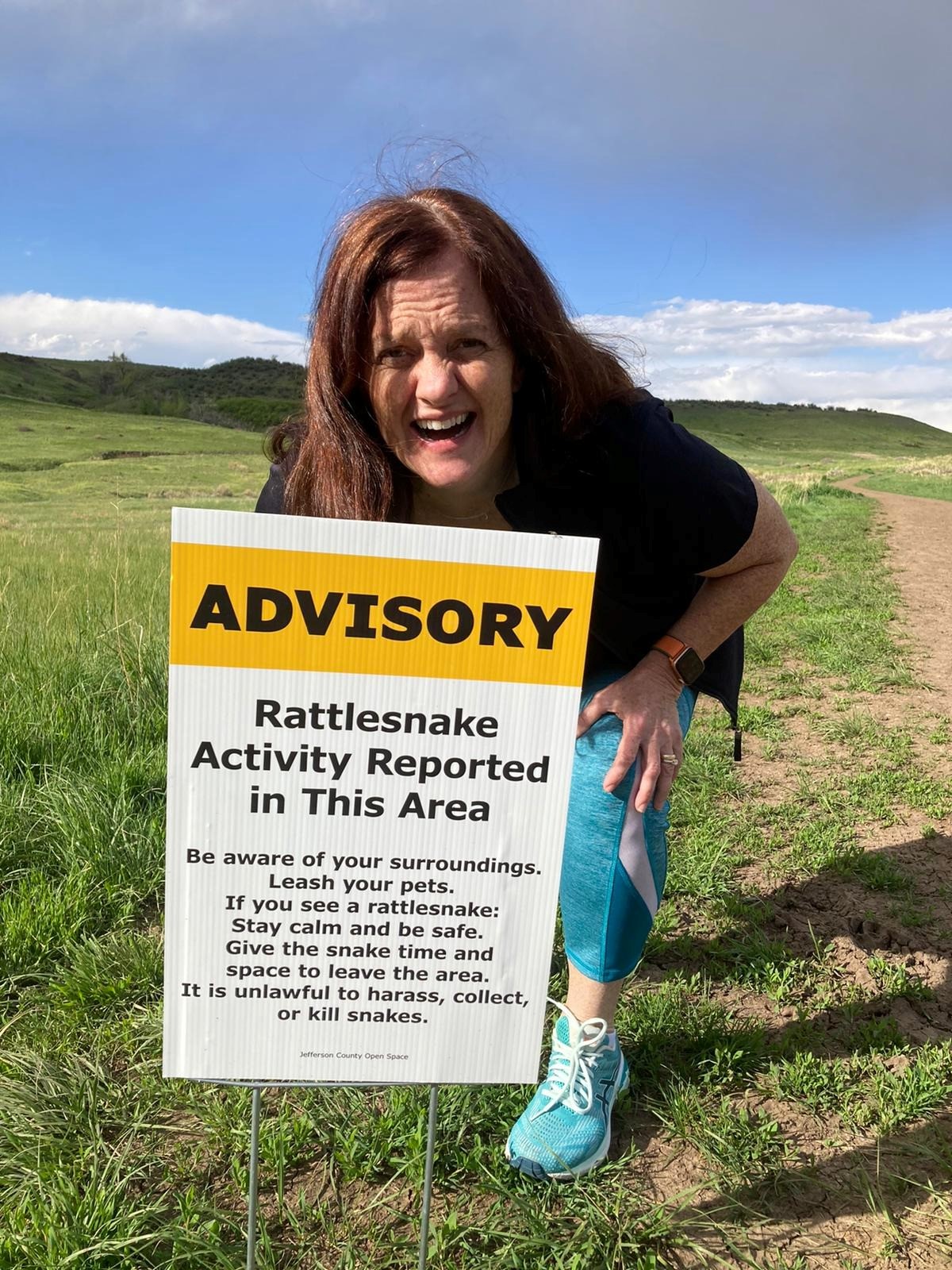
What would you say? Would you have warnings to share? Hope to impart? Like my long-time friend pictured above, would you point out, “There will be rattlesnakes on the path! Might as well expect them!”
For some of us, our 20-year-old self is back a ways! For me, it was 1985. For others, the back-in-time update wouldn’t cover such a span. If going back to when you were 20 would be less than 10 years for you, please let me know. I’m serious. If you’re under 30 and reading Missions Catalyst, take eight seconds to click this link and drop me an email telling me your age. This is a small part of an effort to stave off the, perhaps inevitable, process of us writing for people our own age until we all die!
In his immense grace, God has kindly blessed me with a boatload of friends. (More like this boat than this one.) They are smart, articulate, and funny, and most can remember being 20 even if it’s been a while. So I ask them what they’d say to their younger missions self. Before I share their wise responses, it’s only right that I go first.
1. Accept others.
I’d say to young me: “Dude, stop being ‘Judgy McJudgerface!’” I remember with regret some of the dumb things I said about people who had different priorities than I did, particularly when it came to how they spent their money. Of course, this was in part because they had money and I didn’t. Jealousy may possibly have slipped in. In my early missions days, I could have done with a tenth of the judgment and ten times the grace.
Melanie echos that, saying, “I wish I had not wasted time telling people how wrong they are but told them more about how right Jesus is!!” Amen.
2. Listen up.
Several friends would tell their younger selves to relax a little bit and keep learning. To listen more. To ask questions.
Our intrepid editor offers, “I’d probably tell the 20-year-old Marti: Hey, you don’t have to take yourself so seriously. The 50-year-old Marti sometimes needs to be reminded of that, too!”
Lynn says, “I would keep learning and listening to ministry leaders in other countries.”
Pam adds, “Relax, be a learner, and don’t spend so much of your time thinking about what other people are thinking.”
3. Try these practical tips.
Some of my buds are crazy practical. I wonder how life would be different had I known these people and learned from them 35 years ago.
More than one bud said they’d tell themselves to take the Perspectives course as soon as possible. That’s a good word.
Jen says, “Beware of student loans!” Indeed!
Matt advises young Matt to put away money for retirement!
Dave said, “Keep my mouth shut until Christ’s love fills my heart for the Muslims I am with.”
4. Be intentional.
Jon says he would tell his younger self, “Work hard until age 30 in a high-paying job but live with the spending level of a missionary. Invest every dime over your minimal spending for that decade. By age 30 you’ll be able to serve in ministry the rest of your life and money won’t ever be a worry for the future. You’ll be free to follow however God leads, and your donors will be able to shift their giving directly to ministry projects (they’ll be even happier). Simple.” I’m not sure how simple that is, but crazy smart.
Doug would tell his 20-year-old self, “Find the most fruitful disciple-maker you can find and ask him if you can shadow and assist and learn from him for the next three years. After three years, ask that disciple-maker to help you figure out where to be the most fruitful in God’s kingdom. Unless that disciple-maker tells you otherwise, go to the largest unreached group you can find and take five people with you. The six of you commit to learn the primary heart language and culture and stay there for five years. After the fifth year, ask God what to do next. Rinse and repeat.”
May God raise up thousands who will combine and execute these last two ideas.
5. Keep your priorities straight.
Several friends said they remind their younger selves to keep God first.
Mike says, “Watch over your heart above all things by staying centered on the King.”
Robby adds, “Yield in advance to the Holy Spirit’s direction and empowering in adjustments (repentance) and assignments (good works Father prepared in advance for us).”
Brett says, “Keep the main thing the main thing: loving Jesus and loving people.”
6. Watch out for pitfalls.
Like me and perhaps you, many of my buds have walked some challenging roads in their efforts to see the gospel go where it hasn’t before. For many, there have been rattlesnakes on the path. Some they dodged, others get ‘em. As a result, their advice to their 20-year-old selves is sober and heart-felt.
Fouad says, “Work while there is light for darkness is coming. Put the hand to the plow and never look back.”
Amy offers, “Make sure to marry someone who has a God-placed vision that lines up with yours. Even through all the ups and downs of every marriage, if you share a common vision of why God has you here on earth, it will carry you through stronger than most anything.”
Similarly, a couple of friends would pre-remind themselves to keep their family in mind.
Lois learned to say no to some opportunities when she realized that saying yes to ministry was saying no to her kids.
Brett considered, “As a consultant who mostly worked from home, or traveled for seminars, presentations, and training, I wish I had involved my family in my ministry more. My kids follow Jesus, but I think it would have been so much more enriching to have taken them.”
Tim thoughtfully reminds the younger Tim, “Don’t wish to peer into the future as the things you’ll face will seem too overwhelming if you knew.”
7. Don’t go it alone.
Knowing the road will be fraught with hazards and heartbreak, Barbara says she’d tell herself, “Find your journey-mates or a ‘band of brothers.’ Devote yourselves to caring for and encouraging each other and advance the kingdom together.”
Like someone who knows what he’s talking about, Bret wisely says, “Find a good counselor! Deal with your junk, your family history, and your sinfulness. Find someone you trust and can be honest with. My generation did not do soul work very well. Millennials today are more open to this than we were (thank God!) I have concluded that almost all of us would benefit from going to a counselor as often as we go to a medical doctor! ‘God makes the man, then He makes the ministry.’”
Julie humbly reminds herself, “You’re probably not gonna get it all done by the time you’re 30, more like, you’re not gonna get it all done!” Her husband adds, “Remember there are Kingdom saints who labored before us and saints who will labor after us. Just play the part in God’s generational sweep.” Sad, sober, hopeful words.
Others advised getting in relationship, even submission, to local leaders. It’s easy to think we’re the ones with all the answers. Ethnocentrism is as natural as skin.
Dr. Johnson said, “All theology is contextual, including White theology. And Christianity is not a Western/White religion but a global religion.”
8. Be all in.
Finally, other friends said they’d tell their 20-year-old self to be radical, to be ready to die for the gospel. They’d say to center your coming obedience in a deep love for and from the Father. To focus, like Paul, on laying the foundation where it is not yet.
My dear friend and mentor Greg says from the perspective of his 80 years, “It’s not what you start, it’s what you leave behind. If you can’t finish it, make sure you find some people who can. And keep laughing at your own foibles.”
Amen. Amen.
What would you say?
I can’t tell you how much I’d love to hear what you’d tell your 20-year-old self! Even if you don’t usually respond to requests like this, please take two minutes and share your thoughts here. I’ll link to this page next month so the whole Missions Catalyst community can read them. That link also has the comments that space prevented being included in this article.
In This Issue:1/3 without access to the gospel. Plus 50 miles in a canyon, caring for COVID patients in India, coming to Christ in Iran, Bible storying in Africa, and a conflict in Papua.
WORLD: A Third Without Access to the Gospel
INDIA: Church Opens COVID Care Center
IRAN: The Choice That Changed Taher’s Life
CENTRAL AFRICA: Sharing Bible Stories in the Heart Language
INDONESIA: “Satan’s Forces” Join Conflict in a Darkened Papua
Source: The Alliance for the Unreached, May 14, 2021
On May 23, 2021, the Alliance for the Unreached, a nonprofit collective made up of 50+ organizations, is inviting people across the US to join a Facebook Live event at 1:11 pm (in each US time zone). This event will kick off the 1:11 Prayer Challenge, which is part of the “A Third of Us” movement. A Third of Us raises awareness for the one third of all people still without access to the Bible, the Church, and other believers.
Throughout the day on May 23, the Alliance will release exclusive video chats with David Platt, Francis Chan, and others, offering a more personal look at this issue.
During the 1:11 Prayer Challenge, participants will be asked to pause at 1:11 pm each day for 33 days to pray for the “third of us” who have no access to the message of Jesus. The Alliance for the Unreached chose May 23 to kick off the challenge because it is the International Day for the Unreached, recognized each year on Pentecost Sunday.