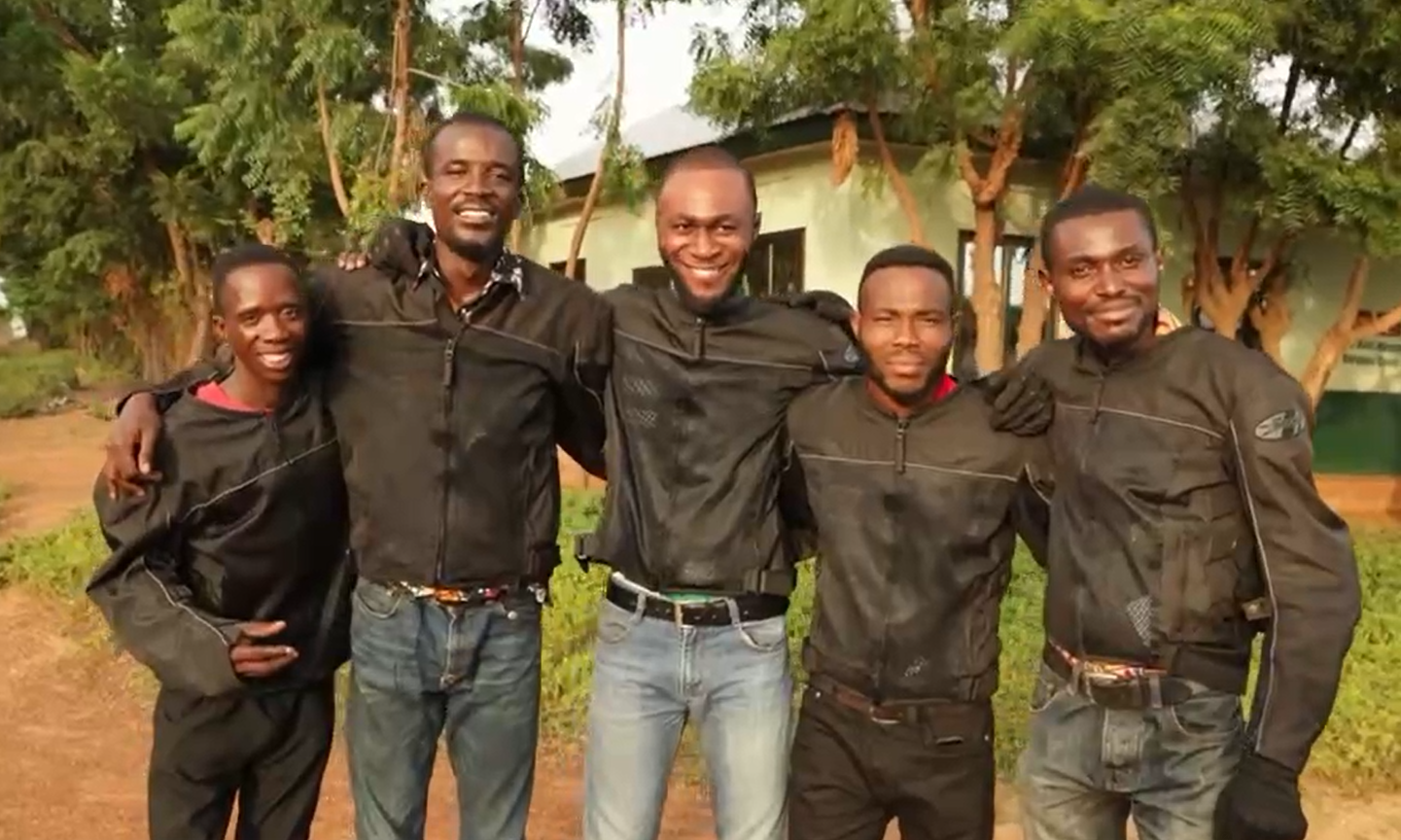
Five young men in Ghana spend their days riding motorbikes across the country on an important mission. Each of them carries a projection kit to show the JESUS Film in different villages, some of them completely unreached with the gospel. They are called the Jesus Film Riders. The initiative is part of OneWay Africa’s Jesus Film Campaign.
Reagan Opoku Agyeman, one of the Jesus Film Riders says, “Jesus Christ has given us the commandment that we should all go into the world (Matthew 20:18-20). So that’s why I do this!”
It’s not easy. They must ride across rugged terrain—often for hours—to reach remote and isolated villages. Each Jesus Film Rider must be willing to go anywhere, sleep anywhere, and eat anything.
Another Jesus Film Rider, Lord Cyrus Nyamenlewoke, says, “I’ve been inspired by St. Francis of Assisi spreading the gospel to places that were dangerous to his life. And so it inspires me to know that I can also do something for God and my life.”
A new study from Lifeway Research found that most Americans believe that Jesus was born in Bethlehem more than 2,000 years ago, but less than half believe that Jesus existed prior to being born on that first Christmas.
“Most Americans consider Jesus’ birth a historical fact,” said Scott McConnell, executive director of Lifeway Research. “It can be easy to only evaluate Jesus like you would any other historical figure—thinking about when He lived and what He did. However, the Bible also describes Jesus in a way that [you] must evaluate who you believe He was. Most Americans believe his origin was from God the Father, but half as many believe He existed before His birth.”
Note from Pat: I have been reading the book An Advent for the Cosmos by Jeffrey Pitts. It makes a strong case for the existence and ministry of Jesus before the incarnation.
Source: International Christian Concern, December 8, 2021
A Buddhist association in South Korea is upset about Seoul’s decision to subsidize the playing of Christmas songs in the coming weeks. It is filing a lawsuit to prevent the government from using its budget for the carol campaign.
Copyright laws have been enforced in South Korea to the extent that Christmas songs are disappearing during the festive months. In response, the Ministry of Culture, Sports, and Tourism recently allocated 1 billion won (US$850,000) to encourage commercial radio stations and public spaces—including shopping malls, cafes, and restaurants—to play the Christmas tunes in the next few weeks.
The state-sponsored program is not well received by everyone. [On December 2] the Association of Korean Buddhist Orders announced its decision to sue the government.
The statement reads, “The Ministry of Culture, Sports, and Tourism, which should be fair and impartial in policies regarding religion, is leading a Christian missionary project on the pretense of comforting people.”
The Buddhist group added that “If the songs, which some people are uncomfortable about, are played continuously through the media, it turns into a deadly weapon and is nothing more than pollution.”
The ministry has responded to the complaint by saying that it did not favor any religion but rather seeks to promote festive spirit towards the end of the year.
By the way, could you or your church use some global advent songs? Paul Neeley of Global Christian Worship made a great YouTube playlist. Languages include French, Yoruba, English, Arabic, Irish Gaeilge, Huron, Norwegian, Nepali, German, Hindi, Thai, Italian, Urdu, Spanish, Pangasinan (from the Philippines), Zulu, Korean, and Swahili.
Amid the relentless waves of COVID-19 infections and deaths, ongoing conflicts, political instability (coups, protests, and upsets), and an increase in disasters, one could easily sink into despair—were it not for the Lord’s sovereign hand and merciful intervention in our world. In this special edition of A World in Motion, we look at five significant, ongoing stories to watch in 2022. There are already some clear indications of possible impacts to the Church and missions in these regions or situations, while others remain speculative.
China-Taiwan flashpoint, one of several
Russian-Ukraine tensions and potential ramifications
Conflict in Ethiopia and its regional impact
Iran nuclear ambitions and their wider geopolitical implications
2022 could be a decisive year in the COVID-19 battle
In Habakkuk 1:5, the Lord says to the prophet:
“Look at the nations and watch—and be utterly amazed. For I am going to do something in your days that you would not believe, even if you were told.”
As followers of Christ, let that be the spirit in which we embrace the coming year—a spirit of anticipation and readiness for what he will do in and through his Church, in our world.
Source: Brian Stiller for World Evangelical Alliance, December 3, 2021
In late November, I met with Ukrainian church leaders to discuss matters of unity and public witness among evangelicals. On a Sunday morning, I walked into a sun-filled sanctuary, alive with a surprisingly young crowd—the average age was probably around the mid-thirties. Worship at the Salvation Church in Kiev was enthusiastic, unabashed, and joyful, led by a worship team and band.
This was the very day on which we heard that Ukraine’s neighbor to the east had expanded its military presence, heightening fears of an imminent invasion. Yet in this country where Evangelicals represent about 4% of the nation’s population of 41 million, neither the geopolitical uncertainty nor the pandemic seemed to negatively impact church attendance. Following the service, we were taken to the construction site that will soon become a 4,500-seat sanctuary. That’s not exactly a sign that the church is about to go into hibernation or close its doors.
For much of the 20th century, [Ukraine] lived under tight Soviet political, economic, and ideological control. Churches were closed and pastors killed; many spent years in prison; congregations were driven apart by intimidation and spy networks.
As the Soviet empire crumbled and freedom seeped in, Evangelicals seized the opportunity to witness and provide Bible training. But here is what surprised me: Evangelicals in Ukraine care deeply about maintaining biblical orthodoxy but they also know that working constructively with the Orthodox, Catholics, Jews, and Muslims matters. In the aftermath of decades of subjugation, they had the courage and creativity to work with all religious groups, at a time when the Evangelical presence was ascending.
I’ve traveled to scores of countries, working among Evangelicals and other Christian communities, but I’ve not often seen anything parallel to this. When they are a minority, Evangelicals tend to keep an arm’s length from other Christian communities and other religions, due to concerns over dilution of theology and waning of witness.
I’m writing this because it is a reminder of what spiritual resilience can accomplish. Ukrainian Evangelicals are more than surviving. Their fervent faith, evangelistic outreach, and energetic worship could offer a positive example as new mutations of the coronavirus wind their way from region to region.
I’ve got a new favorite sound. You have a favorite sound, don’t you? The pleasing burble of a mountain stream or a 1972 Camaro. Your spouse’s laugh when you tell a joke. The silence of late-night Christmas Eve, with only the fire crackling in the background. Here’s my new favorite: The whoop of a 12-year-old girl when she discovers the book she’s had on hold at the library for weeks has finally come in! Yeah, that’s a good one.
Books will do that, won’t they? That’s why they are the sole suggestion for this year’s Practical Mobilization Christmas Wish list. Here are some books making waves in my life lately:
I’m also grateful for the recent, innovative efforts of William Carey Publishing. They sell great books, books written by and for the kind of people who read Missions Catalyst. You could do worse than getting a missions-minded bud a gift certificate to spend with WCP.
Finally, if you have a sense that maybe the path before you is nothing like the path behind you, please join me in reading Tod Bolsinger’s Canoeing the Mountains: Christian Leadership in Uncharted Territory. My pastor, our elder team chairman, and I have formed an impromptu book club to go through this. Personally, I’m wondering this: If around 400 Muslim people groups remain totally unengaged with the gospel, what’s it going to take to get things started among them? What if what we’ve done in the past has worked as well as it’s going to and something new is needed? Answering that question is putting a lot of pressure on a book! But I hope Bolsinger will provide some insights.
New Way to Help Afghans
In last month’s Practical Mobilization email I advocated for US State Department’s Sponsor Circle program, which allows five Americans to band together and host an Afghan family. In response, Pat Hatch, a Practical Mobilization reader who directs the Refugee and Immigrant Ministry for the PCA’s Mission to North America and has forgotten more about welcoming newcomers than I’ll ever know, reached out with an additional idea. It’s called APA Community Partners and has the potential advantage of being more integrated with an established resettlement organization. Church World Service seems to be the farthest along with their efforts to implement APA Community Partners.
As you might guess, Pat has been scrambling to help believers respond to the arrival of so many Afghans. In the midst of that, she’s inviting Mission Catalyst readers to attend her intro Zoom meeting, Afghan Arrival Big Picture tonight (Wednesday) at 8 pm Eastern or tomorrow (Thursday) at noon Eastern. If you’ve been praying for answers or direction, this may be it. Email Pat for more info and webinar dates in January.
Can You Help a Guy Out?
In the next week, I’m planning to write an article for the robust Denison Forum audience called “Happy Halalidays: Christians, Muslims and an Immaculate Misconception.” I’d like to include some warm and winsome stories of people who’ve had Muslims over for a holiday dinner and lived to tell about it.
Assuming you’re pretty busy, I almost hate to ask. But I know some of you have killer stories. If you can share them, I’d be so grateful.
Three Notes for Christmas: God, Gratitude, and Grace
Is there a way to navigate the holidays and survive with your sanctification intact? You probably know better than me, but I keep coming back to three things: God, gratitude, and grace. We even made them the focus of our middle school youth group meeting this week, mainly so I could remember.
Keep God central.
It’s his birthday and all, but with Jesus’s marketing budget looking a speck next to Target’s, he sometimes gets sidelined. Can I tell you what I’m telling me? “Keep going to church. Devote your way through an Advent book or Bible plan. Get quiet for a few minutes and wonder again at God become man.”
Cultivate gratefulness.
It’s possible I have more to be thankful for than you do right now. The goodness of God is washing over me lately in particularly abundant ways. Regardless, we all have much to thank God for and it remains one of the best remedies for the rampant consumerism that can characterize this season. Will you join me in thanking God for coffee, COVID vaccines, and countless other ways you may have seen his goodness?
Swim in grace.
Finally, grace. It’s what’s brought us safe so far and what will lead us home. As we have richly received, may we extravagantly give in the next few weeks.
Grace to the mom whose toddler slept and babbled peacefully the last two hours only to choose the ten minutes in Walgreens to scream like she’s being chased by two-headed snakes. (Don’t click that link! You’ve been warned!)
Grace to the pastor who’s had one more demand placed on them than they were designed to carry.
Grace to the dad who wants so much for his wife and kids, but honestly can’t figure out how to make the math work.
Grace to the cashier who’s walking a road we probably don’t understand.
Grace to the kids who’ve seen 18 gazillion ads screaming at them to want this thing now up against one dear Sunday School teacher who calmly admonished them to be happy that Jesus was born far away a long time ago.
And while you’re at it, grace to yourself. God gives it by the bucketful. It’s OK for you to enjoy a cup.
Christmas will not be perfect. Your brain’s messing with you when it says it used to be! But the baby is perfect, and his message is perfectly suitable for these days.
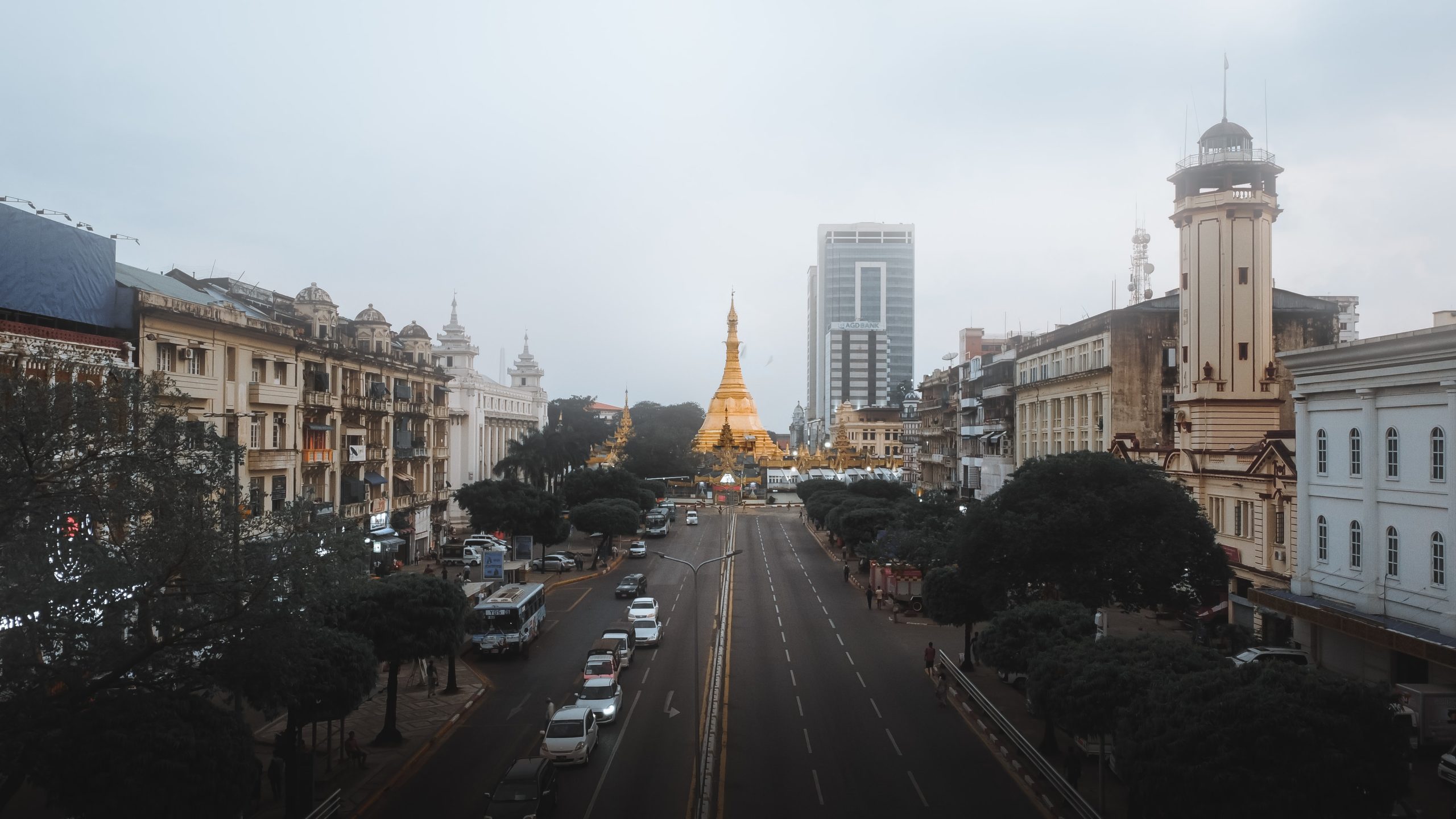
Nine months after Myanmar’s military staged a coup and took over the civilian government, the violence continues. Yet so does the church. Learn more about what’s happening in this edition.
In this edition:
Myanmar: Baptisms in the Face of Bullets as Hundreds Turn to Christ
Afghanistan: Taliban Fighters Have Saul-to-Paul Experience
Korea: A Love Sonata for Japan
Kenya: Commitment to Send Missionaries from Asia to Africa
USA: Surprising Insights on Views of Suffering, Salvation, and More
Nine months after Myanmar’s military staged a coup and took over the civilian government, the violence continues as the Tatmadaw (Burmese local army) leaves traumatized civilians and destruction in their wake.
Yet like so many situations where God’s people are pressed on every side (2 Corinthians 4:8), faith continues to survive in the devastation. Our local partners report that increasing numbers of people are turning to Jesus for their hope.
Our local partners are aware of 544 people giving their lives to Jesus this year in Myanmar, with 166 of them making decisions to be baptized.
Of that number, 50 new believers were children who have dedicated their lives to Jesus in an Open Doors training last month.
On October 25 the United Nations said Afghanistan is on the brink of the world’s worst humanitarian crisis, worse even than Yemen or Syria. Out of 38 million people in the country, 23 million won’t have enough food to last the winter without more aid.
But the Taliban continues hunting down civilians who oppose their ideologies, including activists and Christians. Greg Kelley spoke to contacts of World Mission inside the country. He says, “Not only that, but they’re identifying communities. Because where there’s one Christian, in most cases there tend to be several Christians.”
Kelley heard a remarkable story from his contacts about a group of Taliban fighters that went out searching for a Christian community. “They went to this community and they killed them all. Now on their way back, they had an encounter with an angel, and this angel rebuked these men and gave them instructions on where to go. Now this someone (they would have no idea who this individual was) happened to be a leader of the underground church movement.”
Kelley says the Taliban fighters laid down their weapons before this church leader, who then proclaimed Jesus to them. Now, Christians have taken them in as disciples in the way of Jesus.
Kelley compares this story to what the Apostle Paul experienced while hunting for Christians. His encounter with the risen Jesus and subsequent conversion is recorded in Acts 9. He says this story should encourage Christians everywhere. “I think it just needs to be a reminder to all of us that we can’t put God in a box, even as we look at the horrors and tragedies of Afghanistan.”