What Do You Want to Hear from the People You Donate to?

WhatDonorsWantSuper Short Summer Survey #1

By Shane Bennett

The next three Practical Mobilization columns will be devoted to mining the collective brilliance of the Missions Catalyst tribe. Thank you in advance for taking a few minutes from your elongated days (or nights, friends in the southern hemisphere!) to share your thoughts. They matter.

Somewhere high on a long list of kindnesses God has extended me is the strong sense that there is much, very much, that I don’t know. Like how to manage money, for instance. This has never been natural or easy for me.

Recently, in an additional kindness, God connected me with a financial coach. (If you could use a financial coach, shoot me an email and I’ll connect you to my guy.) He is wise and Jesus-y, and he makes me do hard stuff. He says hard stuff like, “Shane, I want you to call every single one of your donors once a year.” Ack! That works about to three a week. So far, I’m batting about .800 for the month since he gave the assignment.

This has me thinking, though. How many of my donors really want to talk to me on the phone? If you call me, you’d better be bleeding out your eyes or offering me a speaking gig! But Brian asserts this is a component of my ministry. Calling donors, asking how I can pray for them and actually doing so while on the call will bless people. (He also says it will help my support!) So I submit.

But I also wonder. What types of communication, and at what intervals, do donors really want? Personally, I’d like to hear more from the friend to whom I give a small monthly gift. At the same time, I have a dear analog-only donor who’s given monthly to my work for decades with, sadly, almost no information from me.

You probably donate money to support-based workers. You may also live on the gifts of others who give to you. Would you help all of us by taking two minutes to fill out this brief survey? The insights and experiences of our Practical Mob tribe will be helpful to many.

Thank you to the kind folks at Pioneers, Support Raising Solutions and Stewardship Ambassadors for their input on this survey.

One respondent will be chosen at random to receive a US$25 Amazon gift certificate, so answer away.

Compassionate Connection

Ramadan header13 Ways Normal Christians Can Show Care for Muslims during Ramadan

By Shane Bennett

Ramadan, the Muslim month of fasting, has begun.

From May sixth until the moon gets full and goes away again, practicing Muslims avoid food, drink, smoking, and sex during daylight hours. Discipline, celebration, devotion, and spirituality characterize this month for nearly 25% of the world’s population.

It’s also a great time for people like us to reach out in care to connect with our Muslim neighbors, friends, co-workers, and family. Here are thirteen ways to do that. You can likely think of more.

Were you that kid who always got straight A’s? You’ll probably do them all and feel guilty for not thinking of more. Otherwise, just join me in picking one or two. Aim to be a blessing and give out some of the wonderful gifts Jesus has given you.

Practical Prayer

We are blessed to live in a day when resources and opportunities to pray for Muslims during Ramadan are proliferating. I suspect God is pleased with even a simple, “Bless those Muslims,” but none of us, no matter how isolated, have to settle for that. Check out these:

1. Join 30 Days of Prayer.

The 30-days high-quality, insightful booklet has been guiding prayer for Muslims since 1993. As beautiful as the print versions are, it’s probably a bit late to order them now. Instead, grab copies of the pdf for adults and kids.

2. Ask a Muslim friend how you might pray for them.

While writing this column, I’m messaging with a North African bud in England. I started with this: “Happy Ramadan! I would love to pray for you during this month. Can you share with me what you’d like me to ask God for?” His response opened an amazing conversation that’s still going on and involved me sharing a ham-fisted but good-hearted treatise on what Jesus is really up to.

3. Dial in on a particular group.

Go to joshuaproject.net and pick a group from this list to pray for until Ramadan ends. I picked the Ansari. If you want, you can join me in praying for the good kingdom of God to come to this people group in wonderful ways this month. I’m pretty high tech, so I wrote “Ansari” on a Post-it Note and stuck it on my bathroom mirror.

4. Follow a one-page Ramadan prayer outline.

Check out this free, simple, super-short Ramadan prayer guide that can be freely copied to share with your home group or church.

5. Sign up for the Crescent Project Ramadan Prayer focus.

Join thousands of others who will pray each Friday during Ramadan. Sign up here and Crescent Project will email you a reminder and specific prayer points each Thursday.

6. Watch the Prayercast videos.

The rock stars at Prayercast are releasing a high-quality prayer-facilitating video each day during Ramadan. Sign up for daily reminders. I’m planning to show this one at my church on Sunday. It’s very moving.

7. Focus on the Night of Power.

Consider gathering a few friends at church or in a home on the Night of Power toward the end of Ramadan. As Muslims around the world seek forgiveness and their destiny for the coming year, ask God that the abundant life of Jesus would be poured out on them.

Moving Past Prayer

Keep praying! If you’d also like to put feet to your prayers this Ramadan, here are some ideas that will get you in increasing connection with Muslims.

8. Try a Friday fast.

Some Christians choose to show solidarity with Muslims by following most or all the decrees of Ramadan. Trusting they’re obeying God in this, more power to them. May their example move the hearts of many. I’m planning on chucking one meal a week. (I’m pretty spiritual that way!) Would you join me in skipping lunch on the Fridays of Ramadan? If you’re in, shoot me an email and we can pray for each other (as well as for Muslims). Thank you.

9. Post a greeting on Facebook.

Direct this greeting to your Muslim friends. If you don’t have any, simply say, “As a Christian, I’d like to wish Muslims everywhere a blessed Ramadan. May God fill you with joy, keep you safe, and answer your prayers for forgiveness and new life.” Here and here are two examples from a couple of friends I respect a great deal.

10. Ask a question.

We honor someone when we ask about her experience and opinions. Aim for easy-answer, low-offense questions like, “Can you tell me what your family does for Ramadan?” or go deeper with, “I’d love to hear what Ramadan means to you.”

11. Go to an iftar.

The fast-breaking meal each evening during Ramadan is called iftar and is a wonderful time to connect and celebrate with local Muslims. Google “Islamic center” and your town, then call or email to see if a visit is possible. Since you’re the one reading, you’re the designated group leader! Thanks for stepping up and gathering a small cadre to go with you.

12. Hand out welcome cards.

Ramadan is a great time to pass out cards to Muslim newcomers, letting them know you’re glad they’re here. Check out welcome cards here and maybe grab some for yourself and your church.

13. Plan to give a gift at Eid.

Eid al Fitr is the celebration at the end of Ramadan. Families get together for food and fun. In some situations, gifts are a part of the festivities. A simple gift of chocolates, flowers, or a plant would likely be received as a kind and thoughtful blessing. Eid will happen on or around June 3rd of this year. If you want to sound like the cool kids, learn to say, “Eid Mubarak!” That basically means “Happy Eid.”

Conclusion

Okay, so you have a life and probably would have plenty to keep you busy even if it weren’t Ramadan. Fair enough. God is certainly not asking any of us to do all these things. In fact, he may not ask you to do any of them. We are people of grace, not works, after all.

If, however, you do take up any of these suggestions, particularly the more public ones, you will join a growing group of Christians who want to act like Jesus toward Muslims. Together we will reaffirm that Christians do not hate Muslims, but on the contrary, though falteringly and sometimes hesitantly, we love them. And we want for them, as for ourselves, every bit of the forgiveness, hope, and abundant life Jesus came to bring.

» Thoughts? You can respond to this article on Facebook, Twitter, or our website. Just hit reply to reach us directly.

Five Ways to Love Those Short-Term Mission Goofballs

By Shane Bennett

Here in my corner of the world, spring is gloriously breaking out all over the place. With it comes the proliferation of three things:

  1. New life, thanks be to God.
  2. Allergies, thanks to the Fall.
  3. Short-term mission-trip funding requests, thanks to the upwards of two million short-term-mission participants sent out each year by America alone!

The number of requests you receive may correlate closely to how much money you have given in response to past requests. So, if you’re complaining about the stack of letters on your kitchen counter, realize it’s like a war veteran whining about the weight of the medals on his dress uniform. You did this to yourself. But now, what to do about it?

What if this year we all made a concerted effort to really help the short-termers who reach out to us? The Great Commandment (love God, love people) may apply even more than the Great Commission.

Here are five ways you might show love to mission trippers.

1. Give them money.

This is why you read Missions Catalyst, right? For surprising, unforeseen insights such as “give money to someone who’s raising support to go on a short-term mission trip.” Of course this is a way to love them!

But seriously, there’s only so much of this kind of love to go around, right? How do you choose how much and to whom? Consider these options. You’re smart; pick the criteria that seem best to you.

  • First come, first served. This will reward the go-getters who actually follow their organization’s fundraising schedule!
  • Give when they make it easy. Prioritize those who crowdsource or who email their letters and include an online giving link. Who uses checks anymore?
  • Give when the ask is personal. Only give to those who make their request in person or by printed letter and take the time to sign it. Unless it’s a blood relative, in which case you may be close enough to give both money and a scolding.
  • Give when it’s strategic. Only give to those you sense are meeting real needs in a way that short termers can do well.
  • Give a little bit to everyone who asks. This is kind and generous, but also a sure way to multiply the number of requests you’re looking at this time next year.
  • Have a focus. Decide on a type of work or a geographic area to which you’ll give. Bless the rest, but stick to your plan.

2. Give them prayer.

God alone knows how large a donation has to be before it outweighs heartfelt prayer, but I suspect it’s more money than I’ll see in my lifetime. You know prayer matters! You also know it’s easy to check the prayer box to say you’ll pray, and then forget. (Unless that’s just me?)

Make your prayer commitment meaningful by asking for regular prayer requests. Maybe daily ones for a trip that’s two weeks or less, weekly for a longer experience. With a little thought, most can come up with such a list prior to departure.

Some good buds recently participated in a huge, multi-day prayer gathering for unreached peoples and sent out this crazy great prayer guide in advance. Check it out. It might serve as an inspiration for you or someone you’re helping to go.

You could also show love by writing your prayers in a text or email or calling them and praying live. What about taking their prayer requests to an ongoing group you are part of?

3. Give them advice.

I know, I know, you’re thinking, “What advice do I have about missions?” Or maybe, on the contrary, you don’t want to break your new year’s resolution to stop telling other people how to live their lives (again!) But you probably do have some words of wisdom. And can I tell you something? If you deliver them right, they will even bless your friend.

Your advice may be as simple as, “Read this article, Nine Ways to Get the Most Out of Your Mission Trip. You’ll benefit.”

You can also think for a moment of a key way God challenged you during a short-term trip and share that, or even a way the Lord has spoken to you in a sermon or your devotions recently.

You may want to provide a word of warning or counsel. You know: don’t fall in love with your team leader or local translator. Do consult with your team leader before going off with a friend or starting a multi-day fast. Give ongoing attention to how God is using your experience to transform you. Drink more water if your pee gets dark and smelly.

4. Give them a shout.

Over the course of my career I’ve gone from frantically throwing tokens in a Turkish pay phone for a once-a-summer, 90-second call, to now enjoying leisurely, multi-participant video chats at will! Technology allows for—to the point of almost demanding—instant global contact. This does cause some problems (“Stop chatting with your girlfriend back home and pay attention to this local person we flew across the ocean to hang out with!!”)

While keeping that in mind, consider reaching out and communicating with the person you helped send. A ping or two over the course of a week-long trip or weekly for a summer-length project wouldn’t be intrusive but could be super encouraging.

Simply let them know you’re thinking of them. Use the communique to tell them how you’re praying. Pat them on their virtual back and say, “You’re doing good, kid!”

5. Give them follow up.

Finally, one of the best ways you can show love is to follow up with the short-termer after they get back. I’m thinking a coffee-centric event in which two things happen:

  • You listen and ask good follow-up questions. I’ve never met a returned short-term goofball who said, “Ugh, if one more person buys me coffee and lets me tell them about the trip, I’ll scream!!” One of the best ways to love someone is to listen to their stories.
  • You show up packing some good questions. I assume most sending organizations provide their participants some sort of debrief. On the off chance they don’t, be ready. And even if they do, doubling down on this never hurt anyone.

Here are four easy-to-remember, worthwhile-to-answer, debrief questions:

  1. How did you win?
  2. How did you lose?
  3. What did God teach you?
  4. How does this trip fit into the rest of your life?

Ask those questions and the follow-up ones that emerge from their answers and your short-term bud will feel the love.

Conclusion

Ministry people debate the value of short-term missions ad nauseam. You could probably argue both sides of the debate intelligently. But maybe, like me, you feel it’s often a waste of time. The goofballs are going to go! And some of them are not even goofballs. God will delight to use them. And they’re going to ask us to help them succeed.

This summer, let’s go above and beyond. Perhaps we’ll be honored to play a small part in a mighty kingdom harvest.

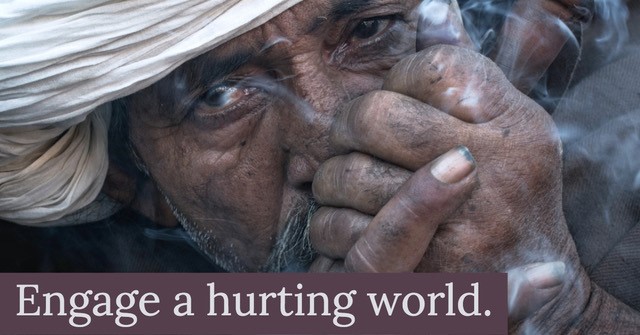
Four Reasons to Engage with a Hurting World

By Shane Bennett

As I sit and write this morning, southern Colorado fog limits the view from my window to a few dozen yards. Overhead, though, military jets are buzzing around in some sort of frenetic training exercise. The intermittent sound bugs me more than it should. Maybe because I can’t see them. Maybe because I’m trying to concentrate and just when I get in a groove, they light up again.

But then it occurs to me there are people for whom that sound is much more than annoyance. The ascending and descending drone of the jets predicts death and destruction, the continued upsetting of life at fundamental levels.

Somewhere in the world an airstrike means the kids can’t go to school. There’s no way to get to work, or no place to work if you can get out. The food in the cabinet will have to last, because there is no more left to buy now.

It may mean broken, twisted, still bodies. Friends, neighbors, and children who must be left where they lie for now. And for how long? Can you even imagine the agony of that calculation? How long until it’s safe to scramble out and retrieve your dead friend? When is it okay to run down the street to see what’s become of the preschool where your wife had gone to collect the kids?

Do you ever want to just turn away from such dark thoughts? I sure do. To focus on a happy, little life right here. The lure is strong and sometimes I succumb. But if you’re reading Missions Catalyst, it probably means God has done a work in you that renders you dissatisfied with that response. This is grace and a gift of inestimable value.

If you ever find yourself needing motivation to empathize with the world’s pain, some reason to re-engage, here are four things that reminds me to keep caring, and to act.

1. The present goodness of Jesus

Somehow Jesus is in the midst of the airstrike. I don’t understand it, but I can’t shake the reality that he’s there, he knows, he cares. All my sympathy and compassion look like vapor next to the real presence of the creator of the cosmos.

Jesus holds the hand of the dying, feels her final breath on his face, and mourns her slowing, fading heartbeat.

He stands with the refugee dad, despairing as the way forward is blocked and the way back simply gone.

He cries with the girl abused by the one she trusted the most.

He stands again in the furnace with faithful followers who trust him for their very lives, some living to see the next sunrise, others waking up in glory.

He is with us in the mess, bringing the very life of God to bear on his creation. Pointing us forward in hope.

2. God’s plan to make all things new

That hope toward which we move is summed up for me in two places in Revelation: John’s vision of the crowd before the throne, made up of a “great multitude that no one could count, from every nation, tribe, people and language” and Jesus’s personal pledge, “I am making everything new!”

Every springtime, every Easter, every Nowruz is practice for the ultimate renewal that awaits creation. That awaits you and me! Can you even imagine it? Is it too scary to try?

3. Our intrepid predecessors

Don Richardson recently traded earth for heaven. If anyone I personally know heard, “Well done, good and faithful servant,” it was him. I remember seeing a clip from his movie, Peace Child in which intrepid Don (sporting some wicked sideburns) and long-suffering Carol are being paddled up to a Sawi village. Say what you will, but that sort of gutsiness makes me want to pay attention, to engage, to—heaven forbid—not let Don down!

This is to say nothing of the biblical heroes of faith, the great missionaries of former centuries, and the Filipinos, Kenyans, Chinese, and South Asians whose noble sacrifice and early, painful transition to glory never made it to Western screens.

May we not sit down on the shoulders of such giants.

4. We were built for impact

We are not powerless. You and I were made to matter. Paul says we are God’s masterpiece, that “He has created us anew in Christ Jesus, so we can do the good things he planned for us long ago.” I don’t know what those “good things” are for you. I often wonder about it for me! But I don’t doubt Paul’s insight nor God’s good purposes.

It’s as normal as air to doubt this, but it’s in your DNA. It’s who we are.

Granted, it may feel like there’s nothing you can do about an airstrike in Yemen or Pakistan. And by most measures, you are right. You can’t be everywhere there’s pain. Nor could you handle it.

Heck, we couldn’t handle the unseen pain present just in our row at church on an average Sunday. Most suffering will transpire apart from our attention. But we know the one who knows it all.This great God has invited us partner with him in the reconciliation of all things.

Conclusion

Let’s not turn ourselves away from the world’s pain. We have good reasons to care and to take action. You can probably think of more than these four. Please share them (and these) with your friends.

And, since perhaps the best way to join in God’s redemptive work is through prayer, I’d like to invite you to jump into this year’s Seek God for the City prayer initiative, already in process. Perspectives hall-of-famer Steve Hawthorne has put together this guided prayer effort for our neighborhoods and the nations.

» Learn more and grab the app today or search “Seek God 2019” wherever you get apps.

Subversive Mobilization: Help!

I’m putting together a language tool for a sister newsletter I write called Muslim Connect. The tool will be a cheat sheet to help people say “hi,” “thank you,” and “you’re welcome” (or the cultural equivalents) in many of the major languages Muslims speak. I hope it will help normal people like us initiate conversations.

I’d love for you check it out and add words to the language(s) you know. I appreciate your insight and experience.

» You’ll find the list and pertinent instructions here. Thank you a ton.

⛔ Nine reasons you’re not going to make it ????

Nine ReasonsTraps and Tendencies that Keep Us from Global Ministry

By Shane Bennett

Editor’s note: We hope this month’s Practical Mobilization article provides some insight for you. You may, however, find it more applicable to those you are currently encouraging to follow God to the nations, essentially the ones you’d like to mobilize. Can I invite you to reprint this, share it widely, and forward it to the friends it might help? Thank you. — Marti Wade


Introduction

It’s the pinnacle of Christian service, right, the role of the foreign missionary? The long-dress-wearing, once-a-week-hair-washing, pop-culture-unknowing, weird-food-loving, strange-language-speaking, stunningly holy, terminally single woman who has given her all for an odd set of people and a hopeless work:

Is it any wonder you don’t want to be that?

But let’s say you’ve outsmarted the stereotypes. You’ve seen through the gauze of hero-worshipped missionaries. You can actually picture yourself serving God where God is little known. And now you’ve set your heart and head in that direction. You’ve put your hand to the plow (1 Kings 19:21).

Good for you. But you want the bad news? There are a thousand little evils in your enemy’s bag of tricks all custom-designed to keep you from doing what God has laid out for you to do. Here are just nine of them. Be on your guard.

1. The bubba you’ll fall for

He’ll fulfill 24 of the 25 items on your list since puberty, but he won’t care about the world. This doesn’t make him a bad guy. In fact, it makes him sort of a project and, for that, all the more intriguing.

Or Bubba may be a Barbara, and when you’re standing next to her in church twelve years down the road, you can know the capacity of God to make plans B, C, and Z work but still wish you were worshipping in another culture.

2. The specter of your past

I don’t know what people have said and done to you, nor do I know what dumb stuff you’ve done as a result. But I hear the whispers of those things even now: “You’re damaged. You’ve slept with too many. You’ve messed up too much. Your contribution to things that matter may be small. Don’t get your hopes up!” If you only hang onto 18 of the 1300 words here, let them be these:

You did not deserve the damage that was dealt you,
and it does not have the last word.

3. The weight of your culture

Like air and gravity, your culture exerts tremendous and largely unnoticed influence. It is relentless and almost always wins. The “bet the rent” odds indicate you will grow up to love, spend, and vote like your parents. The more that tweaks you right now, the greater the likelihood it will happen.

Thirty-one years ago, I could fit everything I owned on the roof of my little yellow Ford Fiesta, shared with two friends and all their stuff for the summer. Three months ago, I had three houses, a mountain of debt and five kids. I’m not kidding about the culture deal.

4. The lure of trendy causes

To be fair, some causes are trendy due to their merit and many of us should rally to them. Matt Damon is right about water. Malala is right about educating girls, and Jesus was right about justice for the oppressed (Matthew 25:31-36). But offering the life of Jesus in cultures that so far have heard little about it has not often been trendy, nor is it now.

Causes are rarely single and compartmentalized, for sure. It’s a messy world. But this is true: If some of us do not focus on and work terribly hard to tell people who haven’t heard about the life Jesus offers, we will drift toward work that’s easier, more measurable—and honestly, trendier.

5. What you take in as entertainment

I have no right to judge your viewing habits and I would not float mine forward as a good standard. But let’s be honest, we live in a time when you can see pretty much anything you want at pretty much any time. Our dads had to hide their dirty magazines. You get email invitations to look at stuff and you simply need to angle your phone a bit.

This is not easy to deal with, but it certainly works against our spiritual health and maturity. At the shallow end, it makes us weak. At the deep end, it will leave you disqualified and sitting on a pile of manure you’ve shoveled together yourself.

6. The debt you’ve accrued

It may have seemed like a good idea or it may have looked like the only way, but now, oh my, what a mess. Again, I have no grounds to judge, but let me encourage you to question the common narrative, to consider who benefits from you buying that next shiny thing, to think critically about the messages of your culture, and to bring someone older and smarter than you into the loop of your money habits. (Yeah, people actually do that. It hurts like heck at first but makes you happy later.)

7. The need to please others

Right now, you may be doing any number of things simply because your parents wouldn’t want you to do them. That’s normal. But over time it’s also normal for us to want to live a life that makes sense to the people most important to us.

This is part of what makes society work and shouldn’t be written off too hastily. But it must be weighed against the tendency of God to ask for radical obedience and his track record of using ordinary dopes like us to accomplish extraordinary things, and often to the bewildered surprise—even disappointment—of friends and family.

8. The lazy longing for comfort

Life is hard work and most of us at some point give in to the desire to float downstream for a while with a cooler nestled in the tube tied to ours. But to find yourself doing effective work in North India, speaking Urdu like a champ, will require more than going around the bend of a lazy river.

You may be flush with your own power and energy, right now. That’s God’s gift. Run with it! But keep your head up and your eyes open. You wouldn’t be the first rock star to find yourself satisfied plinking a couple of tunes around a campfire.

9. A numbing love of tolerance

ISIS and the devils in Burma (and elsewhere) notwithstanding, tolerance is the tenor of global culture these days. It is the utopian theory du jure.

Honestly, it has a lot going for it. Jesus was certainly more tolerant than the religious leaders of his day. And people will like you better if you overlook their quirks and flaws. But what do you do when the wave of tolerance washes over you and you wonder if Jesus really is necessary for life?

Tolerance to the right degree will enliven your Christianity. Taken too far, it will neuter and then kill it. Well before getting to that point, you will have compromised enough to give up the crazy notion of raising your own salary and raising your kids in a killer hot place with little or no access to the internet.

Conclusion

If you’ve made it this far, can you do two things for me?

1. Respond

Take a second to share which of these would most likely knock you or your friends out of the race, or another thing if I failed to mention it. Comment on Facebook, reply on Twitter, or share your thoughts on our website.

2. Remember

Since this list is too grim for even my worst days, remember with me that God is more powerful than all of these, in all their various combinations, in all areas of our lives.

These nine reasons you’re not going to make it could be—should be—proven wrong. One day I’d love to have coffee with you right in the middle of what God calls you to and celebrate our respective victories.

Scanning the Edges, Rustling the Hedges

Missions-Catalyst-no-tagline_largedaniel-chen-193019-unsplashScanning the Edges, Rustling the Hedges

Where field meets woods or fence meets field, that’s where the wild things are.

By Shane Bennett

Over Christmas and New Year, I’ve been tooling around Indiana and Ohio. Good days in real places… driving roads so hilly a Rambler could catch air… looking out over ponds and fields and woods, trying to channel my inner Wendell Berry.

Being here reminded me of one of the coolest classes I took in college, Wildlife Biology. I should have killed it. It was dead center in my sweet spot as 19-year-old. Instead, I got a C; in part because I couldn’t remember the number of square feet in an acre! (Still can’t.)

One thing in that class that did stick: the idea of “the edge,” the frontier where field meets woods or fence meets field, and the ditches that border country roads or drain acreage. That’s where biology really happens. That’s where the wild things are.

Over the years I’ve developed a habit of scanning the edge while I drive. Of course, this must be balanced with watching the road and firing off important texts. (Not really! Don’t text while driving!) I look at the road but also beyond, gazing along fence rows, scanning where weeds and trees abut. Sometimes, and with increasing frequency as the habit solidifies, my scanning is rewarded by the scamper of a squirrel, the flash of a white-tail deer, or a new bird for the life list. Simple, good pleasures for which I say thank you to the Father.

Fascinating Creatures

This is a risky metaphor, but I regularly have more passion than sense, so let’s try it: There are edges in our lives, geographic ones and social ones. These edges are inhabited by fascinating creatures. People aren’t possums and I know my unguided curiosity can reduce humans to concepts and make the amazing creatures we all are into caricatures like those drawn on the streets of Disneyland. But the point stands:

Fascinating people lie on the edges of the main pathways of our lives. As followers of Jesus our invitation is to see them. Really see them. As well as connect with them, learn from them, and when appropriate, serve them.

Jesus was the master of this. I’m sure I don’t understand the full measure of social capital he happily spent to hang out with the woman at the well in John 4. You can almost see her, shy as a bird looking for a place to hide, when Jesus strode up to her at the well, uninvited.

Scan the landscape of your life for a moment. Who’s hanging out on the edges? Who’s the woman at your well? Your Zacchaeus? Who’s sick, in body or mind?

Because you’re smart, you’re probably already dissecting the metaphor and part of your brain is saying, “Hold on, Buddy.” Here are some cautions, caveats, and cop outs:

1. Wild things are wild.

Deer are beautiful, but you don’t bring them into your living room. You don’t let raccoons ride in the car with your kids. Caution is required.

But Jesus did this kind of thing! It stresses the heck out of me. I hear about folks who are loving marginalized people, opening their homes and I think, “Those are the heroes.” Jesus gives a wonderful parable in Luke 14 to show God’s commitment to those on the edges. A man scheduled a feast and the cool people wouldn’t come. So, he went after the rest, relentlessly. We are the rest. There are still more in the hedges and the streets, the ESL classes, and the little tent towns by the river. Does God want us to take them to lunch? Invite them home for dinner and a swim? Would Jesus do it?

2. You gotta keep your eye on the road.

You have a life. People who count on you, stuff that requires your attention, commitments long since made that must be honored. There’s no time to scan the edge, is there?

Now it would be absurd for me to judge your life. But let me say something outright that this time of year invites us to consider: There may be some things we could drop, stop, ease up or let go. Bob Goff famously says you can quit anything on a Thursday. If you’re reading this article the day it goes out, that’s tomorrow.

Anything come to mind? I’m taking an almost imperceptible step in the right direction by backing off on Words with Friends. If that doesn’t kill me, I’ll look for the next way to get my phone out of in front of my face to free a little time and attention for the edge.

3. There may be other people in the car.

Your posse might not approve you caring about people in the edges. For some of us this is a bigger deal than it should be. “If the tribe thinks it’s silly, maybe I shouldn’t do it.” Personally, I’m realizing with fresh disgust how deeply I crave the approval of my people. It’s not pretty, but it’s real. Let’s face it.

Last week, driving home with a pastor friend, I pulled up by a panhandler at a stop light. I grabbed snacks someone had given me out of my bag, asked him if he was hungry, and handed them over, perhaps in part to impress my friend. That went south when he commented that the guy had been there awhile and was being used by his family who capitalize on his diminished mental state.

God gives us friends and family for our benefit. But he also gives each of us nudges, passions, and weird ideas for the benefit of that community and beyond. Grace to you as you walk out the balance. I know I need that grace.

There’s also this perennial mobilizer warning: Just because something is your thing, don’t communicate that it’s everyone’s thing. (Unless of course it’s connecting with Muslims, which clearly God wants to be everyone’s thing!)

4. Finally, you can’t live in the edge.

I’m a 53-year-old white guy. I’ll never roll with the gangs like Father Greg. As someone who can drive a manual transmission, I can only marginally relate to Millenials. And as much as I love Muslims and am honestly devoted to them and the hope of life for them, I don’t understand a fantastically huge amount more than I do understand.

We can’t be them, the people who are in the edges for us. But we can be quiet. We can listen, look, and cherish. We can risk the embarrassment of reaching out and being rebutted, being told we don’t belong. We can try to connect, risking unintentionally assuming the role of patron, walking arrogantly in our privilege. We can live maybe a little more dangerously, a little more generously. If we’re careful, we just might learn something deeper about the dignity of humanity, the shrewd power of the underprivileged and the tender heart of a great God toward those in the edge.

I want to give it a go. Care to join me?

Practical Gratitude: Five Reasons to Go Big on Gratefulness

GratitudeFive Reasons to Go Big on Gratefulness

By Shane Bennett

In our current culture wars, I would like to think I choose my battles carefully. The evidence might indicate otherwise. Certainly, I’m prone to be judgmental toward people who engage with great tenacity on different issues than I do. For example, I could hardly care less if someone says happy holidays or merry Christmas. And I recently went on record saying it was cool that two particular Democrats were elected to Congress (because they were Muslim women, not because they were Democrats).

That said, without getting all whiny about Christmas chattel in Walmart already, I want to plant a flag, wave a flag, or do something with a flag that says, “Thanksgiving is cool” in big, bold, pumpkin-spice-scented letters!

Thanksgiving is essentially what a holiday should be: family, friends, food, and conversation all infused with this warm and grateful internal realization, “Ah, I’m not dead. You’re not dead either. Woohoo! This is good.”

If you hold to the basic tenets of Christianity, we of all people should be given over to gratitude. An uncreated Creator, omnipotent and omniscient, likes us. He went to great lengths to bring us back to himself. And he offers complete forgiveness and purpose-filled life forever starting now! That’s worth a hearty thank you very much. (Tweet this.)

Here’s the trouble: As mobilizers, we spend a good chunk of our time pointing out what isn’t done yet, the difference between what we see now and a completed Great Commission. We talk about needs and suffering. We’ve learned that response often correlates to how bleakly we paint the picture, and funding follows fear.

My purpose here isn’t to encourage you to stop that, but rather, given that reality, to inspire in us a fresh focus on thankfulness. You may or may not need a reminder. I do. About once a week.

Why go big on gratefulness?

1. The Bible says so.

Since you can probably quote Paul’s admonitions to gratitude better than I can, let me back up to Jesus for some biblical basis: In Matthew 5:14-16 Jesus says,

“You are the light of the world. A town built on a hill cannot be hidden. Neither do people light a lamp and put it under a bowl. Instead they put it on its stand, and it gives light to everyone in the house. In the same way, let your light shine before others, that they may see your good deeds and glorify your Father in heaven.”

I wouldn’t split a denomination over this, but I think part of what makes our “light shine before men” is gratitude. When we’re thankful, the light of Jesus shines and people glorify God. I love it when that happens!

2. Gratitude reflects reality.

If we rightly understand the fundamental aspects of reality—that we exist, that we know it, that we exist and know it because of a good God, these naturally engender gratitude. You and I have life. And because of God we have hope.

3. Gratitude reshapes our psyche, outlook, and future.

According to Benedictine monk Brother David Steindl-Rast, “It is not happiness that makes us grateful, but gratefulness that makes us happy.” For a three-and-a-half-minute elaboration on this, check out Brene Brown. For ten change-your-life minutes, watch Ann VosKamp unpack the science and practicality of gratitude.

4. Thankfulness lifts others around us.

I am blessed when I hear people honestly express a sense of gratitude. When they’re grateful for me, of course, but really, regardless of what they’re thankful for. I love to read expressions of gratitude on Facebook and the list of “praises” that often go next to “prayer requests” on ministry newsletters. Oh sure, a little jealousy might sneak in when someone says, “I’m just so thankful that we’re at 118% of our support goal after these arduous five weeks of effort,” but you know, usually I’m blessed!

5. There are so many things for which to be grateful.

For mission mobilizers, the list is long. Although much work remains to be done, God has done so much already. And we live in a time when the growth of his kingdom is staggering. Skim Robby Butler’s article to feel the joy and hope being birthed in some 650 current movements to Jesus around the world.

Two final thoughts to make this as down-in-the-dirt practical as possible:

Who should we thank?

  • Thank God! More and more and more. He has been so good to you and me.
  • If you raise funds, thank your donors. (This is for me. Of course, you thank your donors!)
  • Thank your parents. Most of us could do this more than we do.
  • Thank people before they die. A nice obituary is honorable. Tell them before they die and it really rocks.

How should we practice gratitude?

You’re a grown up and probably already have eight ways you’re doing this and four more you’re considering. Even so, I’d like to invite you into a little experiment: I’ve set up a Google doc for Missions Catalyst readers to daily write down what they’re thankful for between now and US Thanksgiving Day on November 22. Simply scroll down to the correct date and write a couple or three things you’re thankful for.

Join me in doing this for each of the next nine days and we will have begun to form a habit. I’m pretty sure I’ll be better for it. Will you join me? I’ll be grateful if you do!

» Express your gratitude.

Subversive Gratitude

Some of the most potent expressions of gratitude come when your life has spun out of control and darkness has descended like a heavy blanket. I’m writing this in the aftermath of having lost the most important earthly relationship of my life. Much is in question. The way forward is unclear. The pain intense. Even so, I want to practice gratitude.

I’m thankful that Miss Bowers taught me to type in high school. I’m grateful that the current Colorado snowpack is 170% of average and may mean we won’t be plagued by drought next summer. And I’m thankful to be a part of a tribe with you all. Children of God. Loved. Chosen. Anointed. Empowered. And sent.

I don’t know how dark your days are right now. Maybe the worst you’ve seen. Know this: I’m thankful for you and I’m thankful with you.

Out of the Seats and into the Streets | Practical Mobilization

Missions-Catalyst-no-tagline_large

Out of the Seats and into the Streets

Jeannie-Author-Photo-NEW-333x500An interview with mobilizer Jeannie Marie about her brand-new book

By Shane Bennett

My friend and colleague Jeannie Marie knocked it out of the park with her wise, warm, and winsome book, Across the Street and Around the World: Following Jesus to the Nations in Your Neighborhood… and Beyond. With engaging stories and practical insight, she points the way for normal people to make extraordinary contributions to God’s kingdom.

I am loving this book and expect it to become a significant tool in the mobilization toolbox. Jeannie graciously answered some questions for us about the book and her life and offered some suggestions for us as mobilizers. Read her thoughts, then grab a copy of her book.

Q: Who do you hope will read Across the Street and Around the World?

  • Ordinary believers who know they want to make a difference in the world, but just don’t know where to start.
  • Small groups who want to practice reaching out to internationals right in their city and need practical steps to know how to do it well.
  • Teams going overseas on short-term trips who need a good, comprehensive training tool that lays it all out in one place.
  • Pastors who hope to inspire their people to fall in love with God’s heart for the nations and need a simple resource anyone could read.
  • Jesus-following college students, millennials, and retirees trying to figure out if God could send them to the ends of the earth.

Q: What do you hope to see Across the Street and Around the World accomplish?

I’d like to do for discipleship and global church-planting conversations what When Helping Hurts did for poverty alleviation. That is, to help regular people with passion not mess it up too much—and do it well— because now they get the whole picture. And to see ordinary people with a global spark know how to light it up by taking a first step, then keep it going.

I’d love to see people trying things they’ve never tried before, right where they live, like having a refugee family over for dinner. And then a few of those people finding themselves on the other side of the world, speaking Urdu, eating chicken liver on a stick, talking to a rickshaw driver about Jesus.

And the visionary part of me? I imagine that Revelations 5:9 scene with all the peoples from every nation, tribe, and language worshipping the Lamb. I’d like to rub shoulders with the Muslims, Hindus, and Buddhists who came to faith in Jesus Christ because somebody picked up this book and did it.

ATSATW-3D-portraitQ: What is your favorite part of the book?

I smile to myself when I re-read chapter ten. I like stories about people changing. I remember a short trip to Morocco in which I was wrapped in a colorful sheet they call a mulafa in the desert, returning to the white-picket fence suburbs to wrestle with such different worlds, then ended up living with my family in a bright green house in the middle of ten million Muslims in India. That was fun to write.

Q: What was most challenging thing to write about in this book?

How to inspire people to identify and surrender their cultural expectations about things like prayer, church, and even their own religious labels so they can step into someone else’s space with just Jesus on their arm and not a lot of other expectations. It’s tough to describe such a radical theological shift gently without offending traditions people hold dear—and at the same time not use a lot of big, theological words that lose people’s interest.

Q: In your opinion, what five things that will make the biggest difference in reaching the world?

  1. People who spend so much time with Jesus, they know his voice and do what he says.
  2. People who pray. For real. For hours, because they enjoy it and see God doing things.
  3. People who take thousands of small steps in an intentional direction towards the pain, the poverty, and the people with least access to Jesus.
  4. People who plant themselves in strategic places surrounded by millions who don’t have access to Jesus. They learn the language, cry the tears, and bleed the blood, until they can train up local people to reach their own.
  5. People who figure out strategies such as how to foster movements in urban poor cities, how to mine the potential of social media and cell phones, and how to adapt our good news messages to each new generation.

Q: Have you ever seen a mobilizer be really annoying? How can we avoid that?

Mobilizers who only talk about their specific group, trip, or organization without customizing the message (or even totally dropping it) based on who is in front of them feel stale to me. We could listen to people first and find out their passions, interests, and experience. Then, if it makes sense, connect them to a story we could imagine them living.

Here’s a fun way to make the conversation all about them. We can ask them to take this quick quiz on their phone: What Kind of Global Goer Are You? Then, if they’re a Bleeding Heart, a Strategic Thinker or an Adventurous Traveler (see chapter ten!) we can tailor our message and invitation to fit the way they’re wired.

Q: Any tips for getting our pastors to read Across the Street and Around the World?

Put a copy of the book in their hands and tell them it will get their people out of the church seats and into the streets, right where they live. Tell them it’ll guide ordinary believers to take a few first steps, starting soon and starting small right where they live.

As their people start putting a face that’s a friend on the big word “nations,” they’ll start going into the city, and a few will venture across the sea. The people they shepherd will grow closer to Jesus in the process—and influence the world.

You can point out the small group plan at the back of the book and all the useful tools at AcrosstheStreetandAroundtheWorld.com, like sermon-series plans and an all-church global challenge where the whole church eats beans and rice for a week while they send a team to love on refugees.

Q: What’s the next book coming from the Jeannie Marie keyboard?

This two-and-a-half-year-old baby just got born yesterday, and you’re already asking about the next one?! Actually, I live so far in the future inside of my head that book two and three are already written in my mind.

Dress for Heaven shows how to practically live out the way heaven is meant to be, where God is in charge right here on earth, in different spheres of our life: career, family, marriage, purpose, play, and such. If you write and tell me what you think about book number one, I’ll tell you about book number three!

Q: Toward the end of the book, you lay bare the American dream. Talk about your journey of surrender.

While reading the audiobook in the studio, I kept stopping the sound engineer during chapter eleven. I could only read a line at a time in parts because I would start choking up with tears because I lived it. Like when my rich uncle died at a ripe old age and God advanced some of my parents’ treasure in heaven ahead of time through him after they’d followed Jesus for fifty years around the globe. When I finally gave up my beloved dining room table to move overseas. And when God changed the address of people I knew living in foreign countries and gave them an address in heaven.

Surrendering the American dream gets real and personal. A good mobilizer lives it out so we help other people get a feel for the story they might get to live, too.

A Word from Shane

I almost never use this Practical Mobilization column to sell stuff, but I’m asking you to buy this book. If our tribe helps the book go big in its launch week, we’ll contribute to its broader success, help build momentum, and encourage both Jeannie and her publisher, Thomas Nelson, to produce and distribute more good resources like this. Thanks.

New Flavors on Your Local College Campus | Practical Mobilization

spiceNew Flavors on Your Local College Campus

By Shane Bennett

In the US, where I live, as the first crisp mornings of autumn begin to dawn, so does the increasingly pervasive presence of pumpkin spice. I’m no historian, but I think this started with pumpkin pie, a yummy dessert that previously only showed its tasty face at Thanksgiving. Now pretty much anything that can be sold will come in a pumpkin-spice option between September and Christmas.

Autumn also brings spice of a different sort. International students from all over the planet bring flavor to our nation’s campuses. What a gift they are! A chance to connect with people from places we’ll never go. The opportunity to learn about cultures from insiders. Sometimes, deep conversations with people who have never met someone who loves Jesus.

Intrigued about reaching out to international students, but feel you have nothing to contribute? Consider this: You live somewhere, right? You speak the local language, right? You know where to get decent food for relatively cheap, right?

Those are the raw materials. Add some curiosity, compassion, and the most precious of all resources, time, and you’re ready to go.

Where to Look

It’s not like hunting mushrooms or good deals at the mall, but let’s face it: international students are probably not going to simply show up unbidden at your door. If they’ve come thousands of miles to our towns, though, a couple phone calls and a 20-minute car drive are probably not too much to ask of us.

Here are three ways to start:

1. International Students Incorporated.

Go to isionline.org to see if they have staff at a nearby school. These guys are great and may have set up connecting events you can attend. They may also be able to introduce you to people who’ve befriended students for years and are happy to welcome newbies to the work.

2. Christian student groups.

Check out campus fellowships like Cru and InterVarsity as well as churches near campus to see if they have connecting points.

3. Not-so-Christian groups.

Do what my friend Grace did. Show up at events sponsored by a school’s Muslim Student Association. This is gutsy, but odds are pretty good you’ll meet some Muslim students.

What to Do

1. Food.

Some time ago, a school near us had a focus on recruiting students from Turkey. We connected with a couple of them and invited them over for dinner. Mulling over the menu, we settled on Turkish food. On the one hand, who does this? Makes someone their own kind of food? It will never be as good as their mom’s version! On the other hand, they hadn’t had it for several months. Maybe anything that comes close would be nice. Not a morsel remained at the end of the meal!

Feeding people is such a broad avenue to their hearts. Any kind of food. A little time on Google will help you avoid what isn’t kosher in their culture. You can do this. And if you can’t, Appleby’s or Cracker Barrel probably can!

2. Fun.

Because conversation may be awkward in the early stages, I like to have something fun to occupy the initial weird spaces. Pick an activity you do not excel at (and for me that list is long). Miniature golf and bowling are two that provide little windows for conversation and ample opportunities for people to laugh at me. A visit to nearby natural beauty spots can work as well.

3. Photos.

“Can you show me pictures of where you live?” demonstrates your curiosity and care. Showing true interest in someone’s life is an amazing way to bless them. Start with questions that are easy to answer, and if you have the time and common language, aim for deeper topics. You probably know this, but asking questions that can’t be answered with yes, no, or a list will elicit longer and more narrative answers. We want to hear their story and share ours.

What to Watch Out for

1. Messiness.

Whenever people from different cultures try to interact, there’s bound to be misunderstanding. And not just language. We approach some of the basic aspects of life differently: time, money, relationships, and more. Below the surface stuff gets crazy. This is all complicated by the varying status roles of student and host and by the fact that each person is trying to adjust to the other while the other is trying to adjust to them. (Maybe it’s better to just stay home and watch TV?)

2. Busyness.

If you initiate a relationship with an international student, be prepared for them to be very busy. This might be because they’re crazy smart, pursuing two master’s degrees simultaneously, and carrying the weight of their family’s hopes and dreams in their book bag.

On the other hand, they might not yet believe you really want them to hang out and busyness is the safest excuse. In many cultures normal people refuse the first one or two invitations out of politeness and accepted protocol.

Don’t give up too soon. This is a bit of a dance and varies according to at least eighteen invisible factors. Our only hope is practice and the Holy Spirit.

But let’s say you’ve met a friend and set a time for them to come to your house. You’re golden—right up until you’re not. You still need to watch out for a few more things:

3. No shows.

Maybe your friend panicked. Maybe they told you “no” in ways that for all the world sounded like “yes” to you. Maybe they just forgot. Say a prayer, eat the food, lick your wounds, and try again.

4. Bonus shows.

Your wife sends you to pick up your two international student friends for dinner at your house. You arrive to see five—no, six—guys standing at the curb! You brought the Suburban, so you’re good to go. Discreetly text your wife and ask her to super-size the rice!

5. Picky eaters.

You know the rules, right? Eat what’s set before you. That’s what sharp cross-cultural people do. We can’t really enforce that in the other direction. Sometimes there are doubts, concerns, and issues that can’t be spoken which will cause people not to eat your food. And though this is hard to believe, maybe pumpkin spice just doesn’t work for them!

Conclusion

If all this sounds like kindergarten to you, great! Could I encourage you to advocate for international student outreach at your church, with your home group or Bible study? We’ve been given a rare and wonderful gift. We have a chance to act like Jesus and provide acceptance, care, and grace to people who are outsiders in our midst. Let’s not miss it.

Subversive Mobilization: A Sneak Peek at October

Jeannie Marie, a friend and colleague, has written a wonderful and winsome book called Across the Street and Around the World. Next month I’ll interview Jeannie and invite you to get your hands on this great new resource.

Before its official launch on October 2, however, you can pre-order the book, get some cool bonus material, and begin to scheme with me about how we might use it.

Jeannie’s the real deal. And if you’ve chosen to read more than one Missions Catalyst article, you’re probably going to love this book.