

Encouraging Developments | Practical Mobilization

Greetings!

Missions-Catalyst-no-tagline_largeGood NewsSolomon says good news from a far-off land is like water to a weary soul (Proverbs 25). Could you use some? Me too.

This month I want to share with you some developments my friend Robby Butler is seeing as he looks at God’s work around the planet. Robby has spent decades studying the promises of God’s Word, looking at the ways those promises are being fulfilled, and calling believers to participate in fulfilling the Great Commission.

Read on to see why Robby thinks we have reason for great hope in these days.

Give your soul a drink!
Shane

Encouraging Developments

By Robby Butler

Behind the global turmoil that preoccupies so much of the world’s attention, God is quietly reaping the greatest spiritual harvest in history, while preparing an even greater harvest.

And at the center of this global outpouring is prayer, along with the intentional pursuit of movements, empowered by the Holy Spirit, to motivate and equip disciples and small churches to reproduce rather than just gather believers to receive ministry.

Following are the most significant developments I have seen over the past year in this global revolution with links to related resources. Suggestions for improving or expanding this list are welcome.

1. Focused Prayer

In May of 2017, global prayer network leaders met with mission leaders to focus prayer on the remaining missionary task. This has birthed a growing global focus on prayer for movements to complete the Great Commission. Watch an inspiring video.

2. Closure Focus

Shortly after this focus on prayer, the 24:14 Coalition formed—dedicated to pursuing movements of rapidly multiplying small churches and disciples in every remaining unreached people and place by 2025. Read about the coalition or watch a video update.

3. New Awareness

The trust environment created by formation of the 24:14 Coalition led many movement leaders to share with each other what God was doing. This jumped the April 2017 estimate (162 movements with 20 million new disciples) to a 2017 year-end confidence of nearly 650 movements with 50 million new disciples. (I detailed this new awareness in a Mar/Apr 2018 Mission Frontiers article, which I later revised and posted here.)

4. Rediscovery of Movements Strategy

The July/August 2018 Mission Frontiers is dedicated to revealing the pivotal relevance to movement practitioners of the parable Jesus himself entitled “The Parable of the Sower” (Matthew 13:18). We have often misunderstood and misapplied this parable to be teaching us what kind of soil or seed we should be, when in fact it points to the strategy Jesus modeled as a sower. Read the articles.

5. Refugee Dynamics

God is using the global refugee crisis to bring blessing to peoples that were previously isolated from the gospel. (Read observations from our 2017 participation in refugee ministry in Europe).

6. Family Blessing

Movements—the Word of God blessing families and other relational networks—are an important corrective to the tendency of most evangelism and church planting efforts to focus on individuals without regard for their family relationships. I excerpted two books on this for the Mar/Apr 2016 Mission Frontiers. My friend Chuck White drafted an article correcting a common misuse of scripture to win individuals away from their families. I hope to have this expanded to a clarification that God’s intent to bless families is the foundation for discipling nations.

7. Fear Exposed

Satan’s hold over most unreached peoples is partly through their fear that Christianity will tear apart their families and communities. Evangelism that pulls individuals away from their families compounds this fear. Movements correct this problem by blessing families. At the September 2017 meeting of the International Society of Frontier Missiology, I presented an adaptation of McGavran’s article explaining this dynamic. Read an updated version.

8. Disparity Recognized

India has long received only the prayer and laborers proportionate to its classification as a country, while in fact India has a larger population and more complexity than most continents. While most countries receive an average of one missionary for every thousand people in their unreached people groups, India receives only one missionary per 46,000. India is home to nearly half the population of all unreached people groups and has more complexity and need than all of Africa. Awareness of this disparity of needs and resources is stimulating increased prayer and efforts toward starting movements on the Indian subcontinent (India, Pakistan, and Bangladesh). Here’s the data.

9. Frontier People Groups

In early 2018, the concept of frontier people groups (less than one Christian family of any kind per 1,000 families) brought fresh clarity to the remaining task. Read about frontier people groups.

10. Prayer Focus Continued

God continues stirring global prayer for movements among the largest remaining frontier people groups. A small team of global prayer network leaders has pulled together a 31-day prayer guide for the largest frontier people groups (revision in process).

11. Reliance on the Holy Spirit

Steve Smith’s Spirit Walk: The Extraordinary Power of Acts for Ordinary People reintroduces the ancient fruitfulness of following the Holy Spirit’s leading in the pursuit of movements.

12. Movement Training Hubs

The 24:14 Coalition update in the July/Aug 2018 Mission Frontiers reports on the significant development of intentional movement training hubs to accelerate the equipping of more disciples to start movements among peoples that most need them.

13. Annual Increase of Believers

If the data I am now studying is correct, for the first time in history the annual population increase of believers will soon surpass the annual increase of non-believers, and shortly thereafter the number of non-believers in the world will start decreasing. See my draft chapter for an upcoming book on the 24:14 Coalition.

Never in history has the Holy Spirit prompted such global collaboration in focused prayer and labor toward biblical, multiplying discipleship among the peoples and places still waiting in darkness.

He who testifies to these things says, “Yes, I am coming soon.”
Amen. Come, Lord Jesus (Revelation 22:20).

Again, I welcome your suggestions for improving or expanding this list.

Thank you, Robby, for this great list. And thank you, God, for the way you are at work in our day bringing the abundant life of Jesus to all peoples.

Adapted from Extraordinary Global Kingdom Developments, June 24, 2018.

How to Ace a Global Report to Your Church (the Five-Minute Guide)

640px-sennmicrophoneBy Shane Bennett

Is the pain as real for you as it is for me? The worship leader begrudgingly surrenders the microphone (just kidding, worship leaders!) to an ill-prepared but enthusiastic “missions person.” A low collective groan rumbles across the room. By the time Missions Minute Man has adjusted the mic and begun to speak, no one is happy anymore. It’s not as bad as a root canal or a sermon on tithing, but close.

If you’re reading this article, odds are good you’re into missions to some degree, and as such have seen a ton of missions-related promos in your day, maybe given a few yourself. And if you’re honest, you might admit: we haven’t always knocked it out of the park!

Give me another four and a half minutes and I’ll give you five key principles that could help you become the mission-report equivalent of Charles Spurgeon, Tony Robbins, and Maya Angelou rolled into one. You’re going to kill at this!

1. Ask for Some Time

Here are two things I think you’ll agree with me on: that most churches could use more in the “sharing cool global-God kind of stuff from the pulpit” department, and that they’re probably not going to ask for it.

So, job number one for a killer missions promo is get the time. Maybe your church is so super giant that this just never happens. No worries. Your Sunday School classes and adult fellowships are probably as big as most of our churches! So focus on them.

Courage, my friends: Follow the prescribed path to get five minutes in person or on the phone with your pastor. Explain what you’d like to say and why saying it on Sunday morning will help (not just help you, but help the church). If you get a bit of resistance, it’s because your pastor wasn’t born yesterday! Remember, we may be digging out of a hole here because of past experiences.

If the resistance holds, try this: Offer to videotape the whole desired report, submit it to your pastor, and ask that it be shown. It may never happen, but being willing shows humble moxie.

2. Make It Great

If you get a chance to share, pledge before God and the memory of legendary mission mobilizer Lottie Moon that you will not mess it up! Rather, you’ll make it unforgettable. In decades to come, people who were present for your report will die with a smile on their face as they recount how well you did!

You’ll make it great by making sure it is:

  1. True.

Email and the Web will lie to you. Check and double check any facts, and resist the urge to exaggerate stories. Say things only with the degree of confidence you actually have.

  1. Important.

An average service is only about 90 minutes long, and some are shorter. Time and attention are precious. Let’s not waste them by talking about stuff that doesn’t really matter. Of course that’s subjective, but do your best. Maybe even risk running your thoughts by your spouse or that one surly deacon as a test.

  1. Compelling.

If you can do it in the time you have, tell a story. “Here’s a thing that happened” and “Here’s why it matters.” Stories, told well, are almost impossible to resist. Leverage that.

3. Make It Short

Plan to use only two-thirds of your allotted time. This will do two things for you: You could stand out as one of the few people who ever ended early! And if you do go long, you can still end within your allotted time.

As we all, know, it’s better to leave people wanting more than to end with people just leaving!

4. Make It Hopeful

At any given time, a higher percentage of your church than you’d like to admit is probably thinking God’s getting beaten. Let’s try not to reinforce that. I confess I’m not above using some heart-grabbing statistics or a gut-punch anecdote to get people’s attention, but don’t leave them there. Presumably you have given your situation, so help others see where God is at work in it. Take a long view on what can happen. Paint a picture of the godly redemption that you foresee.

If the situation you’re reporting on is apparently, from all angles and as far as you can see, God-forsaken, go ahead and say so. But honestly, if you do that more than once a decade, people may think you’re being hyperbolic.

If God is doing anything, he’s redeeming this whole broken mess. Let’s remind each other of that as often as we can.

5. Make It Actionable

When you step away from the mic, your audience should have something to think, something to feel, and something to do. Encourage them to:

  1. Think.

Present information that is so new and fresh it requires mental processing to integrate.

  1. Feel.

Pluck heartstrings. Most of us let our emotions have a pretty big role in our actions.

  1. Do.

Give people a way to play a part! Even better if the part is somewhat tuned to who they are instead of just a need for any non-flatlined body to join your team. Invite people to pray, give money, invest time, visit, advocate, help, adopt, fight, post, and share.

If you really want to swing for the fence, give them something to take home! As missions people, I think we underuse the tchotchke. A tiny trinket will help people remember your cause. I’m currently giving away small beads made from the lava of Mt. Etna to help people remember to pray for refugees in Catania, my beloved city that sits at the base of that volcano.

Run your next global report through these filters. You’re going to do great! Maybe together we can turn the tide on mission talks. Thanks for reading this and sharing with others you think will benefit from it.

» Comment and share your ideas on Facebook, Twitter, or our website.

Note: This article was originally published in Missions Catalyst on October 12, 2016. We thought it was worth an encore!

Image source: ChrisEngelsma, Flikr/Creative Commons License.

Do’s and don’ts for a summer of mission mobilization | Practical Mobilization

Missions-Catalyst-no-tagline_largesummer mob headerHere in the northern hemisphere, it’s summertime. I’m typing this after 8pm, and it’s still light enough to read. I don’t know about you, but for many of us, summer brings a shift in the basic schedule as well as in the heart: It’s an opportunity to try something new, go somewhere cool, kick back for a few minutes, and think about stuff.


Summer offers us some special ministry opportunities. Here’s a quick list of summer mobilization “to do’s” with a few “to don’ts” thrown in for fun.

Do: Watch some World Cup matches.

If you’re reading Practical Mob when it launches, the FIFA World Cup starts tomorrow. If you’re getting to it later, the tournament is already underway. If you’re game, shoot me a note and tell me why I should root for someone other than Egypt and Senegal!

Bonus points: Watch a match with representatives of one of the six Muslim nations who are competing. Boss level: Show up with halal snacks.

Don’t: Go on endlessly with your friends about how you watch the World Cup and like football, what the whole rest of the world calls it, not soccer.

Do: Keep praying.

Summer doesn’t mean the need for prayer takes a pause. If you haven’t yet, set a daily alarm for 10:02am. When it goes off, wake up and pray like Jesus said to in Luke 10:2… Ask the Lord of the Harvest to send laborers into his harvest.

Don’t: Forget to also pray for the laborers you know. Sometimes they feel like lambs among wolves (Luke 10:3).

Do: Enjoy time with your family.

Eat a good meal and watch a sunset. If you’re an overachiever, make it a sunrise. This kind of advice is straight up from Ecclesiastes, so you’ve got solid biblical backing.

Don’t: Forget that much work remains and needs to happen during the summer, like promotion for that upcoming Perspectives class. If someone’s going to take a class that starts in August, they may need a kind person like you to invite them in July. If your church has a fall missions conference, book the speaker now before someone else snatches her up.

Do: Discuss issues of global importance.

You may find that as you hang out with your friends and family around the campfire, something happens after the sun and some beers have gone down: People open up and talk about real stuff. Look for the conversational openings. This might be a great chance to dream and speak deeply of the purposes of God and his plan for your lives and maybe even the nations. Unless you’re Baptist, in which case you might skip the beers.

Don’t: Try to do this during a game of Watch Ya’ Mouth or, if you live in the Midwest, anywhere near a Euchre tournament (where table talk is discouraged). Also, don’t pout because I teased you in the last paragraph if you’re a Baptist. I know you all are taking some hits lately, but you’re still leading the way at many of the global frontiers of the gospel. I’d be honored to drink sweet tea around a campfire with you.

Do: Learn some language.

Of course it’s better to learn from native speakers. But it’s less embarrassing to learn from an app. Drops is my current favorite. I’m getting a few minutes of Italian each day. Ever so slowly it’s adding up. I challenge you to beat my best streak, 29 days.

Don’t: Be obnoxious with your little bit of language, por favor (or as I might put it, per favore).

Do: Venture into another culture.

Check out a local cultural festival or visit a mosque. Again, if you’re reading this soon after publication, you might be able to join in some end-of-Ramadan festivities. The fast wraps up on June 14th.

Don’t: Just do this on your own. You have friends who want summer fun. Take them along.

Do: Take a newcomer on a field trip.

Take some international students or newly arrived refugees out into the wild. Depending on where the newcomers have come from, you might have the honor of taking them on their first canoe trip or giving them their first opportunity to venture into nature or a major league ball park.

Do: Look for some local speaking opportunities.

If this is in your wheelhouse, now may be your chance. Pastors go to the lake sometimes. Offer to fill in and then knock it out of the park. If kids are more your gig, be a Sunday school sub or pitch in for VBS.

Do: Stretch your mind as well as your body.

Read some things that are fun, helpful, and maybe a bit outside your standard fare. You could take a thoughtful stroll through the challenging and profound pages of Ecclesiastes. I’d love to have you check out my weekly email, Muslim Connect, which helps us make sense of the Muslim world. I’d also like you invite you to join me in reading John Eldredge’s recent book, All Things New.

If summer allows you to dip into fiction, let me recommend the profound and gut-wrenching journey of All the Light We Cannot See.

Do: Take some time to listen.

Listen to someone who came back from a summer mission trip. Maybe they didn’t go where you would have gone or do what seems to be the most valuable work, but they may have had a profound or challenging experience. Hug them, ask good questions, and nudge them to consider how this summer fits in to all the summers ahead that God will give them.

Finally, one more don’t:

Don’t forget that God loves and delights in you. I’m so grateful we get to share in this calling, this adventure of joining with Jesus in seeing his abundant life extended to all peoples.

Have a great summer (or winter, for our South African, Aussie, Kiwi, and other Southern hemisphere colleagues).

Practical Mobilization: George Verwer’s Messiology

Missions-Catalyst-no-tagline_large

verwer image

George Verwer image: Facebook.

Messiology: Five practical principles for mission mobilizers from OM’s George Verwer

By Shane Bennett

You know those people you really wish you could hang out with? Heroes beyond your reach? Maybe you’ll shake their hand or get a picture with them, but there’s no way they’re going to be weekly-get-together, maybe-go-camping-in-the-fall kind of friends. George Verwer, founder of Operation Mobilization, is like that for me. We go way back: I can literally remember stuff he told me (and 17,000 others) at Urbana in 1983. Later talks and books of his have shaped me in significant ways.

Right now I’m really jealous of the guy. I just read a book he wrote called Messiology, and I so wish I’d come up with that term! I love it! I wonder if I was sleeping or deep in a must-watch episode of The Office when God was handing out “messiology” and I missed it. More likely he knew George would hit it out of the park. And so he has.

I love this little book and want to do just two things in today’s Practical Mobilization:

  1. Point out some ways the book speaks particularly to mobilizers.
  2. Convince you to get a copy or five.

Celebrity crush alert: I emailed George to ask for a deal on the book for you all and he wrote me back! Read on, or really, (since this isn’t your first-ever email!), skip down to the end for the deal.

What Is Messiology?

George says, “Put simply, messiology is the idea that God in His patience, mercy, and passion to bring men and women to Himself often does great things in the midst of a mess… Over the course of 57 years in over 90 countries and thousands of churches and other organizations, I have often observed some kind of mess with them. Sometimes clear sin is involved that needs to be repented of. Other times it’s just silly stuff. I have said, and I feel it strongly, that no matter how filled we are with the Holy Spirit, we are still human. Our humanness has its beautiful side and its messy side.”

Pause for a second. Any messes your life and work right now? If you’re at all like me, this probably doesn’t require a lot of mulling over. Likely a few popped into your head instantly. George is right when he says, “Where two or three are gathered together in His Name, sooner or later there will be a mess.”

Here are five things from this little book that I think are particularly helpful for us as we advocate for God’s purposes among the nations, work in the roles he has given us, and deal with the messes we—and sometimes others—have made.

1. We’ll never fully “get” God.

That God works in spite of and sometimes by means of the messes in our lives rests on the mystery and mercy of a great God. Verwer says, “The last verses of Romans 11 have helped me again and again: Oh, the depth of the riches both of the wisdom and knowledge of God! How unsearchable are his judgments and unfathomable his ways.”

The stamp of God on creation, on every bit of life we’re connected to, is both broader, deeper, and more subtle than we imagine. In a way that is both stunning and uncomfortable, I’m reminded that I comprehend only the tiniest slice of the great work of God at any moment. I pray for grace to be duly humble.

2. God didn’t ask me to sign off on who he uses.

Joel Osteen? Pope Francis? Nigerians? Hard-core Calvinists? Americans? Apparently, God doesn’t feel the need to have me vet everyone he chooses to work in and through. I don’t get this: How can perhaps-mistaken people be used by a good God to raise up honest disciples? It boggles the mind!

But clearly, the circle God draws and labels, “these are building my kingdom” is bigger than the one I’d draw, and I tend to think I’m pretty open in this area. I once nearly lost a long-term worker I was recruiting because I was not strong enough on some beliefs. (You’ll have to guess or ask which ones!)

Is it possible we can become so enamored with our view, our dogma, or our history that we assume God does not work outside of it? Is it possible that we waste valuable time writing papers, making videos, holding meetings all primarily designed to point out how other people are wrong? All the while many of those “wrong” people and “wrong” methods are tools in the hands of a wise and powerful God, so intent on accomplishing his purposes of gathering people to himself, that he can and does use them! And we don’t see it.

Neither George nor I advocate that we abandon truth, but rather rejoice in the deeper truth, the mystery of a powerful God who accomplishes his purposes through a more diverse set of humanity than we might be comfortable with.

3. Critical people annoy me to no end.

Seems wherever you look, Facebook, online and print publications, public forums, pulpits and stages, people are constantly being critical. “This ministry isn’t committed to the Bible.” “That church is too extreme.” Really, what is wrong with people? Do they not own a Bible? Maybe they never open it. Don’t they have anything better to do than complain and criticize?

Oh, hang on: “Let there be peace on earth, and let it begin with me…!”

It is so easy for me to snip and bite, casually pointing out the shortcomings of some and the extravagances of others. In my younger days, I wasn’t even subtle: “No Christian should own a Range Rover. It’s just a ridiculous status symbol.” As I’ve gotten older and put childish ways behind me, I’ve sadly gotten more sophisticated in my criticism. Dang it! But God has mercifully reminded me through the valiant Verwer to ease up on knocking people down.

No church is perfect, few supporters respond as quickly as we like, every agency drops the ball, all of us fall short of what we might be. Thank God his grace abounds.

4. I should say “I’m sorry” much more often.

Want to join me in this? Honestly. Not in an “I’m sorry you felt bad when I did that” kind of way. More of an “I dropped the ball; I failed to respond in on time; I lied to you because I was embarrassed about my mistake” kind of way.

There are times when, in an effort to be funny, I say things that are not honoring. Other times I’m arrogant and self-aggrandizing because I want to be looked at and liked. And sadly, I sometimes overlook or demean people because I don’t see how they serve my purpose.

I’m sorry.

5. Let’s love more, even when it hurts.

I cannot imagine the criticism and abuse George Verwer and his wife Drena have dealt with over the years. One of my favorite leadership quotes is, “If you want to be a leader, you’d better get used to the sight of your own blood.” I suppose the Verwers know it well.

May God give us the grace to love people when they fail us. When they impugn our motives. When they relentlessly attack, causing pain to us or worse, to ones we hold dear.

This mobilization stuff, this completing the Great Commission, it’s messy. We know that, don’t we? Thank you, George, for the happy reminder that God is big enough, good enough, and intent enough to work out his purposes for us and the world, in spite of—even through—the messes.

About the Book

About the Book

Messiology cover outlined

In my best George Verwer impersonation, “I beg of you, I implore you, get five copies of this book. Read one, give four away. If you’ll just write me, I’ll send them to you for free, that’s how much I love literature!”

Really though, get this book. If you don’t have any money, ask for a free copy. If you have some money, pay a dollar a copy (10% of the Amazon price). If you have a ton of money, bless George!

» Email your book request (with a shipping address) and transfer funds here (attn: Special Projects). Or get the Kindle edition for US$.99 from Amazon.


Grit in Global Purpose | Practical Mobilization

grit in global purposeSeven practical ways grit gets us where we need to go.

By Shane Bennett

Who does this: Who says to a reasonably smart person, “Hey, wanna go live in a really hot, hard place, do really hard work which might not accomplish much in terms of visible results, annoy your kids and parents, and, get this, raise your own salary? Cool, eh?”

And what sort of person replies, “I’m in!”?

In both cases, these are the sorts of people I want to hang out with. I’m guessing they are the kind of people who read Missions Catalyst. And they are the kind of people who have a measure of grit but can always use more.

In a popular TED talk, psychologist Angela Lee Duckworth identifies grit—passion and perseverance for long-term goals—as a key indicator of success in any challenging endeavor. Emotional Intelligence expert Travis Bradberry springboards off her research in an article called 10 habits of mentally strong people and describes the practical facets of grit that help us get where we need to go in life.

“Mental strength… is that unique combination of passion, tenacity, and stamina that enables you to stick with your goals until they become a reality.” —Travis Bradberry

“To increase your mental strength, you simply need to change your outlook,” says Bradberry. “When hard times hit, people with mental strength suffer just as much as everyone else. The difference is that they understand that life’s challenging moments offer valuable lessons. In the end, it’s these tough lessons that build the strength you need to succeed.”

Seven of the habits he encourages are particularly helpful to us in missions, mission mobilization, and other global pursuits. Let’s take a look.

I may be just writing to myself here. You probably excel at many of them already. Run with whatever fits you from this list, because, believe me, I want you to succeed. You’re walking a tough road. We need you to succeed.

And, at the risk of sounding too much like Joel Osteen, I’ll add: God has made you to succeed.

1. You have to fight when you already feel defeated.

There are moments of honesty when, considering it’s been a little over 2000 years since Jesus gave us the Great Commission and that we still have a long way to go, I wonder what the heck is going on. I consider the years I have left, my limited capacity, and the task ahead, and I think, “Not gonna happen, my friend.”

In times of defeat like this, it’s good to have two things: first, a deep sense that it’s God’s gig before it’s yours, and, second, some friends who will remind you of that and push you back into the fight.

2. You have to delay gratification.

You know the marshmallow experiment, right? “Hey, little kid. You can eat this marshmallow now, or wait until I come back and you can have two.” The kids who waited grew up to win spelling bees and start Google.

Mission mobilizers can go for the quick response by describing needs. Or we can hold out for the deep value shift by sharing God’s global purposes. Missionaries may be tempted to forsake their call and go for the raised hand, the prayed prayer or the satisfaction (sometimes) of pastoring people who are already Christian.

Choose to pioneer discipleship movements among unengaged people? That will likely require delayed gratification. If that is your work, may you find enduring grace for the road you walk. Struggling? See item 1.

3. You have to make mistakes, look like an idiot, and try again.

Where I live, the only people who don’t pursue the American dream are the crazies. Maybe people look at you like you’re crazy. In following Jesus, we’ve got to decide we don’t care what most people think of us.

It’s a tricky balance that calls for wisdom and humility. You’ll make bad calls. You could be accused of stuff you didn’t do or assigned motives you don’t possess. Bring it all before God. Repent where appropriate. Then, in his grace, move on.

Of course, if you drop your sweet self into a foreign culture instead of just sticking with your own people, you’re going to look like an idiot. The only way to avoid it is to stay home. Trouble is, if you’re the kind of person who can do the work to get yourself to a different culture, you’re likely not accustomed to looking dumb.

You’re not dumb, generally: You’re just dumb here. In this situation. For a little bit. Avoid it and it lasts forever. Embrace the awkwardness and you can conquer it.

4. You have to keep your emotions in check.

Bradberry says, “While it’s impossible not to feel your emotions, it’s completely under your power to manage them effectively and to keep yourself in control of them.” Paul says, “We take every thought captive and make it a slave to Christ” (2 Corinthians 10:5).

Fear, anger, and despair are all a part of following Jesus, maybe more so if you’re walking the tough road of advancing God’s kingdom in new places.

Again, a growing understanding of God and the support of others who journey with you are helpful here. I might also recommend a book I’m reading, John Ortberg’s Soul Keeping.

If you feel like you’re about to step off the edge, step back and take some time off. If you think you might be in trouble but aren’t sure, ask your wife, husband, supervisor, or a friend who will shoot straight with you.

You know this, but it bears repeating: God cares more about you than your work.

5. You have to make the calls you’re afraid to make.

Tell a donor, “No, now is not a good time for a visit.” Send a troubled short-termer home early. Launch out into new work when you’d feel more comfortable growing what’s already begun. Call for a fundraising appointment when everything in you wants to email or text, instead.

You know those tough things on your list: Get on them.

Bradberry says, “Every moment spent dreading the task subtracts time and energy from actually getting it done. People that learn to habitually make the tough calls stand out like flamingos in a flock of seagulls.”

6. You have to lead when no one else follows.

Countless heroes of modern missions initially set forth to uncharted territory largely on their own. They had a good role model: When Jesus “set his face toward Jerusalem” (Luke 9:51), no one in the entourage thought it was a good idea. And up until Sunday morning, it looked like they were right.

Mission mobilizers often start building new work in new places amid the chorus of, “There’s so much need right here!” And without doubt, there is need right here. But God calls us forward. And like the priests of Israel, we may find those first few steps in the Jordan pretty scary and lonely.

7. You have to focus on the details even when it makes your mind numb.

I almost left this one off the list. But since I’m mostly writing this to myself anyway, I decided to push it out (see item 5).

I don’t know what’s on your list, but here are some possibilities: Mind the budget, book the Airbnb, write and send in the proposal, keep track of who’s in the pipeline or where people are on their journey to Jesus, send thank-you notes, go to language class and do the homework after, organize the paperwork for your residence permit, remember your anniversary and the kids’ birthdays… These things must be done.

You’ve chosen a challenging road. May God’s grace abound for you, building grit for the long haul. Really, what is our hope without it?

I’d love to hear your thoughts. Respond to this email or post them on our website or Facebook page.

Subversive Mobilization: A Christian Reads The Qur’an

quranLast Ramadan, my friend James Wright read through the Qur’an and wrote down his thoughts and questions for his Muslim friends. Marti mentioned his book about it in our March Resource Reviews.
I want to recommend this book to you. You might find it helpful for your own understanding, but also as a tool to interact with Muslims. Find a short interview with the author in my weekly email, Muslim Connect.

You can get the book in paperback and Kindle (cheap) from Amazon or visit Wright’s website.

Learning from Those Who’ve Gone Before…

header for historyFive things mobilizers can learn from old, dead white guys. And women. And an African American.
By Shane Bennett

I’m really not much of a historian. I know that things, important things, happened, but I’m sadly not much more sophisticated than that. If you ask when some particular event took place, I can say with reasonable confidence, “Before now.”

So it’s a risky move for me to teach mission history, like lesson eight of the Perspectives on the World Christian Movement course. It’s all history, with significant events happening in a particular order that matters, and important people saying and doing landmark things under the influence of God and their contemporary cultures. Whew! If my instructor evaluations are any indication, my students and I survived my recent go at this lesson, but barely.

What I did walk away with (in addition to a bruised ego and growing admiration for our editor/publisher who also kills at teaching history) was a set of five lessons from missionary heroes that mobilizers like us should keep in mind.

1. Advocating new directions will raise old-guard hackles.

It is the nature of mobilization to say, “Hey, how about we do this thing we haven’t done yet?” For some, that type of thinking is all fun and unicorns. Others, however, particularly those who are in charge of “what we’re currently doing,” might not be so enthusiastic.

This is what Hudson Taylor, pioneer of the effort to continue from initial coastal missions outposts to reach yet untouched inland peoples, found when began to advocate for unreached Chinese provinces. I suppose it didn’t help his cause that he’d begun to dress like a person from an unreached Chinese province! (Read more.)

To their credit, though, the guardians of the “current” had something of a case: Things are going well here. Join in with where God is moving. Maybe even, “bloom where you’re planted,” though that might be a stretch.

But we have to move forward, don’t we? For example, the 1100 unengaged, unreached Muslim people groups are off the radar of all except themselves and a Father who loves them dearly. As we advocate for such as these, let’s honor the custodians of now, while gently, persuasively calling forth the new things God has in mind.

2. Do what you can with what you have.

One of the old, dead white guys who figures prominently in this lesson, and in missions history, is Count Zinzendorf. He was a Christian who happened to have an estate. When some refugees from Bohemia came by, he allowed them to set up house there.

Hit pause for just second: Would you have done this? Are you having a hard time imagining having an estate? Me, too. But if I did, I’m afraid I’d say, “You’re good camping here for the weekend, but I’ve got company coming after that.” He did become their bishop; maybe that was part of the deal.

Turns out a revival broke out in the midst of these Moravian refugees and sparked what ended up being a 100-year-long, 24/7 prayer initiative and one of the most remarkable sending efforts in missions history. (Read more.)

Bishop Nick’s lesson for us? Well, there are a few, but since I’m all obsessed with the estate idea, here’s one: When you offer what you have, though it might not seem that great in your eyes, you never know what God might bring forth. An encouraging text. A bed to crash in. Thirty minutes of looking someone in the eye and saying in 18 different ways, “You were made for this.” You really never know what might happen.

3. It’s possible you might have blind spots.

The first time I ever taught this lesson, I made the mistake of asking if there were any questions. I’d pretty much already said everything I knew about the topic and a few things I’d guessed at. Someone raised their hand and said, “What about William Carey as a family man?”

What indeed? As you may be aware, William’s first wife did not want to accompany him to India. I don’t know all the subtle and overt pressure that was brought to bear on dear Dorothy, but I can guess. She eventually went along, hated India (especially the part where one of her children died), and eventually pretty much broke with reality. (Read more.)

Did Carey have a blind spot where caring for his family was concerned? The accuracy of hindsight makes judging in this instance seem unsporting.

This much seems clear, though: If Carey, as brilliant and hard after God as he was, could miss something like this, perhaps I have blind spots as well. Maybe you, too. It’s hard to know your blind spots (hence the name), but what you can do, what I need to do better, is to get people close enough to you to see them and gutsy enough to say what they see when they do.

4. Plodding is often the pace of God.

I want things to happen fast. I delight in the rapid movements to Jesus we increasingly hear about. But I know one of God’s basic units of work is the transformation of the human heart and that usually takes time. As do learning a language, shifting the missional direction of a church, or opening eyes that have by years of habit been closed to certain works of God. We need determination over time.

William Carey, when asked late in life how he accomplished so much, replied, “I can plod. I can persevere in any definite pursuit. To this I owe everything.” (Read more.)

It’s that grit, that determination, that helped Carey and so many others live lives that qualify them to be on the “of whom the world was not worthy” list in Hebrews 11. Don’t grow weary of doing good (Galatians 6:9), and don’t give up praying (Luke 18). God will bring about his results through you.

5. Consider how much we owe pioneering women.

The Perspectives lesson I just taught emphasizes the men who pioneered modern mission efforts but also highlights the women who were behind, alongside, and not infrequently in front of them. We’re reminded they did the same work as the men, but against prevailing social norms. As they said of Ginger Rogers, she did everything Fred Astaire did, but backwards and in high heels!

And, let’s be frank here, a lot of them also gave birth, no easy task in your home culture and rife with challenges when done in another. Sadly, they also buried many of the children they bore. I can’t even imagine that pain.

My hat is off to poor, broken Dorothy, to Hannah Marshman, Lottie Moon, to countless others, and to the contemporary missionary women Marti Wade illuminates in Through Her Eyes, a book you should probably get right now! To whatever degree it’s in my power, I want to cheer on such women and say thanks for leading us forward.

Subversive Mobilization: Who Was First?

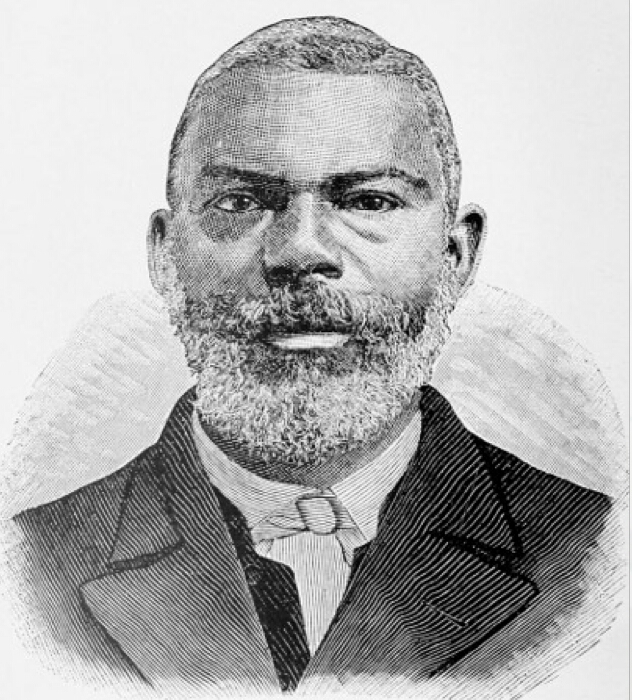
LieleMaybe you already know this, but I just found out and am amazed. We often say that Adoniram Judson was the first foreign missionary from America. Turns out George Liele beat him by nearly twenty years.

George was a slave, then not a slave, one of the first African Americans ordained in America, convened the first black church in America, and went to Jamaica to preach to slaves there in 1783, becoming (arguably) the first missionary to go out from America. Amazing.

Read more of George’s story and look for a chance to tell one person about him this week.

— Shane Bennett

Ten Ways Pastors Can Help Their People Think and Act like Jesus Toward Muslims

Missions-Catalyst-no-tagline_largePastor articleBy Shane Bennett

Pastors, I honestly don’t know what it’s like to walk in your shoes. Back in college, I pastored a church of a dozen people. Elderly saints they were but with a remarkable propensity not to die. So I preached, and I dodged the rest of the pastoral duties. I never faced the stresses you do with budgets and staff and people who come to you with intractable problems, hoping you’ve got a silver bullet to spare.

Nor have I been in your place with goofballs saying, “Hey, your church should do more with Muslims!” Maybe that feels like a burden you’d rather let go. Maybe you have some personal anxiety about Islam or you can already feel the pushback that will come if you lead your flock toward engagement with Muslims.

Here’s why it might be worthwhile anyway:

  1. Islam is a big deal. Over 1.5 billion people are Muslims, with a huge number being added every day. And Islam is talked about like crazy in America and all over the place.
  2. Your people, at least some of them, are wondering how Christians should respond to this.
  3. God, mostly on the down low, is inviting Muslims into his kingdom these days like we have never seen before. This might be the sort of harvest you don’t want to miss out on.

If the Holy Spirit nudges you in this direction, I’d like to make it as easy as possible to obey, with ideas both for “knowing” and “doing” and with varying costs in time and money.

Not a pastor but know one? If you think it might bless them, please send this along. Tell them you’d like them to read it, and understand if they can’t get to it right away.

Ten Ways to Get Started

1. Add to a sense of Muslims’ lostness an understanding that God wants to find them in great numbers.

You probably don’t have to convince your people that Muslims are lost. Most evangelical Christians agree. They might not be thinking as much, though, that God has in mind to gather great numbers of them into his kingdom, that every blessing we enjoy is meant for them, and that the blood of Jesus shed on the cross works redemption for them with the same wonderful efficacy with which it does for us.

2. Share winsome stories of Muslim-Christian interactions.

While evil has certainly been done in the name of Islam and good Muslims have done very bad things, there’s more to the story than that. Negative news makes it hard to imagine that Christians can connect with them. Read this short, surprising story as a counterexample.

3. Highlight similarities between Muslims and Christians.

Sometimes, whether intentionally or subconsciously, we try to keep Muslims at arm’s length as being “other.” In doing so, we might fall prey to thinking, as a woman at my church once told me, “We are completely different in every way!” That’s just not true. Your people need to know this.

I probably go overboard in the other direction, happy that a typical Muslim and I both believe in just one God and both think Jesus was born miraculously of a virgin, is alive today, and could take Chuck Norris in a one-on-one match. Generally, we also believe that abortion is a bad thing, kids are a good thing, Jesus is coming back, and devotion to God should be above all else. Not bad starting points from which to invite Muslims back to the faith of their forbearers.

4. Read and encourage others to read material that prioritizes engagement over fear and defense.

I know, I know. Everyone wants to give the pastor a book. Or ten. Here are two that will help you think in good ways about engaging Muslims and give you tools to pass along to your crew: Muslims, Christians, and Jesus by Carl Medearis and Connecting with Muslims by Fouad Masri. Both are practical and accessible. If you’ve already blown your book budget for the year and can only give this a few minutes a week, I’d be honored to have you read my 300-word weekly email, Muslim Connect. It’s designed to help normal Christians think about Muslims the way God does and love them like Jesus does.

5. Host a seminar on Islam.

Crescent Project offers a quick look at Islam and how to befriend Muslims in a weekend seminar or DVD-based curriculum. Encountering the World of Islam is a twelve-week course based on understanding Muslims. I’ve seen them lead to lives better ready to serve God among Muslims near and far.

6. Encourage your people to connect with international students and refugees.

In any town with a sizable university, someone organizes care and connection for international students (Muslims and others). Find this person. Give them three minutes on the platform in early August to tell your people how they can befriend future leaders from other countries arriving next week. Decide together that they won’t return home without enjoying a dinner in an American home. Be the first to sign up.

Someone in your town also knows what’s up with refugees. Same story. If you don’t know how to find these people, shoot me an email and I’ll give you a hand.

7. Endorse a church-wide commitment to pray for Muslims during Ramadan.

Each year around a million Christians worldwide will use the same beautiful little book to pray for Muslims during Ramadan, their month of fasting. Order copies for your people. Ramadan next occurs May 15 to June 14.

8. Audit the “Muslim impact” of your missions budget.

Are you putting dollars toward work that cares for Muslims and invites them into the kingdom, either locally or far away? It’s none of my business how your budget is set up or what you support, but a budget suggesting that the church, corporately, doesn’t value reaching out to Muslims might limit what individuals will care about and do.

9. Partner with Muslims to address a social ill in your city.

A friend in San Jose, CA unites “Jews, Christians, and Muslims to serve the poor, suffering, and marginalized.” I think he’s onto something. Serving soup or cleaning up trash shoulder to shoulder with someone from another faith teaches things you’ll never get from a book or video.

10. Offer to take some of your people to visit a mosque.

There’s something about stepping into a mosque for the first time that is powerful, though difficult for many (Am I cheating on Jesus?). Your people will walk away with a sense that mosques are more the places where Muslims go to seek God in the best way they know and less the hothouses of religious sedition we’re sometimes told they are. A little bit of reality goes miles toward reshaping imagination. Two key points for this: Go as learners, not evangelists. A first visit is not the time for a showdown. And make sure you have pre-planned a good 45 minutes to debrief the experience.

Conclusion

Because these ideas are designed to be put into action, I’m happy to help you consider and implement any of them. I’d be honored to come alongside as you guide your people into obedience relative to one of the greatest challenges and opportunities of our generation.

» Let’s chat. Also, please add your ideas, whether brilliantly polished or still in process, to this document. I’ll start with my outtakes from this article.

Five Hopes for 2018 | Practical Mobilization

Missions-Catalyst-no-tagline_largehopesfor2018By Shane Bennett

One of the funnest parts of January for me is the opportunity, sometimes, to help launch a Perspectives course by teaching lesson one. On the first night of class, it’s all hope and possibility. And since the odds of being the best speaker are slim, I’m happy to be the first!

The hope that infuses the Perspectives material and flows through the missiology that undergirds is what I find so encouraging, even invigorating: God is doing something huge for his name! And that work for his name not only involves cleaning, reclaiming, and restoring us, but even inviting us into the amazing honor of joining in his purposes. It’s staggering, really.

I want to blow on those embers of possibility in both you and me today by sharing five big hopes that I have for 2018 and asking to hear some of yours.

1. Substantive shifts in the global refugee situation

I hope that 2018 sees life turn toward good for many of the most gut-wrenching refugee situations. How great would it be for Syrians to begin to return home, accompanied by a massive reconstruction effort?

For the Rohingya I hope and pray for resolution that I honestly can’t even imagine. In my wildest dreams I don’t see how this situation can get better soon. But trusting God’s power to be superior to my imagination, I pray he’ll make a difference.

I also pray for the hundreds of thousands of would-be migrants to Sicily now marooned in Libya. In mid-2017 Italy partnered with a Libyan militia to hinder northward migration. While successful and good for Sicily, this has cheapened the lives of many who now suffer unimaginably in Libya.

Finally, I hope my country, the US (you hope for yours!) will act toward refugees in ways that honor God. It’s hard to see how we go from here to there, but again God can make a way.

2. A growing wave of young, smart, global entrepreneurs

Last weekend I watched a sharp documentary called Poverty, Inc. Depending on what you’re up to your ears in, it might make you sad. Or it might anger you. Or, if you’re like me and watch it with a radical young couple bent on honoring God and changing their part of the world, it might fill you with hope. Jesse and Jessica live in Liberia with For the Lamb. They’re starting a compressed-earth block company. They’re dreaming about their business helping Liberians and, even better, helping Liberians help themselves.

I’m dreaming about hundreds of Jesses and Jessicas from the US. From Europe. And even better, from Senegal, Syria, and Singapore… wisely and bravely stepping into situations where the enemy has stolen, killed, and destroyed, with their arms and minds full of the abundant life of Jesus.

I’m hoping they will be joined by hundreds of women and men skilled at PTSD counseling and training others. Few of the 65 million currently displaced people in the world will escape without some deep wounds.

3. A shift in sentiments toward Muslims

In 2018 I hope we see a measurable shift among Americans toward Muslims, both American Muslims and others. I’d like to see Christians on a grand scale trade apathy, anxiousness, and anger for connection and love toward Muslims near and far.

When God told Abraham that he and Sarah would be a conduit through which blessings would extend to all the peoples of the earth, that pretty much included everyone. And when Jesus hung out and laughed with Samaritans, he was showing us, among other things, how to interact with Muslims and others who like them. I would love to hear what you might be doing to make this hope real or what you think might need done.

I’d also like to invite you into my small, but growing effort called Muslim Connect, a super-short weekly email designed to help us think like God about Muslims and love them like Jesus does.

4. A fundamental increase in generosity

After way too long being way underfunded, I’ve hired what’s known in our tribal parlance as a Partnership Development Coach. Turns out this guy, who works as part of Stewardship Ambassadors, is not primarily going to help me talk people into giving to my ministry… he’s going help me help people grow in obedient generosity, and apparently that starts with me. You can imagine my surprise, as well as my hope for a broad-based increase in generosity throughout the global church and beyond.

What I hope to see grow in my own heart, an openness to gladly share of the good stuff God has given me, I hope to see grow in all of our hearts. Most of you, I’m guessing, are starting on a higher floor than me. But many of us have some room to grow.

5. Movements

Finally, I’m hoping that in 2018 we see God’s hand extended to continue gathering a great harvest. Recent research shows a growing number of multiplying movements to Christ particularly among unreached peoples. One observer has charted well over 600 movements in which multiple streams of disciples have reached four generations deep. This means someone following Jesus who leads her friends to him who then lead their friends to him who then lead their friends to follow him. Additionally, he sees thousands of movements that are emerging but have yet to hit the four-generation mark. What might we see as they mature?!? This is huge!

To give legs to both number four and five above, I’d like to give you at my expense a free copy of Stubborn Perseverance, a novelized story of a movement to Christ in Southeast Asia. It is both gripping and instructive. It will fill you with hope and wisdom for what God is up to in our day. To claim your free copy enter my name and email where it asks for the name of “your generous friend” (Ha!) Free print books are limited to the first 100 and only to the US. Kindle or pdf versions are not limited either in number or by geography.

I would love to hear your hopes for 2018 or your thoughts on mine. Respond to this email or post them on our website or Facebook page.