Myanmar: Revival in the Midst of War and Suffering

Source: Asia Harvest Newsletter

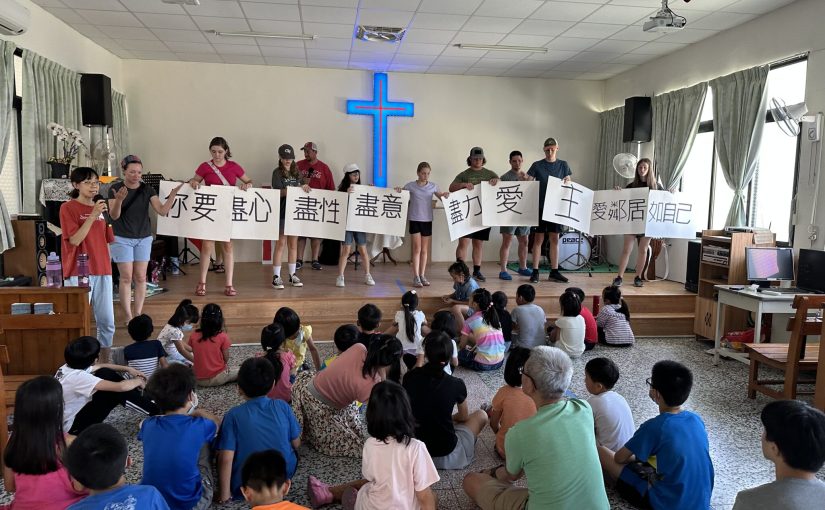
Our Christian hosts took us to a slum where a tin door to a run-down shack opened in front of us. When we stepped inside, it was as though we had passed through a portal and entered another dimension, a heavenly one—a world where Jesus reigns.

It was a church meeting of Burmese children deep in the heart of the slums, providing a ray of hope to penetrate the darkness many were living in.

Among these bare-footed believers, we were slightly embarrassed to be the only ones with socks and shoes. But that didn’t bother these children whose eyes remained closed with tears streaming down their faces as their attention was fully on their Savior.

This experience was repeated at each of the centers we visited. Healings and deliverance from demons, drugs, and crime were commonplace. Most of the gatherings consisted of believers who had come to Christ within the past few years.

[Former] prostitutes sat shoulder-to-shoulder with former murderers and gang members whose tattoos told the tale of their past, but who had now found redemption and cleansing through the blood of Jesus.

The best part of this story is that it is not transpiring based on the efforts of a single ministry, but rather through a sovereign move of the Spirit of God that is sweeping across this vast land—a move that is finally penetrating the poorest and hardest demographic in Myanmar: the 50 million ethnic Burmese people.

Read the original article It includes more stories and pictures and reports that more than 6,000 Burmese have come to Christ through a ministry Asia Harvest reports in Myanmar.

For more encouragement about what God is doing among indigenous ministries in Asia, treat yourself to something from the Asia Harvest bookstore—including whole volumes about the growth of the church in each Province of China.

See also an overview of the situation in Myanmar and how to pray (INcontext International).

Thailand: Wesleyan Church’s Asia-Pacific International Conference

Source: Global Partners, July 1, 2024

[In May], Wesleyan church leaders and pastors from more than 20 countries gathered in Chiang Mai, Thailand for the first ever Asia-Pacific International Conference of the Wesleyan Church.

The conference was centered around the theme “Stronger Together,” igniting a vision for these leaders to work together in the efforts of extend God’s Kingdom across the least-reached, most densely populated continent in the world.

Fiji-born Rev. Atu Lagi said that learning how other countries have been pursuing global missions was a helpful experience for him. In fact, after meeting and getting to know pastors from Indonesia, he hopes to stay in touch and begin sending short-term teams their way within the next year.

Rev. Lex Akers, district superintendent of the New South Wales district in Australia, also enjoyed making new connections. One exciting connection he made was with a couple from India who is interested in planting a satellite church in Australia, to reach the growing number of Indians there.

On the last day, a leader from the Philippines stood to share what the Lord had placed on his heart during the week spent together. Earlier in the week, he shared about the success the Wesleyan Church has had with expanding and church planting [in the Philippines] but took this moment to confess to the delegates from South Asia that he hadn’t considered beyond the Philippines. Then, he asked for forgiveness.

Read the full story. Praise God for using Christians from many nations to challenge and encourage one another.

Uzbekistan: A Plan to Punish Parents Who Allow Religious Education

Source: Forum18, July 12, 2024

On June 25, the Legislative Chamber of the parliament adopted in the first reading a draft law to allegedly “further strengthen the rights of children,” according to the parliamentary website. The draft Law would ban and introduce punishments for parents or guardians who allow their children to receive “illegal” religious education before the age of 18.

The planned amendments to existing laws would impose fines of over a month’s average wages or jail terms of up to 15 days on parents or guardians who allow or arrange “illegal” religious education for under-18-year-olds.

The Interior Ministry claims that the draft Law would prevent children from falling under the influence of terrorist groups.

Read the full story, which adds that many citizens are expressing strong opposition to the proposed law. In other news, Forum18 also reports that the courts have sentenced several women with large fines for allegedly sharing their beliefs with others without permission.

See also Chinese Officials Propose Harsher Restrictions for Christians (International Christian Concern).

World: Opening Possibilities for AI in Deaf Ministry

Source: Mission Network News, July 2, 2024

In almost every field, artificial intelligence (AI) is making an appearance. DOOR International says that the same is true in Deaf ministry.

With the visual nature of sign language, videos, and pictures are major opportunities for AI integration. However, there are many technical aspects that could make those applications difficult to put into practice.

Effective AI pulls material from a wide breadth of information to generate new content. Rob Myers with DOOR notes that this deep pocket of online information is not available for most sign languages. In addition, he says translating the written word to [visual] sign languages is a more complex challenge to ask of AI than from one written language to another.

However, despite the limitations, AI could potentially aid Bible translation work for sign languages. For instance, rather than showing a real person on a video, AI could replace the features of the signer with an avatar. This would be a much safer option for Deaf Christians in countries where it is dangerous to show their faces.

Read the full story.

Speaking of tech advances, see this crazy interactive timeline, Calculating Empires: A Genealogy of Technology and Power Since 1500. Click on the audio tour button (via Flowing Data).

Eritrea: Three Persecuted Pastors Now 20 Years Behind Bars

Source: Global Christian Relief, June 22, 2024

Three persecuted pastors in Eritrea, an East African country notorious for imprisoning Christians, recently marked a tragic anniversary: the 20th anniversary of their arrest and incarceration.

Despite never having been charged with a crime, these three pastors—Haile Nayzgi, Kiflu Gebremeskel and Meron Gebreselasie—are among hundreds of jailed persecuted believers in Eritrea. Abune Antonios, another church leader, died under house arrest at the age of 94 in 2022.

Eritrea, a country of 5.6 million, is home to 1.8 million Christians. Detained believers endure horrific conditions, including sexual abuse and torture, according to the United States Commission on International Religious Freedom (USCIRF). Many are held in metal containers left in the jungle, subject to terrible heat during the day and freezing temperatures at night. Officials who commit human rights abuse are left unpunished.

Read the full story.

Kenya: How Amoss Faithfully Served God on an Entirely Muslim Island

Source: INcontext International, June 19, 2024

Amoss faithfully served God on Faza Island, also known as Pate Island, near Somalia. This island is entirely Muslim and very hostile to the message of Jesus Christ. This is also a dangerous area along the Somali coast, where tourists have been kidnapped. A ministry once tried to build a church there, but it was burned down and never rebuilt.

Amoss was the only Christian on the island and lived in complete isolation from other believers in order to live out the calling God placed on his life. He studied to become a teacher with the goal of using his skills for missions. God led Amoss to start a school where he worked for over 15 years to spread the gospel. He registered the school and received praise from the Kenyan government’s education department. Throughout his time there, Amoss faithfully shared the gospel with the children who attended his school.

Parents were pleased with how their children were treated at the school, especially compared to other students in the village, where physical and verbal abuse was common. The school provided safe drinking water. Some students attended Islamic classes in the afternoon, while others chose to stay at the school all afternoon and return home in the evening.

The extremists hated Amoss and tried many times to get him kicked off the island, but he continued to love them and serve their children. Muslim parents defended him and fought to keep him on the island. Sadly, Amoss died this year from pneumonia. After his death, those who knew him said they never heard him complain despite the many hardships he faced.

Read the full story and another from INcontext which reports that Burkina Faso has surpassed Afghanistan to become the country most impacted by terrorism.

Pray also for Congo, where inter-religious conflict has increased. Islamic State has claimed responsibility for a series of violent attacks that left at least 80 Christians among the dead (Open Doors, via Christian Post). The plight of children in Congo was also highlighted in Justin Long’s weekly prayer publication, always worth a read.

Laos: Pastor and Five Other Christians Arrested

Source: Morning Star News, June 27, 2024

Village officials in central Laos on Saturday, June 22, arrested a pastor and five other Christians as they prayed in preparation for worship services the next day, according to Sirikoon Prasertsee, director of Human Rights Watcher for Lao Religious Freedom (HRWLRF).

“The arrests took place on Saturday at [Pastor] Mum’s home while they were meeting for prayer in preparation for Sunday morning worship on the following day,” Prasertsee said. “They are currently being imprisoned in Xaibouathong District prison.”

She identified the other five Lao Christians as Liang, a 40-year-old man; Pa, a 24-year-old man; Laen, a 50-year-old woman; Lan, a 23-year-old woman; and Khoon, a 28-year-old woman.

After Pastor Mum put his faith in Christ in 2019 upon experiencing God’s healing, he established a church that worshiped freely in his home until a new village chief, identified only as Lang, took office in May, she said.

Article 30 of the Lao Constitution recognizes the right and freedom of Lao citizens “to believe or not to believe in religion,” she noted.

Read the full story or a related article from International Christian Concern. Can we pray for these believers? We looked for an update to see if they have been released but did not find one.

Botswana: Did You Know God Speaks Shekgalagari, Too?

Source: United Bible Societies, June 19, 2024

The Bible Society in Botswana recently completed the Shekgalagari New Testament in collaboration with Lutheran Bible Translators, finishing the first translation of the Scriptures in Shekgalagari [spoken by more than 78,000 Bakgalagari people].

Ofentse Collen Maruping, General Secretary and CEO of the Bible Society in Botswana, is excited about this new translation:

“Our hope for the speakers of Shekgalagari is that this newly published New Testament allows them to connect with God’s Word in a way that opens hearts and minds to the gospel. We have already been greatly encouraged by the response to this New Testament and are looking forward to its distribution to Shekgalagari-speaking areas.”

Read the full story, which provides additional context for this accomplishment and adds that in addition to printed Bibles, the group also began distributing audio Bibles and a smartphone app—significant factors in increasing Scripture engagement.

Algeria: Audio Bible Changes Doctor’s Life

Source: Mission Network News, June 28, 2024

To fully understand God’s Word, some people need to hear Scripture instead of reading it. “The majority of the world is like me in that we are oral learners,” says Darrell Templeton [of MegaVoice, a company that produces audio Bible equipment].

“There’s something about hearing the Word that differs from reading.”

Templeton recently met an Algerian doctor during an overseas trip, and the two started a conversation. Templeton asked the doctor what language he spoke growing up, and when he answered, “Kabyle,” Templeton handed him an audio Bible.

“I had recently gotten the Kabyle New Testament recording [so] I asked him, ‘Would you please listen to this and tell me [if] it is Kabyle, and if it’s a good accent? Is it acceptable?’” Templeton says.

When the doctor put some headphones on and pressed play, everything changed. “When he started listening to it, it was like someone shot him. I mean, he just crumpled to the floor and began sobbing. It was several minutes before he could talk,” Templeton says.

“This doctor spoke eight languages fluently, but for the first time in his life, he heard God’s Word in his heart language.”

Stories like these happen repeatedly as believers introduce people to Scripture in their heart language for the first time.

“The challenge is to get all these languages recorded because most of these remaining languages are small minority languages and don’t even have an orthography. So, for most of these people, it will have to be an audio Bible.”

Read the full story.

See also a report about Australian Aboriginal people hearing God’s Word for the first time (Global Recordings Network).