INDONESIA: Former Jihadist Starts Jesus Communities

Source: Joel News, June 23, 2015

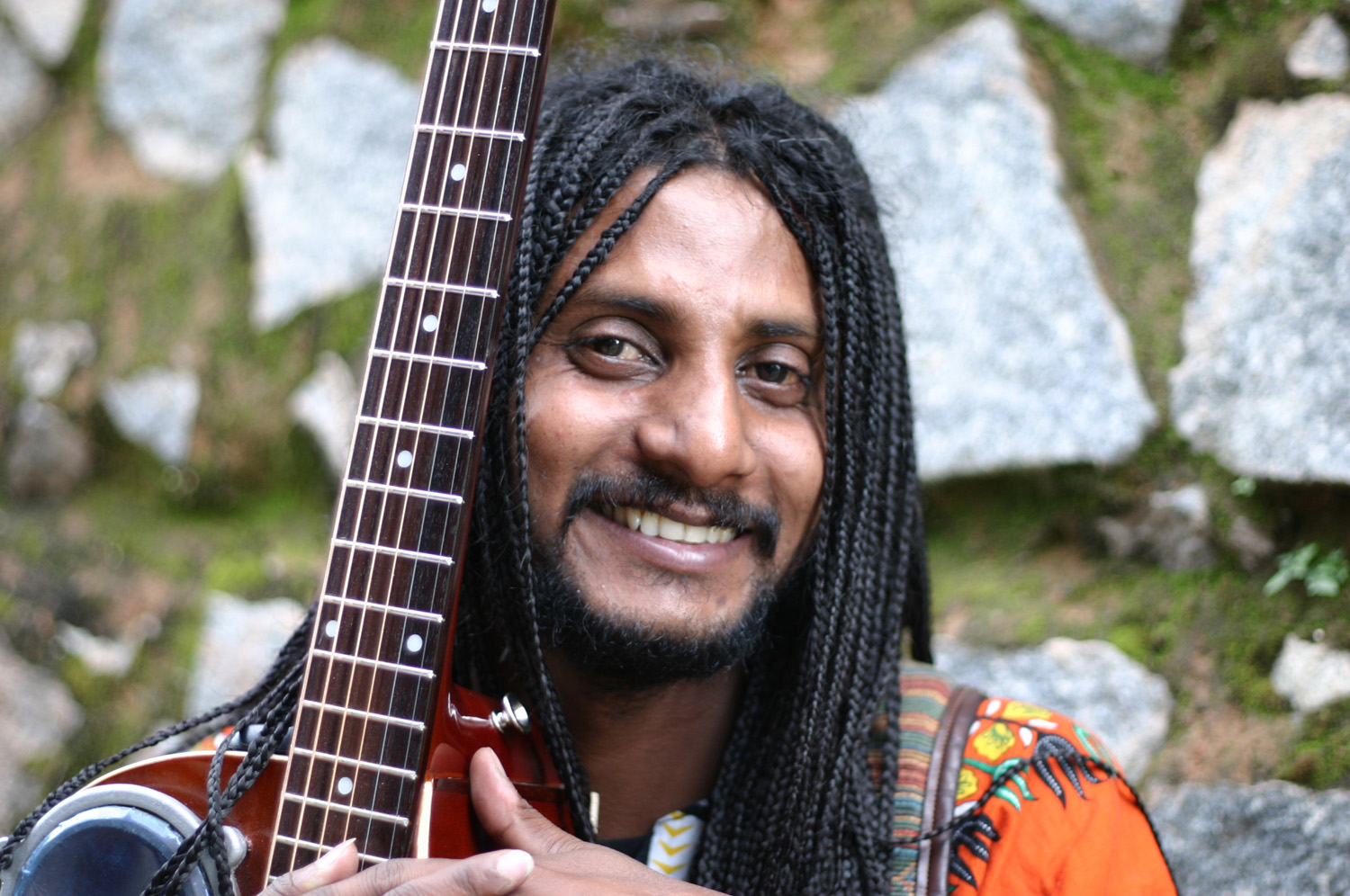
Raharjo (not his real name) was a school drop-out on the Indonesian island of Sulawesi looking for work, when he was recruited by a jihadist organization. Like many young Muslim men, he was paid to attack Christian villages with the aim to force the Christians out of the area. However, as a result of the increased “war on terror” by the United States after the 9-11 attack, his group fell apart and he lost his job. Raharjo returned to Jakarta, traumatized and depressed. There he joined a punk group and started to use heroin.

One night Raharjo had a dream. A person who introduced himself as Jesus (Isa) spoke to him in “bright and strong language” and told him to “Follow me!” In the dream Raharjo decided to follow this person. When he woke up, he found himself healthy, sober, and without any desire to use drugs.

His newfound faith struck deep roots in Raharjo and changed him over time. He introduced all his gang members to his new Christian friends, and one after another began to take an interest in Jesus.

The method they used to “discover Jesus” was simple: they followed the instructions of the Quran to read the Gospels and also parts of the Old Testament. Questions that arose were answered cautiously. In this way the young men were able to discover their faith by themselves.

» Learn more or subscribe to Joel News.

» Readers might also be interested in a recent report from CBN News about Muslims turning to faith in Jesus in response to atrocities committed by Islamic extremists, though some of its claims seem a bit, well, extreme.

World News Briefs

Missions-Catalyst-no-tagline_largeIn This Issue: Challenging our assumptions

African Men

Greetings!

Have you ever observed someone and wondered why they act that way? Or assumed that someone was part of a certain group because of the way they behave? I find it refreshing when my own assumptions are challenged, and sometimes it helps me laugh at myself. The video How Do You Distinguish Americans? provided such an opportunity. See also African Men, Hollywood Stereotypes, in which some young Africans were able to laugh at themselves, too.

The young, who haven’t yet learned how they are “supposed” to behave, are sometimes more ready, willing vessels for God because of it. For example, read a New York Times piece about the Child Preachers of Brazil.

Ramadan begins this evening. I find it a great time to face my stereotypes head on and devoting time to learning about and praying for the Muslim world. The reading and viewing list I hope to tackle this Ramadan will take me into the world of extremists. See a few links from my collection below, as well as another piece we shared this time last year, a report from St. Francis Magazine on Ramadan’s effects on spiritual openness.

This Saturday, June 20, is World Refugee Day. This year’s theme is “Get to Know a Refugee.” Download the UNHCR’s toolkit on this topic.

Getting to know the “other” (and myself),

Pat

ISLAMIC WORLD: Thought-provoking Presentations

Various sources, via Pat Noble

A semi-annual Conference on Religion, Politics, and Public Life was held last month in Florida and included insightful presentations on the topic The Islamic State: Understanding its Ideology and Theology. You can listen to the audio recordings or read the transcripts.

Earlier this month, Brookings Institution convened a US-Islamic World Forum in Qatar. Watch nine videos from that event. First on my list is one on Pluralism in the Islamic World.

My list would not be complete without some TED talks; this time, a playlist on terrorism.

I saved the best for last: Lausanne’s 2014 Global Consultation on Islam includes informative presentations on Progressive and Liberative Islam.

TURKEY: Yazidi People Ask Jesus to Help Them Find a Permanent Home

Source: CryOut prayer email, June 8, 2015

A coordinated plan is underway among several Yazidi refugee camps throughout Turkey to leave their camps [and] migrate to the northwest border of Turkey. Their intent is to bring attention to their plight so that the international community might agree to relocate them to a permanent home in non-Muslim countries, which is their desire.

After nine months in makeshift tent camps where temperatures can reach 120-degrees, where baby formula and diapers are in short supply for mothers unable to produce milk due to PTSD and where very few educational resources are available to children/youth, staying put is no longer an option. Many have come to a point that they would rather risk their lives than waste away, forgotten about, with no promise of relocation.

As a marginalized people they are asking the Christian community for help, and based on what they know of Christians and previous interactions with them, they believe Christians will help them.

Leaders in a local church near one of the camps in southeast Turkey have been studying the Gospels with a Kurd from a nearby local church and have indicated that they believe Jesus will help them in their plight and have begun to call out to him in prayer.

» Read full article, browse CryOut archives, or subscribe to updates.

» Also see Christians Among 88 Eritrean Refugees Kidnapped by ISIS (The Christian Post).

WORLD: Migration and the Future of Faith

Source: INcontext, June 2015

Editor’s Note: This is from a larger analysis of the recent Pew Forum report on religion, but it’s from the section on migration, something not always factored into population studies.

International migration will influence the projected size of religious groups in various regions and countries. Numbers are, however, difficult to determine because migration is often linked to government policies and international events that can change quickly. For this reason, many population projections do not include migration in their models. But the Pew Research Center has developed an innovative way of using data on past migration patterns to estimate the religious composition of migrant flows in the decades ahead.

In Europe, the Muslim share of the population is expected to increase from 5.9% in 2010 to 10.2% in 2050 when migration is taken into account. Without migration, the Muslim share of Europe’s population in 2050 is projected to be nearly two percentage points lower (8.4%).

In North America, the Hindu share of the population is expected to nearly double in the decades ahead, from 0.7% in 2010 to 1.3% in 2050, when migration is included in the projection models. Without migration, the Hindu share of the region’s population would remain about the same (0.8%).

In the Middle East and North Africa, the continued migration of Christians into the six Gulf Cooperation Council (GCC) countries is expected to offset the exodus of Christians from other countries in the region. With migration factored in, the estimated Christian share of the population is expected to be just above 3% (down from nearly 4% in 2010).

» Read full story.

» See also these three finds: State of the World / The Task Reminaing (a short video from Global Frontier Missions), The Top 20 Countries Where Christianity Is Growing the Fastest (Movements.net), and Are Hindus Being Undercounted in Religion Surveys? (Worldwide Religious News).

PHILIPPINES: Congressional Committee Approves Bill Creating Islamic Region

Source: Christian Aid Mission, June 4, 2015

A congressional committee in the Philippines approved a bill last month that would create an independent Islamic state in five provinces on the island of Mindanao, where Christians have long faced hostilities from Islamic militants and Muslim family members.

The Philippines’ second-largest island would thus harbor an independent state under rule of Islamic law (sharia) on its western flank in provinces with sizeable non-Muslim populations. Currently the area already has a measure of autonomy as the Autonomous Region of Muslim Mindanao (ARMM), and the proposed Bangsamoro Basic Law (BBL) would give it even greater independence.

President Benigno Aquino III submitted the bill to Congress last September as a means of ending violence in the region.

» Read full story, which includes the comments of a ministry leader concerned about how this move could affect Christians in the area. Note that the Congress has yet to pass the proposed bill and will not reconvene until July 20 (GMA News).

MEXICO: Treasure in the Sierra Madre

Source: Pioneers-USA, June 2, 2015

The Tarahumara [are] a people group scattered throughout the canyons and mountains of the state of Chihuahua in northern Mexico—within 150 miles of the US border.

Displaced from the verdant valleys of northern Mexico by Spanish conquistadors, the Tarahumara fled into the canyons and mountains of the Sierra Madre. Like the buried treasure in Jesus’ parable, a people group of 120,000 has remained hidden from the outside world for centuries.

Reaching the tiny settlements connected by a spider web of footpaths, learning the language, and finding culturally understandable inroads for the gospel have proven daunting for Christian workers.

“I can count on one hand in the last 500 years the number of missionaries who have learned the Tarahumara language,” notes [a Christian worker].

But that is all changing…

» See full story with pictures and watch a related video.

World News Briefs

Missions-Catalyst-no-tagline_largeIn This Issue: Music to connect heaven and earth

  1. KAZAKHSTAN: A House of Mercy
  2. MALI: Thousands Flee Violent Upsurge in North
  3. PAKISTAN: Giant Cross Erected
  4. EGYPT: “Garbage Kids” Dream Big
  5. ERITREA: Six Years in Prison

Dear Readers,

Northern New York has had the craziest weather this spring; one day I had a fire in my parlor stove and the next I had the air conditioner on. Yet one thing about June has been consistent for years. It is what I call the quiet season, simply because so little music is written to herald summer. I do have memories of the Beatles’ “Here Comes the Sun” but not much more. Send me your summer playlist if you have one!

When new music is born, I think heaven celebrates. Perhaps when composing we hear heaven’s strains. And heaven must grieve when music is quenched on earth (see the Mali story below; read about  the “savior of Afghan music,” a musicologist who lost his hearing to a Taliban bomb; and look up Psalm 137, the song about not singing).

Could music that glorifies God make the news in heaven? Think of angels saying, “Hey, they GOT it! A bit different than what I sent down, but it’s good!”  Check out Global Worship for lots of great music and images.

Musicians without Borders says, “War divides, music connects.” Its greatest purpose may be to connect us not only with one another but also with God. He is not limited to using music in a church or music written or sung by evangelicals. If we are willing to make connections with people different than us, God may open the door to allow us to help them connect with him, building bridges between heaven and earth, God and man.

One more thing: the Global Consultation on Music and Missions, in Thailand is less than a month away. Pray for the attendees to make strategic connections. May heaven rejoice that new music is rising from all nations. As one of the stories below reminds us, “the resources are in the harvest.” That’s especially true when it comes to music.

Blessings,
Pat

KAZAKHSTAN: A House of Mercy

Source: Joel News International, May 21, 2015

A missionary from Canada reports about a recent trip to Kazakhstan:

“We are working with two expressions of community. The first is the house of peace, or house church as expressed by Jesus in Luke 10, and the other our friends in Central Asia have called houses of mercy. A house of mercy is a community where people off the street, out of prison, out of addiction [or] out of prostitution can live for as long as they desire. The only basic rule is to contribute to the community as they are able. The healing program? Worship and work in relationship.

“Friends wanted to have a house of mercy but could not find appropriate rental accommodation and, if they did, the owners would not rent to them for such a purpose. So four years ago they rented a disused Soviet-era bath house (banya).

“A few years ago a [Muslim cleric] well known in Kazakhstan became a follower of Jesus through reading the Koran. He is fearless in sharing his testimony and began to lead others to become followers of Jesus. He met our friends in Kazakhstan and loves how they are doing community. He shared the story of the house of mercy in the banya within his circles of influence and two secret Muslim-background followers of Jesus blessed our team with two large houses and two cars. Each house is home to a community of about 15 people.

“We could not have purchased or rented two houses for our friends in Kazakhstan even if we had wanted to, but they made the step to rent whatever they could and make a start, and God provided! One of the characteristics of all movements that multiply is that the primary resources in people and finance are in the harvest.”

» Thanks to Joel News for sharing this story. See also the original source.

MALI: Thousands Flee Violent Upsurge in North

Source: IRIN News, May 29, 2015

A spike in violence in northern Mali has driven the number of people displaced in the country above 100,000, many of them urgently needing food, water, and shelter as time runs out before the rainy season begins.

The situation is worst in the northern Timbuktu region, where an estimated 23,000 people have been driven from their homes in only a few days, fleeing a marked upsurge in attacks by rebel coalitions and government-controlled militias.

Many key players were absent from a peace signing ceremony in the capital Bamako on May 15 that had been trumpeted as a solution to years of conflict involving the Malian government, the militias, Islamist groups, and Tuareg rebels.

The fighting in northern Mali, which has seen a resurrection of attacks on civilians and humanitarian workers, persists despite several truces, preliminary peace deals, and increased engagement from the international community.

» Read full story.

» Learn about Mali’s annual music Festival in the Desert, now silenced by local conflict. Readers may also be interested in the new film Timbuktu. Read about it in The Guardian. I also strongly encourage you to read a review by Stephen Davies. Thanks for praying for Mali!