WEST AFRICA: “God, We Need Rain Today”

Source: AG News, May 2, 2018

Every weekend that I am able, I visit my friend’s farm, buried deep in the West African brush. This simple place is the perfect place to build our relationship. Each time we are together, I intentionally move our conversation closer to the gospel. It’s not easy, though, because my friend and I do not speak the same language. I speak English and he speaks the African language of our target unreached people group. I am trying hard to learn his language and am getting better every week.

My goal one particular week was to pray next to him. He is Muslim and prays five times a day. This time, as he was getting ready to pray, I asked him if I could pray with him. He said yes. So, while he went through all his motions, I stood next to him in a very respectful form that he would recognize as prayer and then proceeded to pray (in his language) just loud enough for him to hear the words, “Our Heavenly Father… In the name of Jesus the Messiah. Amen.”

Later that day my friend and I visited a neighboring village. It was miles further into the bush with no electricity, no running water, and no paved roads to get there. While we were there, we sat with the village chief for some time. My friend and the chief were enjoying the visit; I listened in as much as I could but was essentially lost in the flow of conversation.

Soon though, the village chief said, “We need rain badly.” My Muslim friend pointed to me and announced, “He can pray to God.” So, the village chief proceeded to ask me to pray for rain—in his language—and for it to rain today. Despite the obvious pressure of being asked to pray for immediate rain in a language I barely know, that is what I did. My friend, the chief, and others listening all seemed grateful for my prayer.

As we returned to the farm, I prayed all the way. “God, we need rain today!” I kept praying for rain while I was at the farm. I looked to the sky and saw clouds. I prayed again, “God, we need more clouds up there. We need rain today!” Later, I heard thunder and started to get very excited. Then came more thunder, and then came the rain—lots and lots of rain! Thank God for his goodness! I can’t wait to visit that village again soon.

» Read full story.

» Heading to Africa? Check out Acclimated to Africa: Cultural Competence for Westerners (SIL). It looks helpful.

No longer a foreigner | World News Briefs

Missions-Catalyst-no-tagline_large

SFC/ CBM in Bori, South Sudan

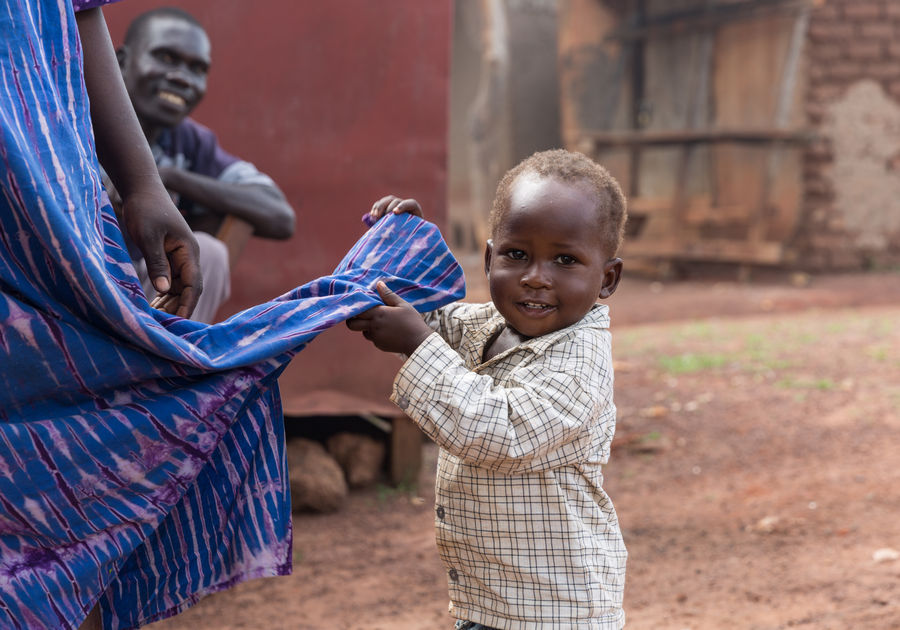
A young boy smiles for the pho­tog­ra­pher in the mar­ket in Bori, South Sudan (Wycliffe Bible Translators; related story below). Today’s edition features stories about breakthroughs and barriers in scripture translation and distribution. Read and pray.

Missions Catalyst News Briefs 05.02.18

  1. SOUTH SUDAN: “God Is Not a Foreigner Anymore”
  2. NORTH AFRICA: Taxi Rides with Tarek
  3. MOZAMBIQUE: Tewe People Celebrate New Audio Bible Materials
  4. CHINA: Ban on Online Bible Sales
  5. BOLIVIA: Sharing the Gospel in Isolated Villages

SOUTH SUDAN: “God Is Not a Foreigner Anymore”

Source: Wycliffe Bible Translators, April 25, 2018

The people of South Sudan have rarely known peace. The decades since Sudan’s independence from Britain and then South Sudan’s independence from Sudan have been marked by turmoil and war.

Despite the turbulence, Bible translation has been taking place. The Baka translation began in 1980 in southern Sudan. The team endured civil war, violence, having to flee as refugees, and a kidnapping. Through it all, translation continued, and in March 2017, the Baka community celebrated the launch of the New Testament.

Now that the Baka have God’s Word, “God is not a foreigner anymore. Jesus is one of us. He can talk [our] dialect,” says Pastor Bennett Marona, the translation project manager.

» Read full story or watch a video about the Baka translation.

» See also The Bible in Uzbek, the story of the 22-year process of completing the translation of the Bible into this Central Asian language. In a surprising turn, it was publically launched in the capital with official approval by the country’s government (United Bible Societies).

NORTH AFRICA: Taxi Rides with Tarek

Source: Frontiers USA, April 4, 2016

I hustled our children into the back seat of the taxi as Kevin climbed in the front seat. “Where are you from?” the driver asked.

“America,” Kevin said. “How about you?”

“I’m from Syria,” the driver responded.

“Oh. I prayed for your country this morning!” Kevin blurted out.

I cringed a little in the back seat at Kevin’s response. What was that emotion in me? Embarrassment? Shame? What did it matter if this taxi driver knew Kevin prayed? Why did I feel like hiding?

It was true after all. Kevin had spent a couple hours that morning, as he often did, in our team’s prayer room. And he had prayed for Syria.

Although I felt sheepish and not very brave about sharing our spiritual lives with this taxi driver, I look back and see that all it took was Kevin’s casual comment, and Tarek, the taxi driver, was hooked. We didn’t know it at the time, but that was the day Tarek’s pursuit of Jesus shifted into high gear…

» Full story is worth reading. Here’s my favorite line: “That first night with his new Bible, Tarek devoured a hundred pages of the Gospels.”

» See also another story about a taxi driver, Listener in Mongolia Becomes Volunteer Broadcaster (FEBC). And don’t forget to pray for the work of God in the Muslim world during Ramadan this year. It begins May 15. Check out resources from Frontiers, Prayercast, and of course 30 Days of Prayer.

MOZAMBIQUE: Tewe People Celebrate New Audio Bible Materials

Source: Mission Network News, April 26, 2018

The Tewe people in central Mozambique have had missionaries come to them for years. Today, about 40 percent of the Tewe people are Christian. However, the Tewe people have no Bible and less than one hour of scripture in audio [form]. Because of their limited access to God’s Word, it is easy for Tewe Christians to mix biblical teachings with the local ethnic religions.

Joshua Harrison with Audio Scripture Ministries says the Tewe people group “is still considered a least-reached people group because there are still some significant cultural strongholds with witchcraft and syncretism. So our team looks at that and says, well, clearly there are some missing tools and access to God’s Word in a form that people can use on a daily basis. That’s why we want to bring that connection to God’s Word in audio [form].”

“We are excited to report that we have over 10 hours of scripture recordings and songs and Bible-engagement materials that we’ve recorded [in the Tewe language] and the community response has been fantastic.”

The process has contained some challenges. The Tewe language is not a written language, which has made it difficult for the team working with local Tewe speakers to translate scripture before they can record.

But God has blessed ASM’s scripture recording efforts in Mozambique. Together with Tewe speakers and musicians, they have completed 18 songs and 50 Bible stories so far.

“The excitement for this is palpable as people hear God’s Word in their heart language. It is really wonderful to see. There is great hunger for the Lord.”

» Read full story. You might also appreciate another MNN story, this one about God’s Word going forth against impossible odds in colonial India.

CHINA: Ban on Online Bible Sales

Source: World Watch Monitor, April 16, 2018

China’s Christians may not be surprised by recent tighter government control of religious affairs, including a ban on online Bible sales. But they are unsure what comes next.

Following [last] month’s announcement that Bibles could no longer be made available online, large websites like Taobao, Jingdong, Weidian, Dangdang, and Amazon China have now stopped selling them. The Catholic news website UCAN reported that “books about Christianity have also been blocked and the business licenses of some shops have been canceled,” and that, according to social media users, websites had started to stop the sale of Bibles as early as March 30.

» Full story provides more context and links to other sources.

BOLIVIA: Sharing the Gospel in Isolated Villages

Source: Pioneers, April 4, 2018

In 2004, Greg and Alex, a father-son team working in Bolivia, came across a man on the road who was holding a little, broken radio. He pleaded with them, “Fix it, it’s my life!” They helped him get the radio repaired and realized it was tuned to a radio station broadcasting in his native language, Quechua.

Greg and Alex had been searching for a way to share the gospel with the people of isolated villages cut off from the rest of civilization during the rainy season. They were amazed to find the radios were made in their native Canada. Since then, they raised funds to purchase and distribute radios that include a Quechua audio translation of the Bible. In the last 10+ years Greg and Alex, along with many short-term workers, have distributed more than 50,000 little red radios.

» Full story includes a photo essay. The video above is actually part 2 in a series. Watch part 1.

SLOVENIA: Help from Historical Heroes

Source: United World Mission, April 6, 2018

Over ten years ago UWM missionaries Benjamin Hlastan and Todd Hunnicutt began to learn more about Slovenia’s [Protestant] Reformer, Primož Trubar. Together with other scholars and church leaders they rediscovered the simple, clear gospel that Trubar shared in the 1500’s, and they saw the potential for impact.

In 2008, the 500th anniversary of Trubar’s birth, they co-founded a Slovene non-profit organization to translate Trubar’s works into modern Slovene. Three key books have come out gaining attention from national media, one during the 450th anniversary of its original publication (originally published in 1564, republished in 2014). Materials are being used in educational settings, including various videos and an animated biography of Trubar. Countless events, lectures, and concerts with Reformation themes have followed in the years since.

2017 was the 500th anniversary of the start of the Reformation, and Todd and Benjamin worked with others to provide events and outreaches all year long [and] partner with the evangelical churches to distribute all 50,000 copies [of the Slovene New Testament].

One person who received a New Testament was literally going to commit suicide the day he got a copy on the town square, but said he knew this meant God is calling him. Another man who used to go to an evangelical church had fallen back into drugs; he was on his way to his dealer when we saw people from that church giving out Bibles. He stopped to talk and is now coming to church again! Churches have had people come to church who got a New Testament and then found out about a local church on the Bible website.

If 50,000 copies of the New Testament have been given out, that means, we can estimate that around 10% of Slovenia’s 500,000 households now have a copy.

Slovenia’s reformer is sowing seeds 500 years later that we trust will bring fruit in the years to come.

» Read full story to learn more about Trubar’s accomplishments and the face of ministry in modern Slovenia. What better use of history than to help people find help for today and hope for tomorrow?

» See also Deadly Chicken Soup, another story about an historical hero, this time in Colombia (Ethnos360).

KAZAKHSTAN: State Demands Young Worshipers’ Personal Data

Source: Forum 18, April 11, 2018

A research institute attached to the Religious Affairs Department of West Kazakhstan Region instructed some local registered religious communities to submit by April 10 [the] full names, ages, place of study, and personal state-assigned numbers of all people under the age of 18 who come to meetings for worship. The official who sent the letter claimed to Forum 18 the information is needed for “monitoring.” Kazakh human rights defenders have expressed concern about the move.

“It was not sent to Muslims, for example, just to Christians, and selectively,” an official stated.

After the deadline expired, the official who issued the instruction told Forum 18 that five religious leaders who replied had all refused to supply the personal data. “We accepted this,” he claimed. He added that he would apologize to them “verbally,” but defended his original instruction seeking the information.

A Deputy Head of the Religious Affairs Committee in the capital Astana, Balgabek Myrzayev, claimed to Forum 18 he knew nothing about the letter. He refused to say whether such a demand for personal data on people under 18 without their parents’ or guardians’ permission is legal or not.

Religious leaders risk prosecution if people under 18 attend meetings for worship against the wishes of at least one of their parents or guardians.

» Full story includes all the details and several links for those who want to understand the whole situation.

» For more positive news from Central Asia, see Three Women Share their Stories (FEBC).