World: Millions of Refugees and Displaced People

Source: Lausanne and Operation World June 19, 2023 (email)

68.5 million people have been forced to leave their homes worldwide.

  • 40 million have fled somewhere else in their own country.
  • 25.4 million have left their country as refugees.
  • 3.1 million are seeking asylum and argue they can never return home.

Of the 25 million who have left their homeland, around two-thirds have come from just five countries: South Sudan, Afghanistan, Syria, Myanmar, and Somalia. Peace and good government in these lands would solve most of the global refugee crisis.

85% of the world’s displaced people are hosted in developing countries. The top refugee-hosting countries—and rarely praised by the global community for this—are Turkey, Uganda, Pakistan, Lebanon, and Iran. In Lebanon, one in six of the population is a refugee.

Migrant flows today are nothing unusual in historical terms. Their numbers, as a proportion of the world, have not changed much in half a century.

  • Pray for the protection of the lives and dignity of all those who leave their homes as migrants or refugees. The path they take is blighted by exploitation, illegal border crossings, rape, torture, and imprisonment.
  • The presence of large numbers of migrants usually creates tensions and strains in receiving countries; pray for a balance between compassionate care for local people in need as well as refugees.
  • Fair sharing between nations would ease the pressure on receiving countries. International cooperation could relieve great evil; pray for justice!
  • The Christian faith has often taken root among refugees and in refugee camps. Pray for all who seek to serve refugees in Christ’s name. Pray that Christ will build his Church among those who have lost everything, turning ashes into beauty.

Sign up for daily emails from Operation World. Daily updates are also available on the Operation World website or through their app.

Note: We notice that some sources list the number of refugees and displaced people as much higher. See also numbers from the UNHCR.

Nigeria: 16 Christians Released from Captivity, Aided by the Muslim Community

Source: Christian Solidarity Worldwide, June 6, 2023

Sixteen members of Bege Baptist Church [in] central Nigeria, who were abducted in May, were released on June 4 after spending almost a month in captivity.

Around 40 members of the congregation were abducted on May 7 by armed assailants of Fulani ethnicity who attacked the church’s Sunday service. The majority managed to escape; however, 16 of them remained in the hands of their captors for almost a month.

The Kaduna State Chair of the Christian Association of Nigeria, Rev. John Joseph Hayab, informed CSW that members of the local Muslim community had contributed funds towards the ransom, and had also purchased a motorcycle requested by the abductors as part of the payment: “I confirm and give thanks that all 16 are now back home. We are grateful to the local Muslims who contributed towards the ransom, and pray that from now [on] the two religious communities will work together to bring this painful era of kidnapping, violence, and killings to an end.”

Read the full story with includes additional background and commentary on the current political climate.

Middle East: “I Think We’re Seeing the Collapse of Islam”

Source: Mission Network News, June 19, 2023

A senior cleric made waves in Iran earlier this month by saying Islam was weak. Roughly two-thirds of Iran’s mosques have closed, he said—a “worrying admission” for a state built around the principles of Islam.

Tom Doyle of Uncharted Ministries says it’s part of a broader trend. “There’s just not that general excitement, that fervency to spread Islam that we saw when we started going to the Middle East 25 years ago,” he explains.

“We see tolerance for it. In places like the Gaza Strip, people are forced to make that the issue. For at least ten years, we’ve seen attendance [declining] in mosques, and many Muslims, especially young ones, becoming agnostic.”

Additionally, “we’ve been privileged to go into Iran a couple of times, and [in] the mosques that we visited, we didn’t see any young people; just a bunch of old people, and there weren’t that many of them. We saw the same thing in Syria, in Iraq,” Doyle says.

“I think we’re seeing the collapse of Islam.”

You could say the same about Christianity in America. Church attendance is down across denominations. However, Muslims in the Middle East are not only turning away from Islam. Many are turning to Jesus.

Read the full story.

Editor’s note: We think it’s too soon to predict Islam’s collapse, but see another opinion piece about Christianity growing in unexpected places and describing why the author thinks it’s happening now (World).

Muslim World: Your Name Is Freedom

Source: Frontiers USA, June 14, 2023

Shah gripped the peeling seat of the old Toyota as he and Tony, a Frontiers field worker, rattled down the bumpy road to Shah’s home village.

He pointed to the left. “Turn here and you’ll be at my uncle’s home.” The weathered house came into view between the thick vegetation that crowded the road.

Shah’s extended family still lived in the area, although he and his parents had moved to a nearby town. Shah and his father had begun working with Tony three years earlier, and since then Tony’s prayers in Jesus’ name had led to the inexplicable healing of his mother’s leukemia and his father’s liver failure.

Shah wished he could follow Jesus, who seemed to heal the most impossible of illnesses, but he knew his family could be hurt or killed if they left Islam. Still, he hoped the prayers of his foreign friend would drive out the evil spirit that had plagued his uncle for a decade. If Jesus couldn’t help, then nothing would.

Read the full story. It’s powerful.

Mali: Gospel Melts Inmates and Prison Official

Source: Christian Aid Mission, June 14, 2023

A crowd of murderers, thieves, and other violent men, women, and minors in Mali were incarcerated uneasily in the same prison when guards called them into the courtyard.

An officer told the inmates that Christians had come from hundreds of kilometers away to give them advice, and to please listen to them.

The hardened faces softened as the native Christian worker spoke of disobedience, sin, and salvation. The worker knew this might be the only chance the criminals from different tribes had of hearing the gospel, the ministry leader said.

Within minutes, a voice cried out, “I am guilty—this man is telling the truth. God help me.”

“You could see each of them whispering similar things to themselves; others had reddened eyes and tears,” the leader said. “As if a light had just burst forth in the midst of darkness, we saw some faces unraveling—certainly the power of God was there.”

As a spirit of repentance dissolved the prior atmosphere of misery, the prison officer also confessed to the inmates: “This word concerns me—I am guilty towards God. May God help me.”

“As he spoke, tears could be seen rolling down the cheeks of many,” the leader said, adding that the officer and inmates pleaded for the workers to pray for them.

Read the full story to see how this encounter changed the prisoners, according to the warden.

The Dog Ate My Passport and 10 Other Ways to Avoid Becoming a Missionary

By Amanda, Pioneers UK

Read or share the email edition of this article.

I’d always thought the excuse of a dog eating one’s homework was laughable (having been an overachieving child myself). Imagine, then, my slightly misplaced delight when I arrived at the office one day to find one of my colleagues—who had been due to fly to South America the day before—inexplicably sitting at his desk.

“But you’re meant to be in Brazil,” I stated quizzically. He said very little, just presented me with a plastic bag. The contents looked like shredded paper at first. That is, until I noticed the remnants of a photograph and the distinctive red of a British passport cover.

“The dog ate my passport,” he said. “I couldn’t go to Brazil because the dog ate my passport.”

I confess that I laughed long and heartily. It wasn’t particularly kind of me, but thankfully my colleague saw the humor in the situation too and we had a good laugh together.

We make small, insignificant decisions every day—decisions we would never imagine could make any difference to our lives. But sometimes they do. (For instance, leaving your passport on the dining table unattended could result in a missed week-long trip to the other side of the world.) In fact, our insignificant, everyday decisions often set the course of our lives more than the major, more dramatic decisions we make.

Howard Culbertson, former missionary and professor of missions at Southern Nazarene University in Oklahoma wrote a checklist for anyone hoping to avoid missionary service. Although it leaves out feeding your passport to your dog, it lists some of the other everyday choices and attitudes that could affect our willingness to say, “Here am I, send me.” The list applies primarily to Goers, but those of us who are Senders, Givers, and Pray-ers will certainly find that it applies to us too!

And now, without further ado, for a good giggle (with just a little sting), I present to you:

10 Ways to Avoid Becoming a Missionary

By Howard Culbertson

1. Ignore Jesus’s request in John 4:35 that we take a long hard look at the fields.

Seeing the needs of people can be depressing and very unsettling. It could lead to genuine missionary concern.

2. Focus your energies on socially legitimate targets.

Go after a bigger salary. Focus on getting a job promotion, a bigger home, a more luxurious car, or future financial security. Along the way, run up some big credit card debts.

3. Get married to somebody who thinks the “Great Commission” is what your employer gives you after you make a big sale.

After marriage, embrace the socially accepted norms of settling down, establishing a respectable career trajectory, and raising a picture-perfect family.

4. Stay away from missionaries.

Their testimonies can be disturbing. The situations they describe will distract you from embracing wholeheartedly the materialistic lifestyle of your home country.

5. If you happen to think about missions, restrict your attention to countries where it’s impossible to openly do missionary work.

Think only about North Korea, Saudi Arabia, China, and other closed countries. Forget the vast areas of our globe open to missionaries. Never, never listen to talk about creative access countries.

6. Think how bad a missionary you would be based on your own past failures.

It is unreasonable to expect you will ever be any better. Don’t even think about Moses, David, Jonah, Peter, or Mark, all of whom overcame failures.

7. Always imagine missionaries as talented, super-spiritual people who stand on lofty pedestals.

Maintaining this image of missionaries will heighten your own sense of inadequacy. Convincing yourself that God does not use ordinary people as missionaries will smother any guilt you may feel about refusing to even listen for a call from God.

8. Agree with the people who tell you that you are indispensable where you are.

Listen when they tell you that your local church or home country can’t do without you.

9. Worry incessantly about money.

10. If you still feel you must go, go out right away without any preparation or training.

You’ll soon be home again and no one can ever blame you for not trying!

And just for good measure, let’s add:

11. Leave your passport on the kitchen table.

Maybe the dog will eat it and then you’ll be off the hook.

Adapted from The Dog Ate My Passport (and Other Ways to Avoid Becoming a Missionary), from Pioneers UK, and How Not to Become a Missionary, by Howard Culbertson.

Dog photo by Matthew Henry on Unsplash.

How to Spread Mission Vision in the Local Church (Barna Reports on Sale Through Friday)

Source: Barna Group

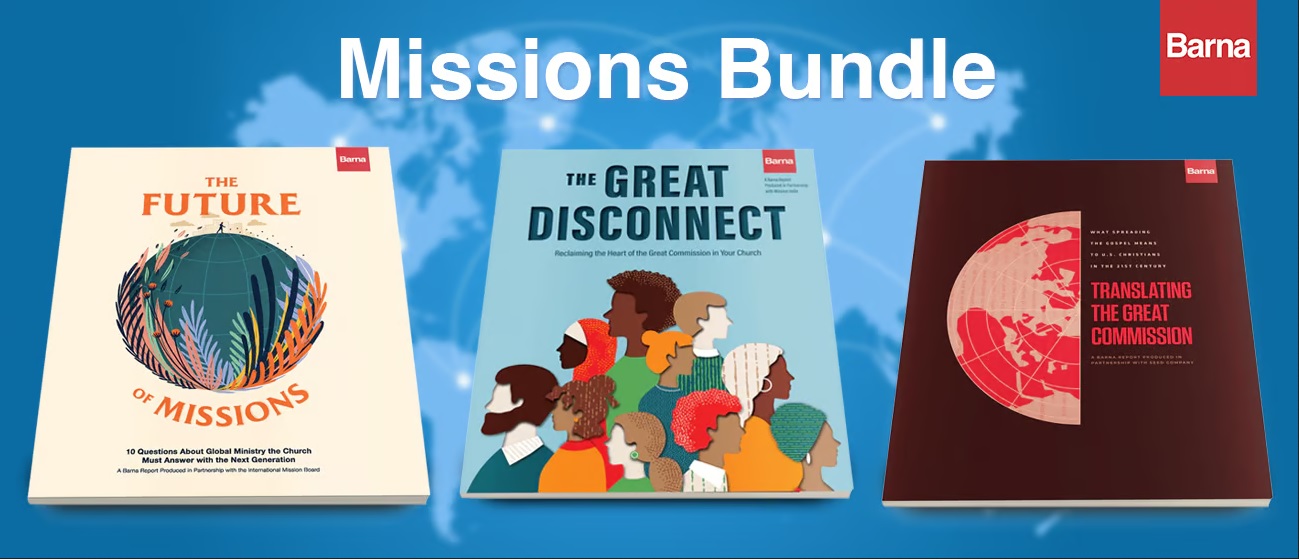
“When we surveyed our readers to identify areas where leaders are looking for more support, the #1 response was helping churches reach their full missions potential,” says Barna. The email caught my eye because that came out in our last survey of Missions Catalyst readers, too. This week only, you can save 40% on three Barna research reports that will help you reimagine missions in your church.

Purchase the Missions Bundle before midnight [Pacific time?] this Friday, June 16, to get all three reports at a 40% discount.

1. The Great Disconnect (published in 2022 with Mission India) is designed to both equip and challenge church leaders to build an expanded, global view of missions within their churches and to evaluate how God is uniquely calling their congregations to reach the unreached.

2. The Future of Missions (published in 2020 with the SBC International Mission Board) reveals how young Christians’ perspectives on missions are different from older believers’—and includes profiles of current missionaries in various parts of the world.

3. Translating the Great Commission (published in 2018 with the Seed Company) details how the American Church really feels about the Great Commission, as well as the many opinions about how to accomplish it.

Looks like the total is US$52. Such prices still seem steep? Search for free online articles that reference these reports and their findings.

News from West Africa, the Middle East and Beyond

  1. Middle East: You Have a Pool, Right?
  2. Burkina Faso/Mali: Australian Doctor Freed after Seven Years in Captivity
  3. West Africa: Holy Spirit Moves among the Fulani
  4. Ghana: Publisher Apologizes for Textbook Critical of Christian Missionaries
  5. Chad: Christians and Muslims Come Together in Bible Translation

Read or share the email edition or scroll down for more.

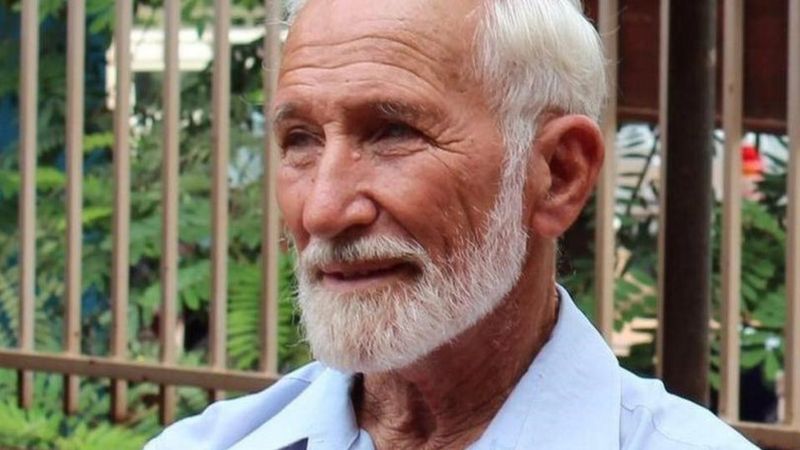
Image: Dr. Ken Elliott from Australia has been freed after spending seven years as a captive in West Africa. See the story below.

Middle East: You Have a Pool, Right?

Source: Frontiers USA, May 15, 2023

I was enjoying the last rays of the Middle Eastern sun late one afternoon when my friend Khaled called me.

“Hey, Trevor,” he greeted me. “You have a pool, right?”

“A pool?” I glanced across the yard at the inflatable kiddie pool my children used on hot days. “Yeah, a little one for the kids. Why do you ask?”

“An adult could fit, right? I need it next Wednesday.” His words came out in a rush. “Can you bring it to the garden? And then can you fill it up?”

I raised an eyebrow, even though Khaled couldn’t see me. “Sure, but what is this all about?”

“Salwa wants to get baptized!”

Salwa lived in a neighboring region that foreigners couldn’t access. For years, my team and I had prayed fervently for the people of this area, but all our attempts to reach them with the gospel had failed.

Salwa had been making regular treks to our city for the past several months. Here she’d met Khaled and some other local Muslim-background believers my team and I have been discipling. When they shared the gospel with Salwa, she eagerly decided to follow Jesus.

Now, Khaled’s invitation to her baptism was a stunning answer to prayer.

I grinned. “I’ll be there. And so will my pool.”

Read the full story and prayer points. Also from Frontiers, read The Grumpy Samaritan.

Burkina Faso/Mali: Australian Doctor Freed After Seven Years in Captivity

Source: International Christian Concern, May 24, 2023

Kenneth Elliott, an Australian doctor kidnapped in Burkina Faso and held captive by al-Qaeda for more than seven years, has finally returned home to his family.

“Kenneth Elliott was safe and well and was reunited with his wife and their children on Thursday night,” Foreign Minister Penny Wong told the Associated Press.

“We wish to express our thanks to God and all who have continued to pray for us,” added Elliott’s family in a statement released by Wong’s department.

On January 15, 2016, Elliott and his wife Jocelyn were taken from their home in Burkina Faso by the Mali-based terror organization al-Qaeda in the Islamic Maghreb (AQIM). Jocelyn was quickly released in February 2016.

Elliott and his wife had been running a hospital in Djibo. The hospital, which could hold 120 patients, was closed due to Elliott’s absence after the kidnappings. He was the only surgeon in the area and made his services free to the population of roughly 2 million. He was given the nicknames the “Doctor of the Poor” and “Savior of the Sahel” for the work he was doing.

Read the full story or one from the Associated Press. The family’s statement says, “At 88 years of age, and after many years away from home, Dr. Elliott now needs time and privacy to rest and rebuild strength.”

Apparently, the Sahel now accounts for nearly half of global terrorism, with more people killed by terrorists there than in the Middle East, North Africa, and South Asia combined (Unherd). On the weekend the Elliotts were kidnapped, the same group took credit for a terrorist attack in Ouagadougou that killed 30 others from at least 18 nationalities.

And in other news of captives released, an Iranian judge freed a Christian couple and ruled that house church gatherings are not illegal, and another judge reduced a Christian’s prison sentence for holding services in his home from ten years to two (Article18).