BOOK: Mission in Motion

Source: William Carey Library

mission-in-motionMission in Motion: Speaking Frankly of Mobilization, by Jay Matenga and Malcolm Gold. Pasadena, CA: William Carey Library, 2016. 298 pages.

This study, nearly a decade in the making, explores what motivates and mobilizes Christians, globally, to the task of world mission. In it nine researchers draw on interviews with mission mobilizers, mission leaders, church leaders, and church mission advocates in eight world regions.

Mission in Motion builds on the work of respected South African missiologist David Bosch whose (rather dense) work Transforming Mission explored historical paradigms of world mission, concluding that mission thinking was in a state of transition. Matenga and Gold’s findings, 25 years later, support this. The church and mission leaders interviewed lack a common understanding of what is and isn’t “missions.” While inclusiveness and focus each have their advantages, this data helps explain a question mission mobilizers grapple with: What is it we are calling Christians to, anyway?

Mission in Motion also describes the history of mission mobilization and some of the typical approaches before focusing in on what might be most useful section, an analysis of the factors that help and hinder Christians pursuing global mission roles.

World mission “accelerants,” they find, include the example, encouragement, and support of family members (following in the footsteps or catching the vision of a relative), as well as relationships with missionaries and church leaders. Books, conferences, and courses may help. But according to the data, those things did not seem to initiate a missions interest. They were accelerants, not the spark. The spark was something much more transcendent.

World mission “retardants,” the research finds, include funding and fundraising challenges (especially for non-Westerners), burdensome structures and requirements, gender disparities, and cultural trends toward secularism, individualism, and materialism.

» Learn more or purchase the book at the special price of US$15.95 from William Carey Library, for a limited time. Preview it through Facebook. We’ll try to let you know when it’s on Amazon and/or available as an ebook, or if findings are published in articles you could more easily share and discuss with others.

ARTICLE: Will Second Language Acquisition Die? Should It?

Source: Brigada Today

Is it just my imagination, or are more and more missionaries assuming they will “train nationals because they understand better the language and culture?” Maybe it’s due to economic realities. Churches and foundations want to stretch every dollar so that it can be as efficient as possible. Or maybe it’s pragmatic: Recent shifts in strategy involve training nationals to multiply ministry anyway. So why bother with language acquisition, especially when national partners already speak English anyway?

» Give some thought to the role of language learning, then join the conversation at Brigada Today.

EVENTS: Upcoming Conference, Courses, and More

Source: Missions Catalyst Events Calendar

Note: As ministries post information about their 2017 events, we will be adding those to the list and preparing a special 2017 calendar edition of Missions Catalyst to send out December 28. Got something you’d like to see included, even if your website hasn’t been updated to include it yet? Please let me know. Thanks!

November 2016

November 2-4, Your FOCUS on the World Coach Training (Lenexa, KS, USA). Church mission coaching training from Catalyst Services.

November 3, 10 New Ideas to Transform Your Mobile Ministry in 2017 (online). Mobile Ministry Forum webinar; free.

November 3, Ethics & Discipleship in Honor-Shame Cultures (online). Webinar from Missio Nexus.

November 3-5, Oasis National Conference (Houston, TX, USA). Crescent Project annual event about reaching out to Muslims in North America.

November 3-5, Canadian Network of Ministry to Muslims Annual Conference (Richmond Hill, ON, Canada). Creating a welcoming community.

November 4-5, Crisis Management Workshop (Minneapolis, MN, USA). Provided by Crisis Consulting International.

November 6-12, Recalibrate! (Aurora, IN, USA). Five days of group and personal missionary debriefing, programs for children of all ages.

November 6 or 13, International Day of Prayer for the Persecuted Church (global).

November 7 to March 19, Perspectives on the World Christian Movement Course (online). Provided by the Perspectives Study Program. New classes start nearly once a month.

November 8, Do Agencies Hurt Churches When They Do Missions “For” Them instead of “With” Them? (online). Discussion from The Mission Table.

November 10-12, Global Missions Health Conference (Louisville, KY, USA). An annual event.

November 17-20, International Conference on Missions (Lexington, KY, USA). Conference of the Christian Church/Churches of Christ.

November 18-19, The Journey Deepens (Renton, WA, USA). Retreat for prospective missionaries.

November 19, UPG Tech Conference (Harbor City, CA, USA). One-day TED-Talk style event on using technology in ministry to the unreached, from CyberMissions.

November 23-26, GO Equipped Tentmaking Course (Hattingen, Germany). Provided by Global Opportunities.

December 2016

December 5-6, Support Raising Bootcamp (Orlando, FL, USA). Provided by Support Raising Solutions.

December 6-8, Finishing the Task Conference (Lake Forest, CA, USA).

December 27-30, Cross Conference (Indianapolis, IN, USA). Conference calling students to the unreached.

December 27-31, Chinese Missions Convention (Baltimore, MD, USA).

» View the calendar. For additional information about a specific event, please contact the organizers.

» See also the UK-based mission information service OSCAR, The Evangelical Fellowship of Canada’s Christian Community Calendar, events with the Southern Baptist International Mission Board, and an international calendar of network meetings at Linking Global Voices.

EUROPE: Nine Obstacles to Faith in the Former Communist Countries

communist-bloc-map

Source: Pioneers in Europe, October 2016

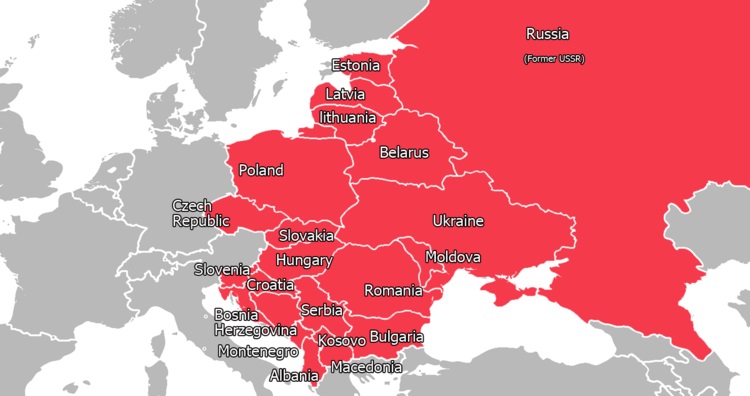
Many [missionaries] serve in nations that are currently communist or have been communist within recent history. Current communist nations include China, Cuba, Laos, Vietnam, and North Korea. Previous communist nations in Europe include Albania, Bulgaria, Czechoslovakia, East Germany, Hungary, Poland, Romania, and the Soviet Union.

What happens to a people group that has endured communism? What barriers does communism create for gospel receptivity? The list below was compiled with input from Pioneers [members] located around the globe, serving in nations that are currently or formerly communist.

  1. Communism creates a culture of secrecy.
  2. Under communism Christians often become desensitized to compromise.
  3. Communism [celebrates] the material world, science, and intellect.
  4. People who live or have lived under communism find the concept of grace very hard to digest.
  5. On the opposite side of the same coin, communism produces people who work to earn favor.
  6. In communist cultures leaders are not kind or trustworthy.
  7. Under communism the collective good of the people is considered far more worthwhile than the independence of individuals.
  8. People under communism are very afraid of the repercussions they will face if they believe.
  9. Missionaries often find life in communist or post-communist cultures very difficult and oppressive.

Pray for people groups around the globe who currently suffer under communism or have been raised under communism and have not yet shed its oppression. Pray that the God of grace would move hearts to believe and follow him, that his grace would be found sufficient for them (2 Corinthians 12:9), and that he would be exalted among the nations and in all the earth (Psalm 46:10).

» Read full story and see How Did the Church Survive? (Pioneers USA).

WORLD: Refugee Hoax Exposed

Source: INcontext Ministries, October 4, 2016

In September 2015, reports were published on social media stating that a furniture shipment that was supposed to go to refugee camps in Europe was actually filled with 52 tons of guns and ammunition. This was supposedly discovered by the Greek Border Securities.

Social media users pointed to a global conspiracy, which was supposedly the reason why the media never reported the incident. A question was posed about how long they will “continue with this charade,” and the claim was made that it would be until “they are being killed by these Arab hooligans.”

This email [like a version which resurfaced in September 2016] is false and constitutes an intentional effort to create suspicion and fear about refugees in Europe. Please forward [a link to this story] to anyone who sent you this email.

The accompanying pictures published were actually of Greek authorities seizing a freighter carrying an undeclared shipment of weapons en route from Turkey to Libya.

» Full story includes links to more information and the text of the email being circulated.

» You might also be able to use A Biblical View of the Refugee Crisis, a short video featuring IMB president David Platt.

GERMANY: Refugees Foil Terror Plot

Source: Missions Network News, October 16, 2016

Last week, three Syrian refugees in Germany helped capture a fellow refugee who was allegedly planning to bomb a Berlin airport. Investigators say the would-be bomber, Jaber al-Bakr, was likely an ISIS allegiant. His captors are being hailed as heroes.

Al-Bakr had been on the run for two days. Security forces raided his apartment and circulated the suspect’s photo on social media. According to USA Today, al-Bakr approached three fellow Syrian refugees at a train station and asked if he could stay at their apartment. One of the refugees, identified by German media as Mohamed A, said they took in al-Bakr because they recognized him and knew they had to turn him in. Mohamed A told German press, “I was so angry at him. I won’t accept such a thing—especially here in Germany, the country that opened its door to us.”

The three friends trussed up al-Bakr on their couch, refused his monetary bribes, and turned him over to the police. German authorities have issued public gratitude to the three men for taking a stand against terrorism. The suspect committed suicide in jail later in the week. Although Syrian refugees in Germany have left the war in Syria behind, the trauma still follows them.

» Read full story.

» Also read Life for Some Christians in German Refugee Shelters “Still Unbearable” (World Watch Monitor) and watch a video report about how a church in Macedonia is responding to the refugees passing through their country (SEND International).

PAKISTAN: Christian Woman’s Death Sentence Appeal Postponed

Source: BosNews Life, October 13, 2016

After waiting seven years in jail, Pakistan’s first Christian woman sentenced to death for blasphemy had her final Supreme Court appeal adjourned as angry Muslims packed the court room to demand her execution.

Aasiya Noreen, better known as Asia Bibi, who has been prison since the summer of 2009, was detained for allegedly insulting Islam’s prophet when she offered water to a Muslim co-worker and defended her faith in Jesus Christ.

Trial observers told BosNewsLife that one judge of the Supreme Court in Islamabad, Pakistan’s highest court, refused to be one of the three judges to decide on Bibi’s appeal because he had previously heard all details of a case against Mumtaz Qadri, who murdered the governor of Punjab province, Salman Taseer, in January 2011.

Quadri said he killed the governor for demanding that Asia Bibi would be freed. The governor also called Pakistan’s blasphemy statutes “black laws” and called for reforms and a presidential pardon for Asia Bibi.

» Read full story and a related story from WorldWatch Monitor. On a more positive note, we are glad to hear that Iranian pastor Behnam Irani has been released. He has also been held in prison for seven years.

INDONESIA: Expanding Christ’s Kingdom on “The Island of Gods”

Source: Christian Aid Mission, October 6, 2016

On Indonesia’s island of Bali, Hindu villagers mix worship of myriad deities with service to Buddhist figures, ancestors and spirits; a potpourri of barriers to the gospel that the director of an indigenous ministry is well suited to overcome.

“I am an original Bali[an] who has a very rare opportunity to be able to serve and reach my brothers,” said the leader, whose name is withheld for security reasons. “This is an advantage for me to more easily reach them.”

Known as the “island of the gods” with its estimated 20,000 temples and shrines, Bali has a population that is more than 80 percent Hindu amid the predominantly Muslim archipelago of Indonesia. Though Islam is growing in Bali Province, Hindu/Buddhist belief mixed with animism, magic, and mythology permeates all aspects of most islanders’ lives.

Within this context, the kingdom of God has been growing in Bali through the indigenous organization’s service to the poor. While cultural knowledge is key to knowing how to relate to and nuance communications with villagers, the love of Christ is directly expressed through meeting felt needs.

» Read full story.

» See also The Power of Prayer: Good News for Hindus (IMB).

How to Ace a Global Report to Your Church (the Five-Minute Guide)

640px-sennmicrophoneBy Shane Bennett

Is the pain as real for you as it is for me? The worship leader begrudgingly surrenders the microphone (just kidding, worship leaders!) to an ill-prepared but enthusiastic “missions person.” A low collective groan rumbles across the room. By the time Missions Minute Man has adjusted the mic and begun to speak, no one is happy anymore. It’s not as bad as a root canal or a sermon on tithing, but close.

If you’re reading this article, odds are good you’re into missions to some degree, and as such have seen a ton of missions-related promos in your day, maybe given a few yourself. And if you’re honest, you might admit: we haven’t always knocked it out of the park!

Give me another four and a half minutes and I’ll give you five key principles that could help you become the mission-report equivalent of Charles Spurgeon, Tony Robbins, and Maya Angelou rolled into one. You’re going to kill at this!

1. Ask for some time.

Here are two things I think you’ll agree with me on: that most churches could use more in the “sharing cool global-God kind of stuff from the pulpit” department, and that they’re probably not going to ask for it.

So, job number one for a killer missions promo is get the time. Maybe your church is so super giant that this just never happens. No worries. Your Sunday School classes and adult fellowships are probably as big as most of our churches! So focus on them.

Courage, my friends: Follow the prescribed path to get five minutes in person or on the phone with your pastor. Explain what you’d like to say and why saying it on Sunday morning will help (not just help you, but help the church). If you get a bit of resistance, it’s because your pastor wasn’t born yesterday! Remember, we may be digging out of a hole here because of past experiences.

If the resistance holds, try this: Offer to videotape the whole desired report, submit it to your pastor, and ask that it be shown. It may never happen, but being willing shows humble moxie.

2. Make it great.

If you get a chance to share, pledge before God and the memory of legendary mission mobilizer Lottie Moon that you will not mess it up! Rather, you’ll make it unforgettable. In decades to come, people who were present for your report will die with a smile on their face as they recount how well you did!

You’ll make it great by making sure it is:

A. True.

Email and the Web will lie to you (except for Missions Catalyst!) Check and double check any facts, and resist the urge to exaggerate stories. Say things only with the degree of confidence you actually have.

B. Important.

An average service is only about 90 minutes long. Time and attention are precious. Let’s not waste them by talking about stuff that doesn’t really matter. Of course that’s subjective, but do your best. Maybe even risk running your thoughts by your wife or that one surly deacon as a test.

C. Compelling.

If you can do it in the time you have, tell a story. “Here’s a thing that happened” and “Here’s why it matters.” Stories, told well, are almost impossible to resist. Leverage that.

3. Make it short.

Plan to use only two-thirds of your allotted time. This will do two things for you: You could stand out as one of the few people who ever ended early! And if you do go long, you can still end within your allotted time.

As we all, know, it’s better to leave people wanting more than to end with people just leaving!

4. Make it hopeful.

At any given time, a higher percentage of your church than you’d like to admit is probably thinking God’s getting beaten. Let’s try not to reinforce that. I confess I’m not above using some heart-grabbing statistics or a gut-punch anecdote to get people’s attention, but don’t leave them there. Presumably you have given your situation, so help others see where God is at work in it. Take a long view on what can happen. Paint a picture of the godly redemption that you foresee.

If the situation you’re reporting on is apparently, from all angles and as far as you can see, God-forsaken, go ahead and say so. But honestly, if you do that more than once a decade, people may think you’re being hyperbolic.

If God is doing anything, he’s redeeming this whole broken mess. Let’s remind each other of that as often as we can.

5. Make it actionable.

When you step away from the mic, your audience should have something to think, something to feel, and something to do. Encourage them to:

A. Think.

Present information that is so new and fresh it requires mental processing to integrate.

B. Feel.

Pluck heartstrings. Most of us let our emotions have a pretty big role in our actions.

C. Do.

Give people a way to play a part! Even better if the part is somewhat tuned to who they are instead of just a need for any non-flatlined body to join your team. Invite people to pray, give money, invest time, visit, advocate, help, adopt, fight, post, and share.

If you really want to swing for the fence, give them something to take home! As missions people, I think we underuse the tchotchke. A tiny trinket will help people remember your cause. I’m currently giving away small beads made from the lava of Mt. Etna to help people remember to pray for refugees in Catania, my beloved city that sits at the base of that volcano.

Run your next global report through these filters. You’re going to do great! Maybe together we can turn the tide on mission talks. Thanks for reading this and sharing with others you think will benefit from it.

» Comment and share your ideas below or on Facebook and Twitter.

image: Chris Engelsma, Flikr/Creative Commons License.