How to Ace a Global Report to Your Church (the Five-Minute Guide)

640px-sennmicrophoneBy Shane Bennett

Is the pain as real for you as it is for me? The worship leader begrudgingly surrenders the microphone (just kidding, worship leaders!) to an ill-prepared but enthusiastic “missions person.” A low collective groan rumbles across the room. By the time Missions Minute Man has adjusted the mic and begun to speak, no one is happy anymore. It’s not as bad as a root canal or a sermon on tithing, but close.

If you’re reading this article, odds are good you’re into missions to some degree, and as such have seen a ton of missions-related promos in your day, maybe given a few yourself. And if you’re honest, you might admit: we haven’t always knocked it out of the park!

Give me another four and a half minutes and I’ll give you five key principles that could help you become the mission-report equivalent of Charles Spurgeon, Tony Robbins, and Maya Angelou rolled into one. You’re going to kill at this!

1. Ask for some time.

Here are two things I think you’ll agree with me on: that most churches could use more in the “sharing cool global-God kind of stuff from the pulpit” department, and that they’re probably not going to ask for it.

So, job number one for a killer missions promo is get the time. Maybe your church is so super giant that this just never happens. No worries. Your Sunday School classes and adult fellowships are probably as big as most of our churches! So focus on them.

Courage, my friends: Follow the prescribed path to get five minutes in person or on the phone with your pastor. Explain what you’d like to say and why saying it on Sunday morning will help (not just help you, but help the church). If you get a bit of resistance, it’s because your pastor wasn’t born yesterday! Remember, we may be digging out of a hole here because of past experiences.

If the resistance holds, try this: Offer to videotape the whole desired report, submit it to your pastor, and ask that it be shown. It may never happen, but being willing shows humble moxie.

2. Make it great.

If you get a chance to share, pledge before God and the memory of legendary mission mobilizer Lottie Moon that you will not mess it up! Rather, you’ll make it unforgettable. In decades to come, people who were present for your report will die with a smile on their face as they recount how well you did!

You’ll make it great by making sure it is:

A. True.

Email and the Web will lie to you (except for Missions Catalyst!) Check and double check any facts, and resist the urge to exaggerate stories. Say things only with the degree of confidence you actually have.

B. Important.

An average service is only about 90 minutes long. Time and attention are precious. Let’s not waste them by talking about stuff that doesn’t really matter. Of course that’s subjective, but do your best. Maybe even risk running your thoughts by your wife or that one surly deacon as a test.

C. Compelling.

If you can do it in the time you have, tell a story. “Here’s a thing that happened” and “Here’s why it matters.” Stories, told well, are almost impossible to resist. Leverage that.

3. Make it short.

Plan to use only two-thirds of your allotted time. This will do two things for you: You could stand out as one of the few people who ever ended early! And if you do go long, you can still end within your allotted time.

As we all, know, it’s better to leave people wanting more than to end with people just leaving!

4. Make it hopeful.

At any given time, a higher percentage of your church than you’d like to admit is probably thinking God’s getting beaten. Let’s try not to reinforce that. I confess I’m not above using some heart-grabbing statistics or a gut-punch anecdote to get people’s attention, but don’t leave them there. Presumably you have given your situation, so help others see where God is at work in it. Take a long view on what can happen. Paint a picture of the godly redemption that you foresee.

If the situation you’re reporting on is apparently, from all angles and as far as you can see, God-forsaken, go ahead and say so. But honestly, if you do that more than once a decade, people may think you’re being hyperbolic.

If God is doing anything, he’s redeeming this whole broken mess. Let’s remind each other of that as often as we can.

5. Make it actionable.

When you step away from the mic, your audience should have something to think, something to feel, and something to do. Encourage them to:

A. Think.

Present information that is so new and fresh it requires mental processing to integrate.

B. Feel.

Pluck heartstrings. Most of us let our emotions have a pretty big role in our actions.

C. Do.

Give people a way to play a part! Even better if the part is somewhat tuned to who they are instead of just a need for any non-flatlined body to join your team. Invite people to pray, give money, invest time, visit, advocate, help, adopt, fight, post, and share.

If you really want to swing for the fence, give them something to take home! As missions people, I think we underuse the tchotchke. A tiny trinket will help people remember your cause. I’m currently giving away small beads made from the lava of Mt. Etna to help people remember to pray for refugees in Catania, my beloved city that sits at the base of that volcano.

Run your next global report through these filters. You’re going to do great! Maybe together we can turn the tide on mission talks. Thanks for reading this and sharing with others you think will benefit from it.

» Comment and share your ideas below or on Facebook and Twitter.

image: Chris Engelsma, Flikr/Creative Commons License.

World News Briefs

Missions-Catalyst-no-tagline_large

translation

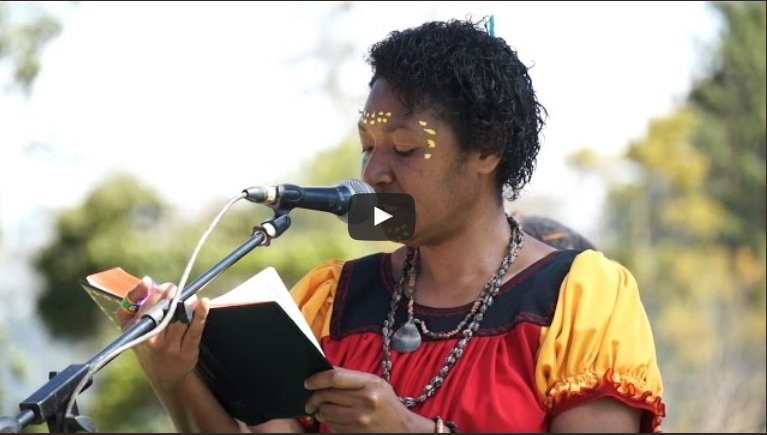
Source: Wycliffe Bible Translators. In this video, recorded on the fiftiethanniversary of the completion of the Cakchiquel New Testament, Dr. Billy Graham talks about the significance of Bible translation and challenges listeners to become part of the work.

Today’s edition of Missions Catalyst News Briefs features several stories about breakthroughs and barriers in Bible translation and distribution. Read on and pray.

WORLD: 75 Years of Bible Translation

Source: Wycliffe Bible Translators, September 30, 2016

It all began in 1917 when William Cameron Townsend (known by friends as “Cam”) went to Guatemala to sell Spanish Bibles.

When Cam stepped off the boat, his youthful enthusiasm for sharing the gospel was high, but he soon realized that most of the people he was meeting didn’t understand the Bible in Spanish! Many of them spoke Cakchiquel instead.

Cam faced a dilemma. If they didn’t understand, how was he reaching people for Jesus? Frustrated and disappointed, Cam began to wonder if he’d failed. But God had others plans in mind.

Deep down, Cam thought everyone—man, woman and child alike—should be able to read God’s Word in the language of their heart. So although it would end up taking almost 10 years of his life, he learned the complex Cakchiquel language, created an alphabet and translated the New Testament.

When he was done, the Cakchiquel Indians finally had God’s Word, but thousands of other languages still needed it.

» Full story describes Cam Townsend’s journey to founding Wycliffe Bible Translators USA in 1942. Learn more about Wycliffe USA’s 75-year anniversary through a timeline, stories, and more.

KIRIBATI: New Translation Begun in 1988 Is Finished

Source: United Bible Societies, September 30, 2016

Praise God for the launch of the “Te Baibara—Te Rairai Ae Boou” (Kiribati New Version Bible or the Kiribati Contemporary Bible) on September 17 in Tarawa, Kiribati [in the South Pacific]. The project started in November 1988 with the translation of the New Testament.

The new features which may be regarded as adding value to the Kiribati New Version Bible help to make it more user-friendly for better reading and in-depth Bible study (including section headings, book introductions, cross-references, footnotes, illustrations, and more).

“It will take a while for the older generation to adjust to anything new, even the New Version. In my position as a pastor, the Kiribati New Version will help people to better understand the message of the Gospel for a transformed life. As they grow towards maturity they will move to the Kiribati Old Version for deeper study of the living Word of God.”

In 2015, Bible Societies assisted in the completion of translations in 50 languages spoken by nearly 160 million people.

» Full story also describes progress on Bibles in braille and sign languages.

» Also read about the completion of a Lubwisi New Testament for Uganda, a project fifteen years in the making (Mission Network News).

AZERBAIJAN: Bible Society Registers after 20 Years, But Will It Be Able to Print Bibles?

Source: World Watch Monitor, October 3, 2016

The recent registration of a Bible Society in Azerbaijan, after a 20-year fight, has brought fresh optimism to the country’s minority Christians, but there remains some confusion about the types of books it will be allowed to print, with even Bibles potentially falling foul of the country’s strict regulations.

Terje Hartberg from United Bible Societies called it “a great development, which will start a new chapter in Bible ministry for all Christians in Azerbaijan.”

However, all literature either printed or imported by the Bible Society will remain subject to approval by the government—with every publication labelled with an official sticker—and its distribution permitted only at state-approved venues.

» Read full story.

» Also see a story about neighboring Iran which describes that country’s church growth spurt (Mission Network News).

UZBEKISTAN: Punished for Religious Books at Home

Source: Forum18, September 29, 2016

A Baptist from Urgench [Urganch] in the north-western Khorezm Region has been punished for a second time within a year for having Christian books at home, which state officials regard as illegal. As this was a second punishment, Stanislav Kim was convicted under the Criminal Code, receiving a two-year corrective labor sentence.

A Presbyterian Christian in the capital Tashkent was fined in May for having religious literature at home. The Christian literature was ordered to be handed to the state-backed Muslim Board.

A criminal trial against him began in September for illegal use of computers.

In Surkhandarya Region, four Baptists were punished for religious literature confiscated during an illegal house search. Two Bibles, as well as other books and discs, were ordered destroyed. Officials claimed one book was banned because it could be used to spread a faith. They also claimed Baptists are banned in the region because they do not have state registration.

In Zarafshan, a Baptist pastor and his wife were fined for Bibles and Baptist song books seized from their home.

[These] eight individuals are among many punished for having personal religious literature in their homes. The authorities regard such possession of religious literature as illegal.

» Read full story.

JAPAN: New Era Begins for Gospel Radio

Source: TWR, August 9, 2016

Probably because of its long history as a mission field combined with its highly successful assimilation of Western-dominated industry and contemporary culture, many are surprised to learn that Japan still has one of the largest populations of people unreached by the gospel. That means only a tiny portion of its nearly 130 million people—significantly less than 1 percent, in fact—are evangelical Christians.

After a 2011 earthquake and tsunami overwhelmed the northeastern region of Tohoku, killing nearly 16,000, sparking meltdowns at nuclear reactors and driving more than 200,000 from their homes, many Japanese felt the certainty of their worldview had been undermined. The people seemed more open to hearing the gospel presented; the previously stony ground had begun to soften.

Another development at the same time facilitated the door opening: Radio, which had played a key role in informing the public during the crisis, gained renewed respect.

Along with people to handle organizational and technical matters, 25 pastors were recruited to develop and present the programming.

“We told them to preach a Christ-centered gospel message boldly,” said [TWR regional ministry director] Samuel Tan. “Anything not Christ-centered, delete. This is what people in Japan need.”

» Read full story.

SYRIA: “If There Are No Men to Lead the Church, I Will!”

Source: Joel News, October 2016

Mathild Sabbagh, 26, returns to her hometown. She is the first female minister in Syria. Her town in northern Syria is surrounded by ISIS. Last year her cousin was killed by Muslim extremists. Her brother who is also a pastor was kidnapped.

“If there are no men who can lead the church at this time, I’ll do it!”

Before the war her church still had almost 200 members, but today only 30 or 40 people have remained. ISIS has decimated the number of believers. “Some were killed, others fled. From my primary school friends no one stayed. Everybody’s gone. The war left our city shot to pieces and our entire community beaten apart.”

But it doesn’t keep Mathild from going back. She is more determined than ever, and feels a great sense of urgency. “I believe in the mysterious growth of the Kingdom of God, even against the odds. I go back to my church because I know I’m needed there. The church is like my own family. I’ve learned all my life that I can bring my talents to the church. So now I’ll bring what I have.”

» Read more of this story or subscribe to Joel News.

VIDEOS: Loving Your Neighbors

Sources: Deidox, Moving Works, and Prayercast

While many of the resources we feature here are designed to inspire and equip you (and those you might mobilize) for global service, today I want to share some great videos about showing love closer to home.

Turns out the principles are much the same. We still have internal resistance, issues with our priorities, and other barriers to overcome if we want to be obedient and make a difference in the lives of others.

loveyourneighbor

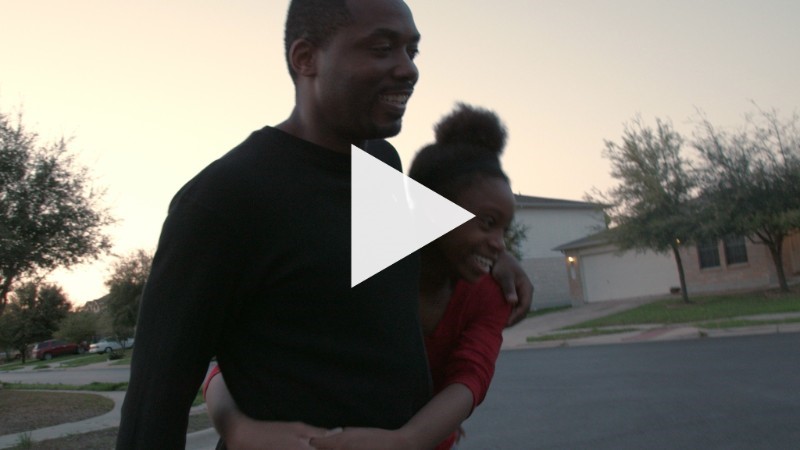
Jay has been challenged to love his neighbors, but he can’t do it if he doesn’t know them. Watch as this Austin, Texas man and his wife wrestle with finding the time and then take a small but simple step. Love Your Neighbors—A Simple Step is part one in a series of three short videos from Deidox. The others will be out within the next two weeks. This first video, at just over four minutes long, might easily be folded into a presentation.

Moving Works has also released a new short video (5.5 minutes) about someone who has a conversation with God that leads her to reach out to love and serve a neglected population close to home. Watch Bettie Goes to Jail. Download a simple discussion guide for small groups.

Finally, our friends at Prayercast are part of an interesting campaign to raise up prayer for a city. They’re mobilizing praying for every one of Chicago’s 77 neighborhoods. Each day between September 8 and November 23, a prayer video for another neighborhood will be released. Check out Chicago77.

What would it look like to pray systematically for every inch of your city?