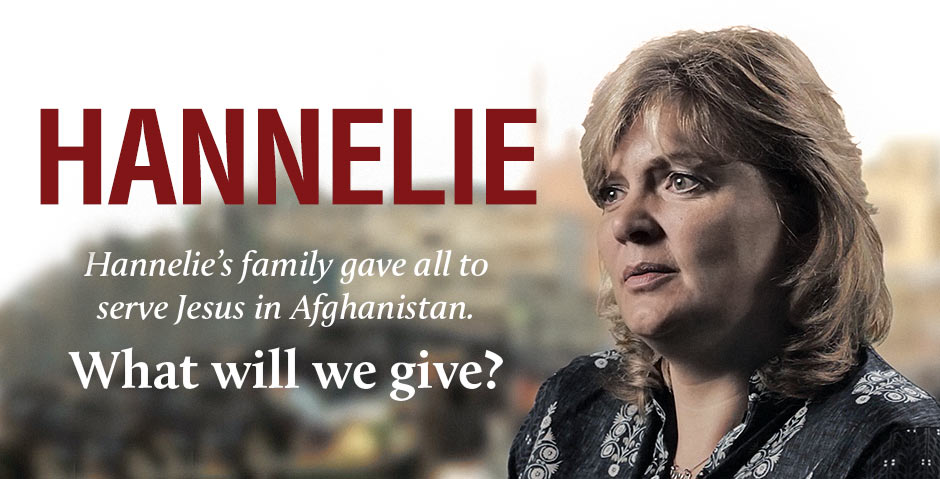
 This year’s IDOP prayer video is a powerful one, but for me it raised a big question…
How Can We Tell Hard Stories?
By Shane Bennett
Can I invite you into my confusion? Here’s the story: This weekend at church we commemorated the International Day of Prayer for the Persecuted Church by praying for believers in oppressive situations and watching a video produced by Voice of the Martyrs. Perhaps your church did something like this as well. I admit that the global persecuted church is not usually at the top of my agenda. In fact, I’d do well to give more thought and action to these issues. In the meantime, I’m grateful that God is raising up many from all over to pray and advocate for our sisters and brothers suffering for their faith.
Here’s my problem. The video we watched, Hannalie, was well done, intense, gripping, and heart-breaking. A lovely family moved from South Africa to minister in Afghanistan. The father and two teenage children were murdered by Afghans, leaving the mom a childless widow. The tragedy was palpable. The leader in our church who prayed after the video spoke to God through tears. The congregation was visibly moved.
Moved to pray? I hope so. But what else?
Moved to hate Muslims. Confirmed that our suspicions are valid, our anger justified. The logic is hard to escape. God called these dear people to this risky situation and they got killed. But as good Christians, we hesitate to blame God for their deaths. (Although if the children’s grandparents didn’t hesitate, we’d be hard pressed to blame them.) You can’t blame the dad; he’s dead. And who can blame a widow? So we blame the Muslims. And because we’re not too sophisticated in our understanding (and they are brown, after all) we blame all Muslims. It is desperately difficult not to extrapolate, to allow the actions of a few to characterize the attitudes and intentions of the rest.
I’m confused because honestly, Muslims did this terrible thing. And Muslims have lately done a number of terrible things, sometimes clearly in the name of Islam. Sometimes directly targeting Christians. So how do we tell those stories fairly? How can we tell them honestly, without contributing to growing fear and anger toward Muslims?
I don’t know. Do you have ideas? Good examples? Should we be balanced in our depiction of bad deeds? It seems absurd to give equal time to bad things Christians have done, although doing so might be less difficult than it first appears. I don’t think we should avoid telling such stories either. To be clear, I don’t wish to question the motivation of Voice of the Martyrs. I’m simply expressing concern about the results of telling the story in the way they did. Maybe there are better ways. I’d love your input.
In the meantime, words of Jesus ring in my ears:
“Love your enemies. Pray for those who persecute you.”
“I’m sending you as sheep among wolves. Be as wise as serpents. As innocent as doves.”
“I’m sending you as the Father has sent me.”
And my prayer for dear believers risking their lives for Jesus is this:
Holy Father, give strength, courage, and hope to your dear children living in challenging situations. May the aroma of Christ emanate from them and the joy of Jesus permeate every molecule of their being. May their lives and deaths (should they happen) result in the purposes of God going forward mightily and the kingdom of God arriving fully.
» Respond on Facebook, email, or the Missions Catalyst website.
 Missions Catalyst News Briefs 11.2.16