Four Reasons to Engage with a Hurting World

By Shane Bennett

As I sit and write this morning, southern Colorado fog limits the view from my window to a few dozen yards. Overhead, though, military jets are buzzing around in some sort of frenetic training exercise. The intermittent sound bugs me more than it should. Maybe because I can’t see them. Maybe because I’m trying to concentrate and just when I get in a groove, they light up again.

But then it occurs to me there are people for whom that sound is much more than annoyance. The ascending and descending drone of the jets predicts death and destruction, the continued upsetting of life at fundamental levels.

Somewhere in the world an airstrike means the kids can’t go to school. There’s no way to get to work, or no place to work if you can get out. The food in the cabinet will have to last, because there is no more left to buy now.

It may mean broken, twisted, still bodies. Friends, neighbors, and children who must be left where they lie for now. And for how long? Can you even imagine the agony of that calculation? How long until it’s safe to scramble out and retrieve your dead friend? When is it okay to run down the street to see what’s become of the preschool where your wife had gone to collect the kids?

Do you ever want to just turn away from such dark thoughts? I sure do. To focus on a happy, little life right here. The lure is strong and sometimes I succumb. But if you’re reading Missions Catalyst, it probably means God has done a work in you that renders you dissatisfied with that response. This is grace and a gift of inestimable value.

If you ever find yourself needing motivation to empathize with the world’s pain, some reason to re-engage, here are four things that reminds me to keep caring, and to act.

1. The present goodness of Jesus

Somehow Jesus is in the midst of the airstrike. I don’t understand it, but I can’t shake the reality that he’s there, he knows, he cares. All my sympathy and compassion look like vapor next to the real presence of the creator of the cosmos.

Jesus holds the hand of the dying, feels her final breath on his face, and mourns her slowing, fading heartbeat.

He stands with the refugee dad, despairing as the way forward is blocked and the way back simply gone.

He cries with the girl abused by the one she trusted the most.

He stands again in the furnace with faithful followers who trust him for their very lives, some living to see the next sunrise, others waking up in glory.

He is with us in the mess, bringing the very life of God to bear on his creation. Pointing us forward in hope.

2. God’s plan to make all things new

That hope toward which we move is summed up for me in two places in Revelation: John’s vision of the crowd before the throne, made up of a “great multitude that no one could count, from every nation, tribe, people and language” and Jesus’s personal pledge, “I am making everything new!”

Every springtime, every Easter, every Nowruz is practice for the ultimate renewal that awaits creation. That awaits you and me! Can you even imagine it? Is it too scary to try?

3. Our intrepid predecessors

Don Richardson recently traded earth for heaven. If anyone I personally know heard, “Well done, good and faithful servant,” it was him. I remember seeing a clip from his movie, Peace Child in which intrepid Don (sporting some wicked sideburns) and long-suffering Carol are being paddled up to a Sawi village. Say what you will, but that sort of gutsiness makes me want to pay attention, to engage, to—heaven forbid—not let Don down!

This is to say nothing of the biblical heroes of faith, the great missionaries of former centuries, and the Filipinos, Kenyans, Chinese, and South Asians whose noble sacrifice and early, painful transition to glory never made it to Western screens.

May we not sit down on the shoulders of such giants.

4. We were built for impact

We are not powerless. You and I were made to matter. Paul says we are God’s masterpiece, that “He has created us anew in Christ Jesus, so we can do the good things he planned for us long ago.” I don’t know what those “good things” are for you. I often wonder about it for me! But I don’t doubt Paul’s insight nor God’s good purposes.

It’s as normal as air to doubt this, but it’s in your DNA. It’s who we are.

Granted, it may feel like there’s nothing you can do about an airstrike in Yemen or Pakistan. And by most measures, you are right. You can’t be everywhere there’s pain. Nor could you handle it.

Heck, we couldn’t handle the unseen pain present just in our row at church on an average Sunday. Most suffering will transpire apart from our attention. But we know the one who knows it all.This great God has invited us partner with him in the reconciliation of all things.

Conclusion

Let’s not turn ourselves away from the world’s pain. We have good reasons to care and to take action. You can probably think of more than these four. Please share them (and these) with your friends.

And, since perhaps the best way to join in God’s redemptive work is through prayer, I’d like to invite you to jump into this year’s Seek God for the City prayer initiative, already in process. Perspectives hall-of-famer Steve Hawthorne has put together this guided prayer effort for our neighborhoods and the nations.

» Learn more and grab the app today or search “Seek God 2019” wherever you get apps.
Subversive Mobilization: Help!

I’m putting together a language tool for a sister newsletter I write called Muslim Connect. The tool will be a cheat sheet to help people say “hi,” “thank you,” and “you’re welcome” (or the cultural equivalents) in many of the major languages Muslims speak. I hope it will help normal people like us initiate conversations.

I’d love for you check it out and add words to the language(s) you know. I appreciate your insight and experience.

» You’ll find the list and pertinent instructions here. Thank you a ton.

???? Underground house churches in Iran | World News Briefs ????

Nowruz is coming up! The Persian New Year is celebrated by Muslims from Turkey to India and in diaspora communities across the planet. Learn more in Shane Bennett’s Muslim Connect. Below, learn what God is doing among Persians in Iran and the UK.

Missions-Catalyst-no-tagline_large

  1. IRAN: Bringing Worship to Underground House Churches
  2. USA: Barna’s “Reviving Evangelism” Study Is Disturbing
  3. TAJIKISTAN: Children Barred from Church, Christian Calendars Burned
  4. MYANMAR: Buddhist Militants Kidnap Second Pastor
  5. SWEDEN: Muslim Mom Brought Home Bible from Library by Mistake, Daughter Found Joy

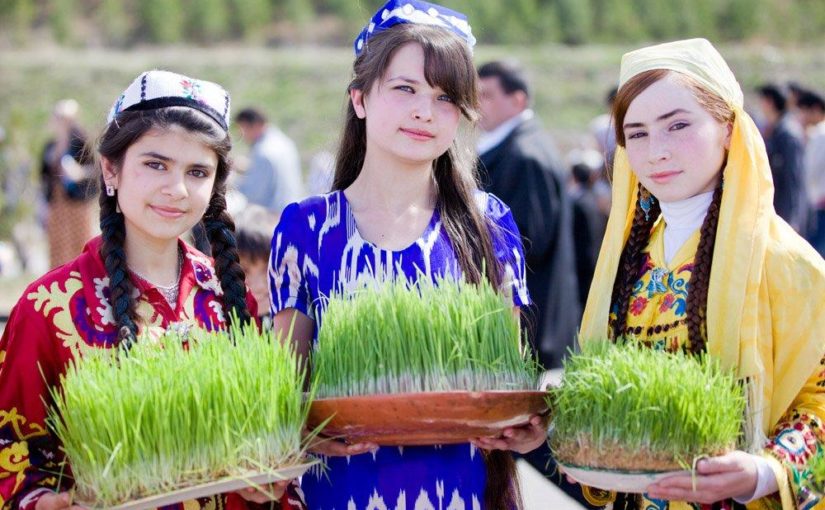
Photo: Tajik girls celebrate Navruz in Dushanbe, Tajikistan. By Franrasyan, Wikimedia Commons.

IRAN: Bringing Worship to Underground House Churches

Source: SAT-7, February 22, 2019

Persian house churches worry that worshiping loudly could attract the attention of suspicious neighbors and authorities. One Iranian Christian recalls,

“When we gathered [at] a house [we would play] worship songs on CD or a satellite program…and if we had a worship leader they would lead us in worship. But very quietly and with no clapping. We had to be especially careful in apartments. Sometimes, we would use blankets to soundproof doors for extra security.”

Another challenge for Persian believers is that the repertoire of Persian worship material is limited, and musicians are relatively scarce.

In response to an environment of risk, and limited Persian worship resources, SAT-7 produced and is airing the weekly live program Heavenly Worship.

Behind closed doors, they watch to learn about the miracle of salvation they’ve experienced, to fellowship with the hosts and pastors, and to join in songs of praise. They receive vital information and support [amid] opposition.

“We get feedback from our viewers who meet at home and are unable to sing aloud,” shares Producer Mostafa Keshavarz. “Some don’t know how to sing. We make sure the song words are on the screen and invite the viewers to join in with the singing and worship—whether silently or aloud. Viewers get in touch and tell us how happy they are that they had the opportunity to join us in praise and worship, and this is really encouraging for us.”

» Read full story.

» Also read about how the Church of England held a service in Farsi after a huge rise in Iranian converts (Telegraph) and learn about Christianity in Iran 40 years after the Iranian revolution (Christianity Today).

USA: Barna’s “Reviving Evangelism” Study Is Disturbing

Source: Brigada Today, March 3, 2019

This past week, I (Doug) read through every word of Barna’s report, Reviving Evangelism. It’s a disturbing commentary. According to their data, nearly half of Millennial practicing Christians say it is wrong to evangelize (47%). Almost two in five practicing Christians (of all ages) say they have no non-Christian friends or family members (30%). More than half of all practicing Christians report having two or fewer conversations about faith in past year (56%).

To us, these are some of the most disturbing trends of our day. We could probably survive if political figures stop treating one another with adequate civility. But if, as the years tick by, we “forget” (or stop caring) about evangelizing (as it appears we are) and if, in the process, we forget how to tell the Good News (as it appears we are), we would be placing the Kingdom of God in a precarious position.

What do YOU think we should do about the study? How would YOU guess we respond?

» Comment on this item.

» Read an excerpt from the Barna report: Almost Half of Practicing Christian Millenials Say Evangelism Is Wrong. See also Some Pastors Optimistic about Millennials, Church Growth. Stats Don’t Bear Them Out (Baptist News Global).

TAJIKISTAN: Children Barred from Church, Christian Calendars Burned

Source: World Watch Monitor, February 25, 2019

Tajik authorities implementing a new religion law are barring children from attending religious services and have burned thousands of calendars with Bible verses.

Amendments to Tajikistan’s Religion Law came into force in January last year, giving the state greater control over religious education and increasing the amount of information religious organizations must pass on to the state.

The State Committee for Religious Affairs and Regulation of Traditions, Ceremonies and Rituals (SCRA) now demands “all kinds of information on the number of members, finances and activities,” a member of a religious community told Oslo-based news agency Forum 18 anonymously, fearing reprisals (see Forum 18 article).

They also gather information about the number of children under the age of 10 attending religious meetings, using the Religion Law and the Parental Responsibility Law to put pressure on parents and religious communities.

» Read full story. It looks like Jehovah’s Witnesses are being targeted in particular, but other faith communities like the Baptists who imported the Christian calendars are suffering as well.

» Also read the article Five Reality Checks for Mission, a recent article which deftly summarizes today’s key challenges for Christian witness in Asia and globally (Church Mission Society).

MYANMAR: Buddhist Militants Kidnap Second Pastor

Source: Barnabas Fund, March 2019

Barnabas Fund contacts report that Pastor Thar Tun was kidnapped from his home in Rakhine state, Myanmar (Burma) on February 13 by Buddhist militants thought to be members of the Arakan Army (AA).

Pastor Tun, 56, who has five children, is the second pastor to be kidnapped in Myanmar in less than a month. It is thought that the pastor’s work helping refugees in his home town of Buthidaung made him a target.

On January 19, Pastor Tun Nu, 41, was kidnapped at gunpoint in Rakhine state by militants also thought to be members of AA. He was reported killed on February 1 alongside several others held captive, but his body has not been found.

At the time of Pastor Tun Nu’s abduction, witnesses described the AA as “truly brutal” and had warned that more abductions of Christians were likely because their missionary work made them a target.

» Read full story and please pray for these men’s families and ministries.

» Readers might also be interested in learning about a ministry in another part of East Asia. Christian Freedom International reports that religious refugees are counting on the tides to bring rice, medicine, and Bibles to the suffering people of North Korea.

SWEDEN: Muslim Mom Brought Home Bible from Library by Mistake, Daughter Found Joy

Source: God Reports, February 19, 2019

Chaima wanted to join ISIS and kill Christians. “I loved to see people dying, I loved to see them bleeding,” Chaima says on a video on YouTube. “I was seeing videos of decapitation on the Internet and I loved it. I was just blind.”

Her mother was an immigrant from Africa to Sweden and both parents were devout Muslims. Chaima saw life as cruel and wondered, “What am I doing in this world?”

“I tried to kill myself three times. I was doing drugs. I just wanted to destroy myself.”

Chaima, from childhood, grew up unhappy. “I hated people who were not Muslim. I wanted to kill them. I was bound to dangerous things,” she says. “I didn’t feel loved by anyone.”

She had a passion for reading, so her mom, concerned for her bouts with depression, brought her library books. One of the books, by accident, was the Bible. Chaima decided to read it and try to prove to Christians that they were wrong.

» Read full story or watch Chaima tell her story on YouTube. This video was made about 18 months ago when she was 18 years old and explores not only her change of heart and baptism but deliverance from demonic activity. Some might find it a bit disturbing.

Inspired by martyrs | World News Briefs

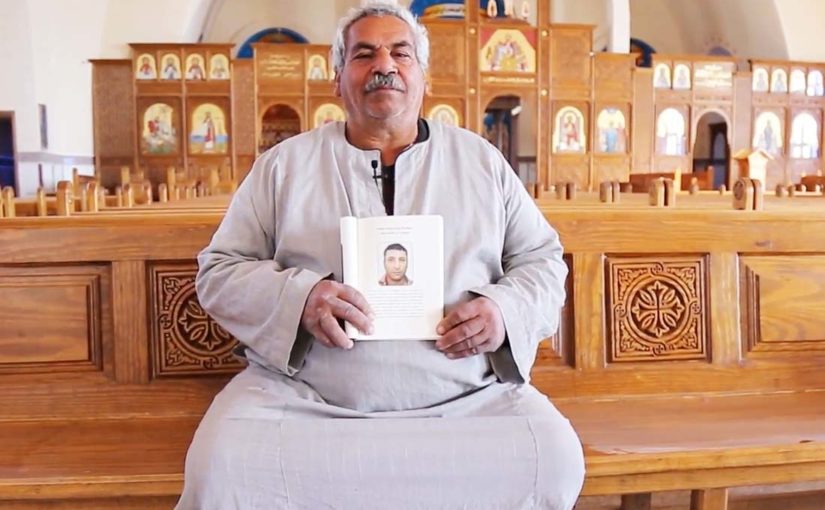
Malak is the father of one of the 21 martyrs killed by Islamic State militants on the Libyan coast four years ago. See related story below. Image: World Watch Monitor.

  1. EGYPT: Commemorating the Deaths of 21 Coptic Martyrs
  2. UNITED ARAB EMIRATES: Unprecedented Gathering of Christians
  3. VENEZUELA: Crisis Facts and Frequently Asked Questions
  4. COLOMBIA: Another Pastor Killed, Church Terrified
  5. USA: “Nacho Libre” Leads Muslims to Christ

EGYPT: Commemorating the Deaths of 21 Coptic Martyrs

Source: Open Doors, February 15, 2019

“We only knew martyrdom from films, but martyrdom was reintroduced and it strengthened our faith because these people, these 21 martyrs, lived among us,” [says Malak, whose son was killed four years ago].

Few will forget the graphic images of the mass beheadings in a video released and paraded online around the world. February 15, mark[ed] the fourth anniversary of the deaths of 20 Coptic Christian men from Egypt and one Christian man from Ghana—all 21 martyrs for their faith.

In the days and weeks leading up to their deaths, ISIS captors reportedly tortured the men who had traveled the 1,200 miles to Libya to find work and support their families. Militants attempted to persuade them to deny Jesus in return for their lives. They all refused.

A new book, The 21: A Journey into the Land of Coptic Martyrs, by Martin Mosebach, includes interviews with families of the men who were killed.

Reportedly, what he found was “a completely different point of view of martyrdom… No lamentation, no mourning, no pity, but, instead, pride and happiness.”

» Read full story and watch a short video about a church built to honor the martyrs (World Watch Monitor).

» See also Why the Church in the Middle East Won’t Stay Hidden (Frontiers USA).