SOUTHEAST ASIA: How Could God Use an Occupational Therapist in Mission?

Source: OMF International, November 2019

In 2017 I had the pleasure of spending three months in a Southeast Asian country as part of OMF’s Serve Asia program.

In all honesty, at times the needs seemed overwhelming due to cultural differences, the lack of healthcare, or limited resources and the lack of facilities which I had become used to. However, it challenged me to depend wholly on God and to ask him first. I also had to “think outside the box” and look at what was available and what would work best locally.

An example was using a combination of crates and bricks to raise the height of a bench to help a man with cerebral palsy do his work. He loves his role of sawing and sanding wooden board for artwork!

The lack of language also made things more complicated although I managed a few language lessons and grasped a few basic phrases which always caused my new friends to smile (and sometimes laugh).

I was also able to spend time helping at a local Christian home school. This allowed me to use my occupational therapy skills in sharing resources and advice for teachers and assistants working with children with additional learning needs.

Admittedly, I had only envisaged this as a short-term trip. However, the experience has opened my eyes to the opportunities for the gospel in this country and God has started a work in my heart as to the real possibility of longer-term mission. I was surprised by what God could do through me.

» Read full story.

» Other stories about using your talents in missions: Read how a man who worked in marketing saw his skills repurposed for ministry (Beyond) and how runners are needed in Susan (Mission Network News), plus follow the journey of a Malaysian Chinese girl pursuing God’s call while honoring her elderly parents (OM).

» See also, from Pioneers, Why Not You? Why Not Now? and Discerning Your Calling.

ZANZIBAR: Vacation in Paradise Took Unexpected Turn

Source: God Reports, October 16, 2019

Peter and Tammy Russell work with Wild Hope International in Tanzania after spending years working with Kenya’s Maasai. Recently, they had a five-day getaway on the pristine beaches of Zanzibar. Peter had looked forward to the time to “relax, read a good book, enjoy some good food, swim, and exercise.”

“As we flew in over the Indian Ocean, the aquamarine and coral blue of the waters surrounding the emerald archipelago formed a picture so breathtaking that I felt my soul start to rejuvenate,” he recounted.

[But] that night Peter had a disturbing dream. “I saw Maasai going to perform a sacrifice filled with occult meaning. When I woke up, I shared the dream with Tammy, we prayed together, and the heaviness lifted somewhat. But later in the day it came back, and I had a stirring in my heart to have church on the beach.”

When Sunday arrived, Peter and Tammy took a walk on the beach.

When a young Maasai man greeted them, Peter answered him in Maasai. The young man was shocked to hear his language coming from a tourist.

“I have a message on my heart to give to you Maasai here. Can you gather your friends together?” Peter asked.

» See full story with pictures.

INDONESIA: Islamic Organization Drops “Infidel” Category

Source: Barnabas Fund, October 22, 2019

Nahdlatul Ulama (NU), the Indonesian Muslim political party and world’s largest moderate Muslim movement, has made a significant break with Islamic conservatism in an unprecedented decision to abolish the legal category of “infidel” (kafir) for non-Muslims.

The groundbreaking move, apparently aimed at sweeping away Islamic doctrines often used by extremists to justify terrorism, was first announced at the NU national conference in West Java earlier in 2019.

Around 20,000 Muslim scholars gathered to create and endorse a new Islamic legal framework (fiqh). The new rulings include a raft of changes embracing the modern definition of nation state, instead of a caliphate, and recognizing all as “fellow citizens,” irrespective of their religion or ethnicity, with equal rights and obligation to obey modern national laws.

Indonesia is the world’s largest Muslim nation and the NU claims to have more than 90 million members. Its revisions of Islamic doctrine and legal rulings are expected to reverberate throughout the Muslim world.

» Read full story.

» The NU also eased a ban on non-Muslim greetings, that is, greetings associated with the other religions of Indonesia (The Jakarta Post).

Rubbing Shoulders with Visionaries

You’ve heard the saying, “If you’re the smartest person in the room, you’re in the wrong room.” In other words, if you’re going to get smarter, get around people who are smarter than you. Of course, for some of us, pretty much anyone will suffice!

Similarly, I’ve been sensing lately a need to be around people who have more vision than me. Surely, I’m not the only one whose vision for the nations is prone to flag from time to time. Am I?

Last night I was on the phone with a ministry partner who shared about a trip to North Africa. It had profoundly changed him, he said: “What I saw convinced me a whole Muslim people group, not just ones and twos, could be won to Christ.” That was straight dopamine for me. After a few minutes buddy-breathing on his vision, I hung up the phone happy!

I’m wondering how to get around big-vision people more consistently. As mission mobilizers, we’re often scattered about and maybe even prone to isolation. Without regular reinforcement, given the blows our faith will doubtless take, we may falter or plateau.

So how can I—I mean we—get in proximity to people of great vision? Here are some ideas. But I’m hoping you have some that are even better. Let me know!

1. Go to mission conferences.

We list many of these on the Missions Catalyst events calendar and will soon be adding a host of 2020 events.

  • Upside: You can hang out and ask great people great questions while they eat breakfast.
  • Downside: Pretty pricey.

2. Text visionary people.

I guess you could call, too, but that just scares me! Ask them how you can pray for them. Ask them to tell you about their vision or tell you about something they’ve found encouraging lately.

3. Crash a Perspectives class.

Offer to host the instructor or drive them to the airport.

4. Read visionary books.

Start with the Bible. Read fiction and non-fiction as well as magazines and blogs. Missions Catalyst Resource Reviews can give you some leads. Reading James Bryan Smith’s The Magnificent Story recently did wonders for my vision. It increased my hope and desire for God’s kingdom.

5. Borrow vision from related disciplines.

Get coffee with local pastors who are killing it. Take entrepreneurs and successful farmers to lunch.

What do you do when your vision dips low? Let us know.

Making Thanksgiving Count for the Kingdom

Here in the US, our most American holiday is right around the corner. Thanksgiving presents a chance not only to re-calibrate our own gratitude meter, but also reach out to people we’ve considered connecting with but haven’t been able to trip the trigger.

Thanksgiving is innocuous, non-partisan, and safe. Even the most mild-mannered can break the social ice with, “What are we thankful for?” The more intrepid can follow up, “Who are we thankful to?” It’s a ready-made opportunity to get more comfortable talking about God. And should a sermon threaten to break out, there’s football, board games, and more pie.

If this idea is intriguing but intimidating, check out my super-short Five-Step Plan for a Killer International Thanksgiving Dinner. This will get you going in the right direction. Fill in the details by ransacking this beautiful and ridiculously helpful site with ideas for cross-cultural hospitality, The Serviette. These guys give the body of Christ a wonderful gift. Enjoy it.

Focusing on Goals for 2020

What does the coming year look like for you? Will you be expecting great things from God and attempting great things for God? (Hat tip to William Carey!) Recently when people have asked how they can pray for me, I’ve been sharing a desire to know God’s plans, purposes, and dreams for me and through me in 2020. I’m feeling ready for fresh direction and big challenges.

Being prone to both delusion and sloth, I know I’d best get in league with like-minded buds or that vision could all be for naught. I need people to dream and scheme with, to push and be pushed by. Maybe many of us need people who’ll ask, “Are you doing what it takes to get done what you’ve determined to do?”

Toward that end, a good friend and I are beginning this morning to read through Goals! How to Get Everything You Want—Faster Than You Ever Thought Possible. I hope reading this book together will culminate in some pretty serious goal setting next month.

If you want to set great goals but struggle with motivation to actually do so, check out this brief article on the brain science behind goals. Apparently setting your mind on challenging goals that also capture your heart actually rewires your brain to accomplish them!

And as mission mobilizers we need big, biblically sound, do-it-or-die-trying goals. The harvest is indeed plentiful, the laborers yet few. God is inviting the likes of you and me to rally, equip, and release laborers into his harvest.

If you’d benefit from sharing your goal journey but don’t have a pre-formed fellowship with which to do it, shoot me an email. I’d be happy to hear what you’re hearing from God, dream with you, and cheer you on to completion. And I wouldn’t hate having your input on my goals!

Subversive Mobilization: What’s on Your Christmas List?

In past years the December edition of Practical Mobilization has consisted of Christmas lists “from” and “for” mobilizers. Basically: What might you get a person for Christmas to increase their passion for God’s purposes? What do you get someone whose life is devoted to mobilizing others?

Please weigh in on this year’s lists and thereby make them the best ever. Take a jolly minute to go to this Google doc and drop some good ideas in each column. Bonus points if you include links.

To encourage participation, your good buds at Missions Catalyst will buy one gift from each list for a lucky contributor. (Please include your email so we can tell you the good news!) To be clear: I’m hoping the list will have gifts with a wide range of value, but honestly, you’re more likely to get chosen if your gift tends toward this, rather than this!

Ghana’s Christian chiefs | World News Briefs

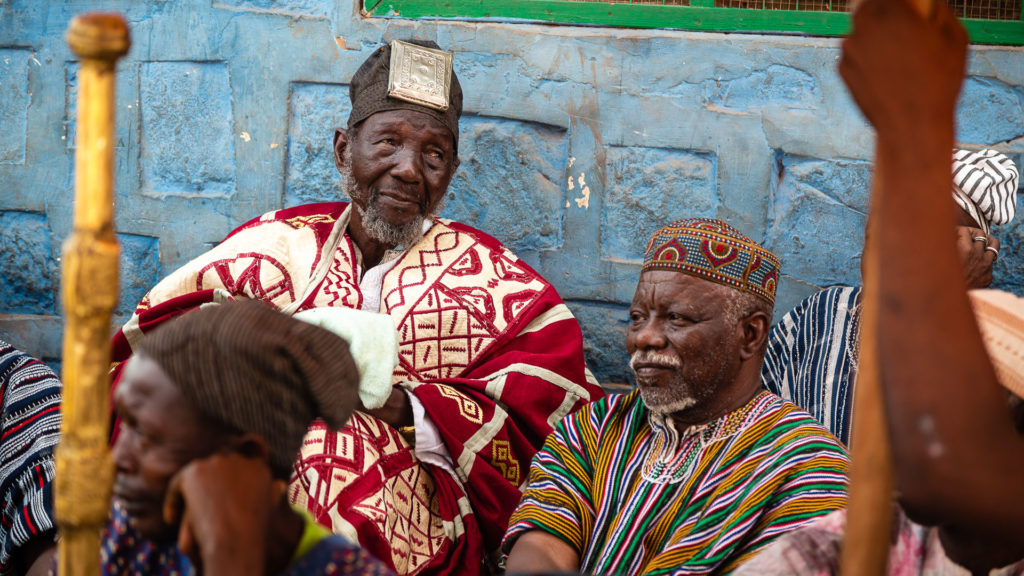
Missions-Catalyst-no-tagline_largeIMB Ghana picIn Ghana, where chiefs make blood sacrifices and employ soothsayers, some traditions are giving way as Christians become chiefs and elders (International Mission Board). This edition of Missions Catalyst includes several articles about how God is equipping and using local Christian leaders in Africa and beyond.

  1. GHANA: The Christian Chiefs
  2. MOZAMBIQUE: Graduates Ready to Serve
  3. WEST AFRICA: Celebrating the Scriptures
  4. EAST AFRICA: From Islamic Scholar to Follower of Jesus
  5. CHINA: A Testimony

GHANA: The Christian Chiefs

Source: International Mission Board, November 4, 2019

The tension can be felt across the crowd of hundreds outside the palace in Nalerigu, Ghana. They wait in silent anticipation for the Taraana, one of the Mamprusi king’s seven elders, to come out of the hall to present the man the king has selected as chief. When he does, the new chief’s supporters erupt into cheers and applause. The Taraana ceremoniously places a white smock on the chief followed by a bright red cap. Thus begins several days of celebration and ritual as the new chief is “enskinned.”

The Taraana—which translates literally to “peer” or “equal”—is in many senses the king’s right-hand man. However, over the next few days, this Taraana will not be involved in the ritual sacrifices to the ancestral spirits or in the formal Islamic prayers for the new chief. This Taraana is the first in the traditional kingdom of Mamprugu’s seven-hundred-year history to be a follower of Jesus Christ.

Like many West African nations, even though a democratic government runs the nation, there are traditional, tribal chieftaincy structures that are still the authority at the local and, occasionally, even regional level. These local leadership positions are almost always intricately connected to African traditional religious belief systems.

In northern Ghana, chiefs sit on skins (hence the term enskinned instead of enthroned) and those skins are often taken from the animals that were sacrificed to ancestral spirits in a prayerful plea to win the chieftaincy contest. Once in power, a chief will wear magical amulets to empower his rule and protect him from his enemies. He will regularly employ soothsayers and make blood sacrifices to ancestral shrines for guidance.

So the question arises, can a Christian become a chief? Fifty years ago, this was unheard of in northern Ghana.

» Full story (with pictures) reports there are now so many Christian chiefs in Northern Ghana that they formed their own Christian Chiefs Association, working to integrate Christian principles and discourage harmful practices. Read Annual Northern Ghana Christian Chiefs Conference Ends with a Call to Promote Peace (Ghana Broadcasting Corporation).

» Read about the evangelical Ethiopian Prime Minister and Nobel Peace Prize winner again struggling to reconcile opposing forces (Christianity Today).