In South Africa, free analog-broadcast community television stations whose programming caters to low-income majority Black townships are broke. To keep the lights on, they take advertising money from startup Pentecostal pastors who promise bewildering miracles and changes of fortune for jobless audiences.
Anele Heli is a 20-something charismatic prophet-pastor in Cape Town, South Africa’s most racially and financially gentrified city. He goes by the moniker Sir Anele, and his weekly TV sermons on Cape Town TV, the largest nonprofit community channel in the city, attract thousands of viewers and thousands more offline. Worshipers are desperate for him to touch their heads and to ease their pain in a country with the world’s highest joblessness rate. “I’m here to change lives on TV,” Heli said. “My sermons heal diabetes, restore lost jobs, reverse divorces.”
Nearly a dozen dubious South African township TV prophet-pastors are on trial for rape, murder, extortion, immigration fraud, and “fake miracles” stunts.
Poor, majority Black township residents in South Africa can’t afford high-quality pay-per-view TV or home Internet broadband. Broke community TV stations are their only source of information. Therefore, fraudster prophet-pastors lie in wait for desperate township TV viewers beset by joblessness, lack of health insurance, or mental health ailments.
[Kudakwashe Magezi, a poet and tech critic in Johannesburg, explains] “Prophet-pastors recoup their money by performing TV ‘miracles’ and aggressively requesting cash donations to a bank account. Cellular phone corporations get a cut of the cash revenue from desperate viewers [through] text messages.”
Some things are more valuable due to their rarity. For instance, solar eclipses are cool at their present rate. If they happened daily, we’d be annoyed. You may value people who exemplify Proverbs 31 because you don’t see them very often. (I mean the first seven verses, of course. Most women I know check the boxes on the second part of the chapter!)
An opportunity of exquisite rarity has just been offered to us. Last week the US State Department launched a program called Sponsor Circles that allows five American citizens to band together to help an Afghan family get going in the US. Not just give them a winter coat and a phrasebook, but enough to take them the whole nine yards from being a precarious and mystified stranger to being a productive community member.
The website for Sponsor Circles exuberantly reads, “No matter where you are located in the United States, you can welcome a newcomer and provide them with the practical support they need to get settled by serving as a certified sponsor circle. As a sponsor circle, you and your neighbors will take on tasks like finding initial housing, stocking the pantry, connecting children to school, providing initial income support, and helping adults to find employment.”
This amazing opportunity is not unprecedented. Americans could privately sponsor refugees under a short-lived program President Reagan initiated in 1986 called the Private Sector Initiative. While it was active, 16,000 refugees entered the US via private sponsorship, including thousands of Pentecostal Christians fleeing persecution in the Soviet Union.
It should be noted that, as in many efforts like this, Canada has led the way. Over the past 50 years, private sponsors have welcomed more than 350,000 refugees to Canada. Way to go, eh?
By now you may be wondering some of the same things I am:
Is this safe? What if we mess up?
Like first-time parents, we wonder, “What if we drop the baby?” The good people behind Sponsor Circles promise to help with the application process and training. Once you’re approved, they’ll link you with an agency that will help with tricky questions and challenging bureaucracy.
Jesus’s words from Luke 14 also apply, “Suppose one of you wants to build a tower. Won’t you first sit down and estimate the cost to see if you have enough money to complete it? For if you lay the foundation and are not able to finish it, everyone who sees it will ridicule you, saying, ‘This person began to build and wasn’t able to finish.’”
This isn’t a mobilization challenge you execute over a weekend, take a victory lap, and be done. This calls for careful prayer and consideration. And some money!
How much does it cost?
Groups of five sponsors commit to raising $2,275 for each member of the Afghan family to be hosted. This money will be used for the initial setup and care of the family.
In terms of time, Circles commit to preparing for the family’s arrival, then helping with their adjustment for at least three months.
What does the Sponsor Circle need to actually do?
According to the website, Sponsor Circles are responsible to support the Afghan newcomer(s) with the following:
Secure housing
Provide basic necessities
Provide time-bound income support
Assist in completing required changes of address
Connect to legal assistance
Support in obtaining a Social Security card
Support newcomer in selective service registration as appropriate
Support in accessing medical services
Support in accessing available benefits
Enroll children in school
Provide English language support
Provide job search advice and support
Provide community orientation
Complete 30-day and 90-day reports
Does that list feel a little daunting to you? Me, too. This effort qualifies as radical hospitality. At my little church, we have nearly an apartment’s worth of stuff we’ve collected over the past few weeks to help set up an apartment for an Afghan family. It’s one thing to gather the material for a house. It’s a whole other deal to help a family establish their home in the US.
Can we take our family to church?
Proselytizing is not allowed. The guidelines are similar to those of other refugee resettlement agencies. At the same time, when a family asks you why you’re doing this, you can share what the Bible says and what Jesus has done for you.
OK, I’m intrigued. What’s next?
Pray. Give God a chance to say, “No, this astounding opportunity I’m giving the Church is not for you.”
Ask God who he might want to link you up with for this adventure.
Start asking people to consider joining you.
Pray together and get the green light from God.
Start raising money and working on your Welcome Plan.
My head is still spinning thinking what an amazing door God has opened up for us. This is an opportunity to do the right thing, extend care to people whose lives have been turned upside down, and offer hope and home to people who’ve had little of either lately.
Can I ask you to do one more thing?
Forward this email all over the place: to your pastor and others pastors you know, to missions directors, to people who might have interest and money but no time to give, to people who might have time but no money, to friends who are just now retiring and wondering what to do with themselves, to young people ripe for a challenge, and to that sweet, old lady at church who you just know knows how to pray.
I’d love to hear your response to this. Please tell me what you’re dreaming, so I can be your biggest cheerleader.
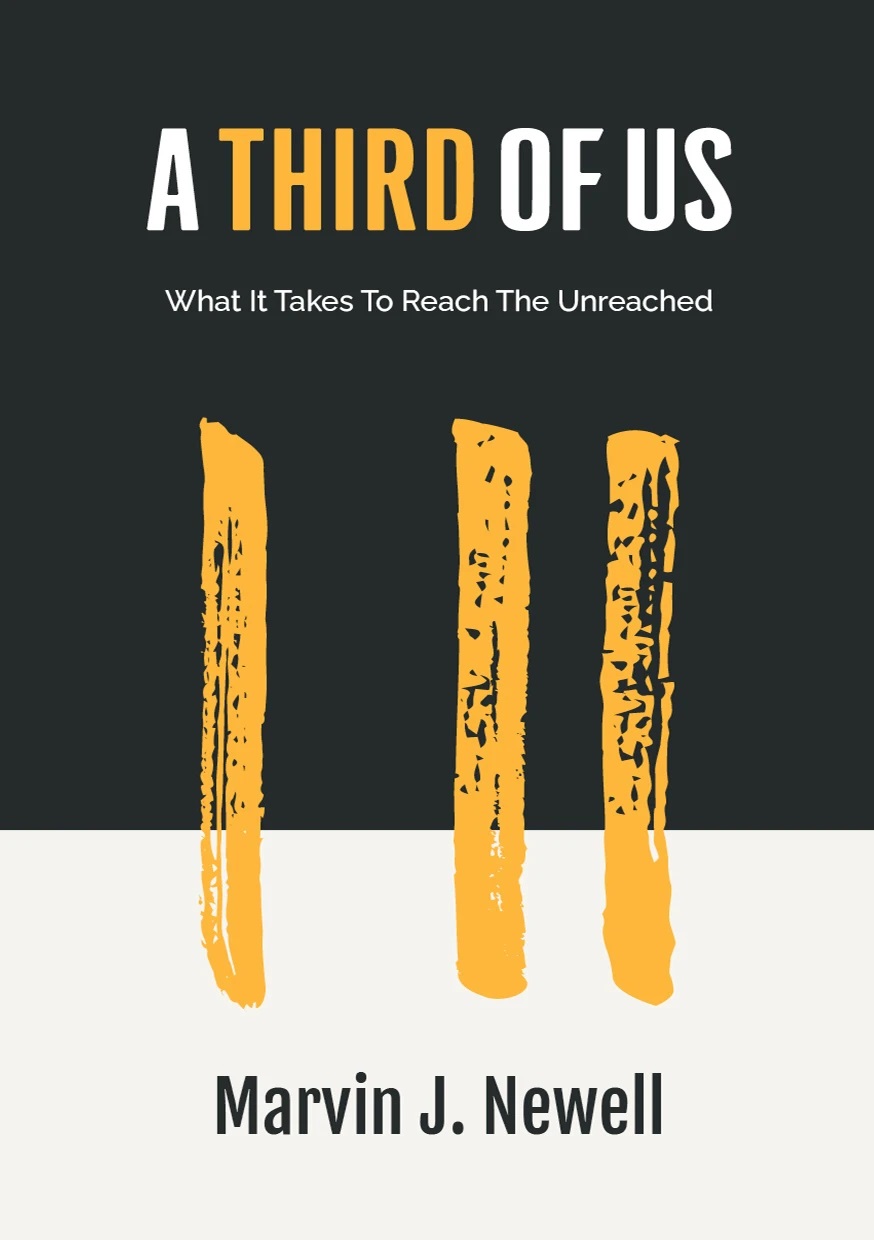
A Third of Us: What It Takes to Reach the Unreached, by Marvin J. Newell. William Carey Publishing, 2021. 136 pages.
Ever wished you had one short but sound and winsome book that makes the case for prioritizing efforts to reach the unreached? Here you go!
A Third of Us calls the body of Christ to recognize the injustice that more than a third of the world is unreached with the gospel and calls us to respond. In between, it explores the five Great Commission passages that show us the essence of the task of making disciples among all nations.
If you are a long-time Marv Newell fan like me, you will recognize some of this material; it’s adapted from his 2010 book Commissioned. Ample and current references and footnotes addressing the nuances should help this book go further.
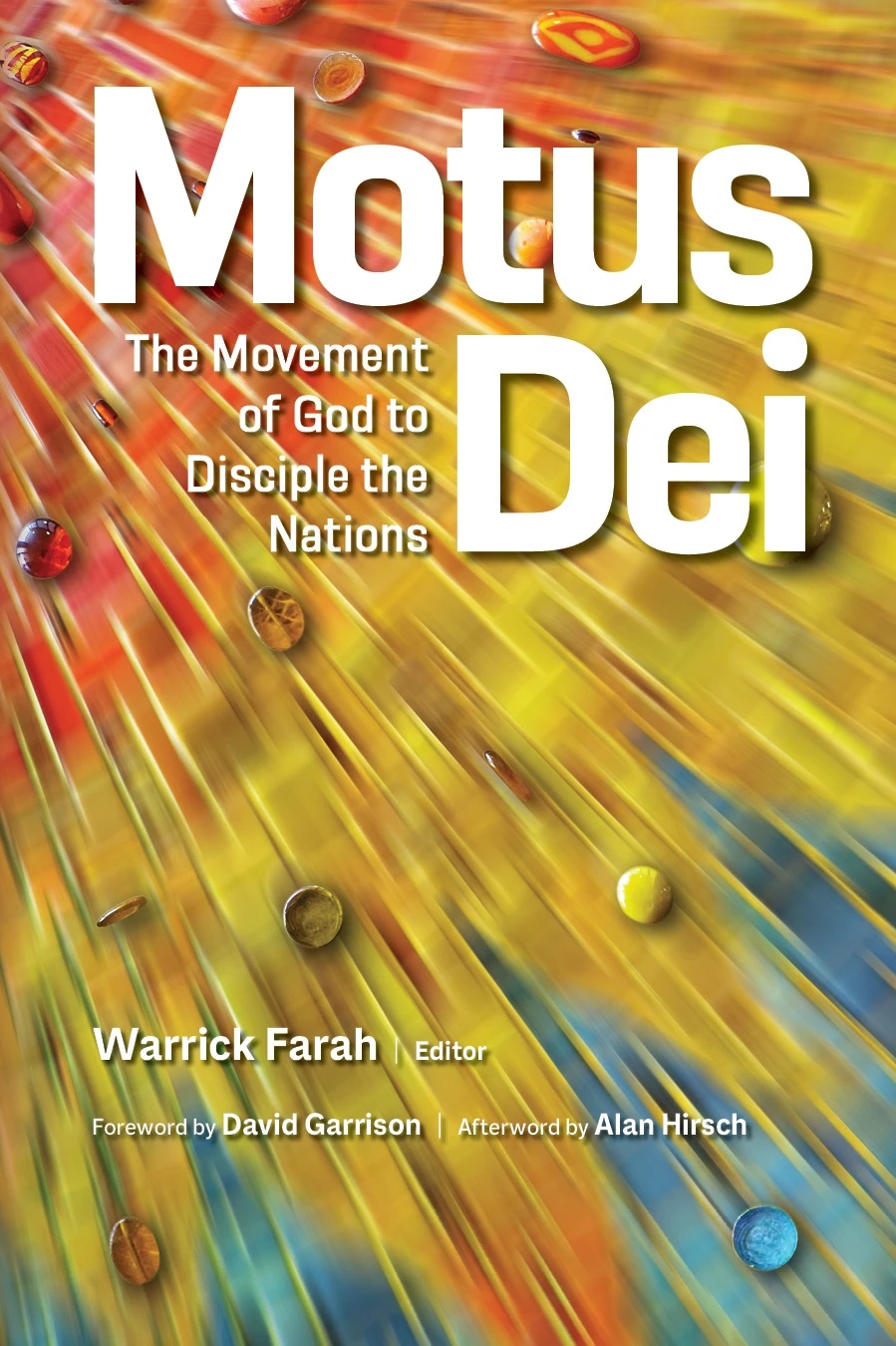
Motus Dei: The Movement of God to Disciple the Nations, edited by Warrick Farah. William Carey Publishing, 2021. 376 pages.
One of the remarkable features of global mission today is the growth of more than 1,000 disciple-making movements including more than 70 million believers. Too good to be true? Too strange to be good? While the literature about disciple-making movements is growing, this book is a big step forward in compiling some of the best thinking and research on contemporary disciple-making movements. Definitely pro-movement but with plenty of critical thinking brought to bear.
Here some 30 contributors share biblical and historical perspectives, factors that contribute to or challenge movements, meaty and diverse case studies, and areas for further research and reflection. If academic or strategic research is on your mind, this book will give you a head start as it includes lots of references and detail on research methodology. A number of the authors also offer key points from their recent or soon-to-be-published work.
The book is one outcome of a 2020 virtual movements research symposium held by Motus Dei, an international network for the missiological study of global movements to Christ.
A new podcast from Frontiers UK shares authentic stories of joy and frustration from ordinary followers of Jesus with a radical call to abandon the security and comforts of home and share the Good News to Muslims across the world. Matt, the host, interviews Frontiers members (primarily) about how they have obeyed the command to go to all nations—beyond Jerusalem, Judea, and Samaria—to the ends of the earth. Though a recent episode about building relationships with Muslims in the UK was great.
Head to the podcast website or just look on Apple Podcasts, Spotify, or wherever you get your podcasts. I’ve listened to several episodes and found them inspiring!
Our dear friend Brother Yun, whose testimony you may have read in The Heavenly Man, was visiting Canada a few years ago when a group of pastors and mission leaders asked him to comment on the removal of crosses in China. Thinking he would express alarm at such a ghastly act, many in the room were totally shocked when Brother Yun replied:
“I am very happy that so many crosses have been torn down! The cross was never meant to be fixed to the roof of a building. Instead, the Lord Jesus called us to carry the cross on our shoulders and in our hearts. I completely agree with the government’s decision to pull down all the crosses!”
Looking for a brief but transformative short-term mission? I hear good reviews of the three-day Global Missions Journey program GFM offers to give churches, students, and small groups a taste of global missions in the international microcosm of Clarkston, Georgia.
But what if instead of heading to Clarkston, you hosted a cross-cultural learning experience along the same lines in your own city or town? GFM is now offering a digital kit of materials that you can customize as needed along with a bit of coaching to help you plan a day-long or two-day experience for your group.
“A basic implementation includes a teaching and activity, a tour at a local mosque or Hindu temple, a meal at an ethnic restaurant, and a closing time to pray about next steps,” they say. “Prioritizing exposure and learning over any ostensible quick fix, our hope is that these activities and teachings challenge each participant and plant seeds for long-term involvement the Great Commission.”
November 17-18, Standards Introductory Workshop (Richmond, VA, USA). Seminar on the Seven Standards of Excellence in Short-term Mission; provided in connection with the International Conference on Missions.
November 18-21, Mental Health and Missions Conference (Pottsboro, TX, USA). A regular event for mental health and member care professionals who work with missionaries.
November 29 to December 4, Debriefing and Renewal (Palmer Lake, CO, USA). Provided regularly by Missionary Training International.
Lately, I have been rethinking what the Church is and how God intends it to grow. I should have seen this long ago, but now I see the family motif as the best way to think about the Church. If the Church is a family, then might there be a better way to think about the unreached? As those with no church family?
This idea is not new; you may remember the Adopt-A-People movement. But what if we think of them as not adopted until they have a church family, or are “reached.” I doubt that missiologists will adopt (pun intended) new labels but my mind is made up. These unreached peoples or frontier peoples are simply orphaned peoples who need to learn of the Father that awaits their return.
My thinking started to change on this when I read Michael Heiser’s book, What Does God Want?
Whatever way you categorize the people of the earth, this interactive map at Joshua Project is amazing! Read more about the Frontier Peoples model below.